Representative Martin Kalbfleisch
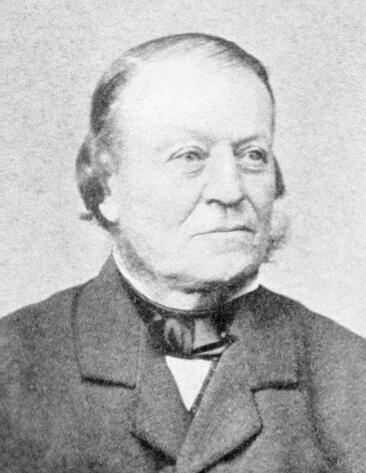
Here you will find contact information for Representative Martin Kalbfleisch, including email address, phone number, and mailing address.
| Name | Martin Kalbfleisch |
| Position | Representative |
| State | New York |
| District | 2 |
| Party | Democratic |
| Status | Former Representative |
| Term Start | December 7, 1863 |
| Term End | March 3, 1865 |
| Terms Served | 1 |
| Born | February 8, 1804 |
| Gender | Male |
| Bioguide ID | K000005 |
About Representative Martin Kalbfleisch
Martin Kalbfleisch (February 8, 1804 – February 12, 1873) was a Dutch-born pioneer in the chemical industry, a prominent municipal official and mayor of the city of Brooklyn, New York, and a United States Representative from New York during the American Civil War. He served one term in the U.S. House of Representatives, from March 4, 1863, to March 3, 1865, as a member of the Democratic Party.
Kalbfleisch was born in Flushing, Netherlands, on February 8, 1804. He attended the public schools there, where he studied chemistry, an interest that would later shape his business career. At the age of eighteen he embarked with an American captain on a trading venture to Sumatra, but the expedition was cut short and he returned because of a cholera outbreak. He subsequently formed a partnership with an American associate and conducted business in Le Havre, France, for four years, gaining experience in international commerce and trade.
In 1826 Kalbfleisch immigrated to the United States and settled in New York City. There he engaged in the manufacture and sale of paints, establishing himself in the burgeoning chemical and industrial sector and earning recognition as a pioneer in the chemical industry. He became involved in local public service early in his American career, serving as a health warden in 1832 during a period when public health concerns were acute in growing urban centers. In 1836 he served as a school trustee, reflecting his engagement with civic and educational affairs. Expanding his industrial interests, in 1844 he established a chemical factory at Greenpoint, in what would become part of Brooklyn, further solidifying his position as an industrial entrepreneur.
Kalbfleisch’s political career developed alongside his business activities. He served as Town Supervisor of Bushwick from 1852 to 1854, participating in the administration of what was then a separate town adjacent to Brooklyn. In 1854 he was an unsuccessful candidate for mayor of the City of Brooklyn, but he remained active in municipal politics. He served as an alderman in Brooklyn from 1855 to 1861, a period of rapid urban growth and increasing political complexity. His persistence in public life was rewarded when he was elected mayor of Brooklyn, serving his first term from 1862 to 1864, guiding the city through the early and middle years of the Civil War.
During this same critical period in American history, Kalbfleisch was elected as a Democrat to the Thirty-eighth Congress, representing New York in the U.S. House of Representatives from March 4, 1863, to March 3, 1865. As a member of the Democratic Party representing New York, he contributed to the legislative process during his single term in office, participating in the democratic process and representing the interests of his constituents at a time when the nation was divided by civil war. While in Congress he voted against the Thirteenth Amendment to the United States Constitution, which abolished slavery, placing him among those Democrats who opposed that measure during the conflict over Reconstruction-era policies.
After leaving Congress, Kalbfleisch continued to play a role in national and local political affairs. He was a delegate to the Union National Convention held at Philadelphia in 1866, a gathering intended to promote reconciliation between different political factions following the Civil War. He returned to municipal leadership when he was again elected mayor of Brooklyn, serving a second tenure from 1867 to 1871. At the conclusion of this term he ran as an independent candidate for reelection but was unsuccessful, after which he retired from active pursuits in both business and politics.
Martin Kalbfleisch died in Brooklyn, New York, on February 12, 1873. He was interred at Green-Wood Cemetery in Brooklyn, a resting place for many of the city’s notable nineteenth-century figures. His career spanned international commerce, industrial innovation in the chemical field, and significant municipal and congressional service during one of the most consequential eras in American history.