Representative Martin Barnaby Madden
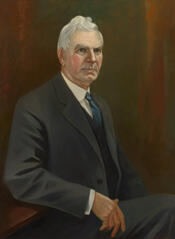
Here you will find contact information for Representative Martin Barnaby Madden, including email address, phone number, and mailing address.
| Name | Martin Barnaby Madden |
| Position | Representative |
| State | Illinois |
| District | 1 |
| Party | Republican |
| Status | Former Representative |
| Term Start | December 4, 1905 |
| Term End | March 3, 1929 |
| Terms Served | 12 |
| Born | March 21, 1855 |
| Gender | Male |
| Bioguide ID | M000038 |
About Representative Martin Barnaby Madden
Martin Barnaby Madden (March 21, 1855 – April 27, 1928) was a Republican U.S. Representative from Illinois who served in the United States Congress from March 4, 1905, until his death in 1928. Over the course of twelve consecutive terms, he represented Illinois’s 1st congressional district and became a key figure in House leadership, notably as chairman of the Committee on Appropriations. As of 2025, he is the last non–African American to serve as a representative for Illinois’s 1st congressional district.
Madden was born on March 21, 1855, in Wolviston, County Durham, England, to parents of Irish birth. In 1869 he immigrated to the United States with his family, who settled near Lemont, Illinois. He attended public schools in Chicago and pursued business and technical training at an early age. In 1873 he graduated from Bryant and Stratton Business College, and he also completed studies at an engineering trade school, preparing himself for a career in industry and construction in the rapidly growing Chicago area.
Before entering national politics, Madden built a substantial career in business and local civic affairs. He became involved in the stone and construction industries, serving as president of the Quarry Owners’ Association of the United States from 1885 to 1889. He further expanded his influence in the building trades as vice president and director of the Builders’ and Traders’ Exchange of Chicago in 1886 and 1887. From 1895 to 1915 he was president of the Western Stone Company, one of the leading stone concerns in the region, and from 1895 to 1910 he served as a director of the Metropolitan Trust & Savings Bank of Chicago. These roles established him as a prominent businessman and provided a platform for his entry into public life.
Madden’s political career began at the municipal level in Chicago. A committed member of the Republican Party, he was elected to the Chicago City Council, where he served from 1889 to 1897. During his tenure he rose to positions of considerable authority, acting as the presiding officer of the council from 1891 to 1893 and serving as chairman of the powerful finance committee for seven years. At the same time, he was active in party organization, holding the post of chairman of the Republican Committee of Chicago from 1890 to 1896. His growing prominence in party circles led to his selection as a delegate to several Republican National Conventions, including those of 1896, 1900, 1912, 1916, and 1924.
Madden first sought national office in 1902, when he ran unsuccessfully for election to the Fifty-eighth Congress. Undeterred, he stood again in 1904 and was elected as a Republican to the Fifty-ninth Congress. He was subsequently re-elected to the eleven succeeding Congresses, serving continuously from March 4, 1905, until his death on April 27, 1928. His long tenure in the House of Representatives coincided with a significant period in American history, encompassing the Progressive Era, World War I, and the early years of the 1920s. As a member of the House, Madden participated actively in the legislative process and represented the interests of his Chicago-area constituents. He attained particular influence as chairman of the Committee on Appropriations during the Sixty-eighth through Seventieth Congresses, where he played a central role in shaping federal spending and fiscal policy.
Madden remained an active legislator until the end of his life. After being nominated for re-election in 1928, he died at age seventy-three in the Committee on Appropriations meeting room of the House of Representatives in the U.S. Capitol in Washington, D.C., on April 27, 1928, while still in office. His death placed him among the members of the United States Congress who died in office in the first half of the twentieth century. He was buried in Cass Cemetery near Hinsdale, Illinois, a resting place that later fell within the incorporated limits of Darien, Illinois. His wife, Josephine, was interred beside him six years later.
Madden’s public service was commemorated in the years following his death. In 1935 the Madden Dam on the Chagres River, an important component of the Panama Canal water system, was named in his honor, as was the reservoir behind it, originally known as Madden Lake. The lake was later renamed Lake Alajuela by Panama, but the dam’s association with Madden endures as a testament to his long career in Congress and his role in federal appropriations and infrastructure development.