Representative Martin Olav Sabo
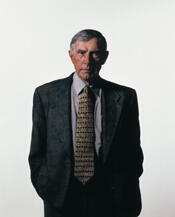
Here you will find contact information for Representative Martin Olav Sabo, including email address, phone number, and mailing address.
| Name | Martin Olav Sabo |
| Position | Representative |
| State | Minnesota |
| District | 5 |
| Party | Democratic |
| Status | Former Representative |
| Term Start | January 15, 1979 |
| Term End | January 3, 2007 |
| Terms Served | 14 |
| Born | February 28, 1938 |
| Gender | Male |
| Bioguide ID | S000005 |
About Representative Martin Olav Sabo
Martin Olav Sabo (February 28, 1938 – March 13, 2016) was an American politician who served as United States Representative for Minnesota’s Fifth Congressional District from 1979 to 2007. A member of the Democratic Party and Minnesota’s Democratic–Farmer–Labor Party (DFL), he represented a district that includes Minneapolis and is one of eight congressional districts in Minnesota. Over 14 terms in the U.S. House of Representatives, Sabo contributed to the legislative process during a significant period in American history, participating in the democratic process and representing the interests of his constituents.
Sabo was born in Crosby, North Dakota, the son of Lutheran Norwegian immigrant parents. Raised in a Lutheran household and shaped by his Norwegian heritage, he grew up in a rural environment that influenced his later views on local control and public service. He moved to Minnesota for his education, enrolling at Augsburg College in Minneapolis, where he received a Bachelor of Arts degree in 1959. He later pursued graduate studies at the University of Minnesota, further grounding himself in the political and civic life of the state that he would go on to represent for decades.
Sabo entered public office at an unusually young age. In 1960, at just 22 years old, he was elected to the Minnesota House of Representatives. Over the next 18 years, he rose steadily through the legislative ranks. He served as minority leader of the Minnesota House from 1969 to 1972 and then, in 1973, became the first Democrat to serve as Speaker of the Minnesota House of Representatives, a position he held until 1978. During his tenure in the state legislature, he also gained national prominence among state lawmakers, serving as president of the National Conference of State Legislatures and of the National Legislative Conference. In addition, he was appointed by the President to the National Advisory Commission on Intergovernmental Relations, reflecting his growing influence on issues of federal–state relations.
When eight-term incumbent and fellow DFL member Donald M. Fraser stepped down from the U.S. House to run for the U.S. Senate, Sabo became the DFL candidate to succeed him in what had become the most reliably Democratic district in Minnesota. Fraser had defeated a 10-term Republican in 1962 and had not faced serious opposition thereafter, and Sabo continued that pattern. He won the November 1978 election easily and took his seat in the 96th Congress on January 3, 1979. He was subsequently reelected thirteen times without serious opposition, serving in the 96th, 97th, 98th, 99th, 100th, 101st, 102nd, 103rd, 104th, 105th, 106th, 107th, 108th, and 109th Congresses, for a total of 28 years in the U.S. House of Representatives.
During his congressional service, Sabo became particularly known for his work on budget and appropriations matters. In the 103rd Congress (1993–1994), he served as chair of the House Budget Committee. In that role, he shepherded the Omnibus Budget Reconciliation Act of 1993 through the House, landmark legislation that contributed to the elimination of the federal budget deficit by 1999, although the deficit later returned. In the 109th Congress, he served on the House Appropriations Committee and was the ranking member of that committee’s Homeland Security Subcommittee, where he played a key role in overseeing funding for national security and domestic preparedness. Over the course of his House career, he was widely regarded as one of the most liberal members of the Minnesota delegation; in the 109th Congress he scored 4 percent conservative according to a conservative group and 90 percent progressive according to a liberal group. He often described himself as a “liberal decentrist,” favoring progressive policies but emphasizing local rather than federal control.
Sabo’s electoral strength in his district was reflected in consistently lopsided victories. In the 2004 race for the U.S. House of Representatives in Minnesota’s Fifth District, he was reelected with 70 percent of the vote, defeating Republican Daniel Mathias, who received 24 percent, and Green Party candidate Jay Pond, who received 6 percent. On March 18, 2006, Sabo announced that he would not seek reelection for the 110th Congress, bringing to a close 46 years as an elected official, including 28 years in Congress. At the time of his retirement, his tenure was the third-longest in either house of Congress in Minnesota’s history, behind only fellow Democrats Jim Oberstar and Collin Peterson. He endorsed his longtime chief of staff, Mike Erlandson, in the DFL primary to succeed him, but Erlandson lost to State Representative Keith Ellison, who went on to win the general election and succeeded Sabo on January 4, 2007.
In his later years, Sabo remained engaged in public policy, particularly in the area of transportation. He served as a co-chair of the National Transportation Policy Project at the Bipartisan Policy Center, where he worked on strategies for funding and improving the nation’s transportation infrastructure. In recognition of his efforts to secure funding for transportation projects, especially those benefiting pedestrians and bicyclists, the Midtown Greenway bridge in Minneapolis was named the Martin Olav Sabo Bridge. His legacy in the city was further honored in 2022 when the central Minneapolis post office was renamed the Martin Olav Sabo Post Office. His legislative and congressional papers were deposited at the Minnesota Historical Society, where they are available for research, and his public career is also documented through appearances on C-SPAN.
Sabo’s personal life reflected his strong ties to Minnesota and his Lutheran faith. A lifelong Lutheran, he was married and had two children and six grandchildren. His daughter, Julie Sabo, followed him into public service, serving as a member of the Minnesota Senate and becoming the DFL nominee for lieutenant governor of Minnesota in 2002. In 1994, Sabo was inducted into the Scandinavian-American Hall of Fame, an honor that recognized both his heritage and his long record of public service. A lifelong smoker, he quit in 2003, several years before his retirement from Congress.
Martin Olav Sabo was hospitalized with breathing difficulties and died on March 13, 2016, in Minneapolis, Minnesota, at the age of 78. He is buried in Lakewood Cemetery in Minneapolis. His death prompted tributes from across the political spectrum in Minnesota. U.S. Senator Amy Klobuchar described him as a “friend and mentor,” and Governor Mark Dayton praised him as “a great political leader and an outstanding public servant.” His long tenure, legislative accomplishments, and reputation for integrity left a lasting imprint on Minnesota politics and on the institutions in which he served.