Representative Martin Fernard Smith
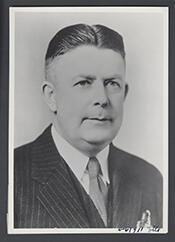
Here you will find contact information for Representative Martin Fernard Smith, including email address, phone number, and mailing address.
| Name | Martin Fernard Smith |
| Position | Representative |
| State | Washington |
| District | 3 |
| Party | Democratic |
| Status | Former Representative |
| Term Start | March 9, 1933 |
| Term End | January 3, 1943 |
| Terms Served | 5 |
| Born | May 28, 1891 |
| Gender | Male |
| Bioguide ID | S000591 |
About Representative Martin Fernard Smith
Martin Fernard Smith (May 28, 1891 – October 25, 1954) was an American lawyer and Democratic politician who served as a U.S. Representative from the State of Washington from 1933 to 1943. Over the course of five consecutive terms in the United States House of Representatives, he represented his constituents during a transformative decade in American history that encompassed the Great Depression, the New Deal era, and the early years of the Second World War.
Born on May 28, 1891, Smith came of age at the turn of the twentieth century, a period marked by rapid economic and social change in the United States. Details of his early life, including his family background and upbringing, are not extensively documented in the surviving public record, but his later professional and political career indicates that he pursued formal education and legal training that prepared him for public service and elective office. His early experiences in the Pacific Northwest and his exposure to the issues facing Washington’s communities helped shape his later legislative priorities.
Smith’s education led him into the practice of law, a common pathway to political life in his era. Through his legal work, he became familiar with the economic, regulatory, and social challenges confronting both individuals and businesses in Washington State. This professional grounding in the law provided him with the skills necessary to interpret and draft legislation and to engage effectively in the complex committee and floor processes of the House of Representatives. His legal background also contributed to his credibility among voters and party leaders within the Democratic Party.
By the early 1930s, Smith had established himself sufficiently in public and professional life to seek national office. A member of the Democratic Party, he was elected to the United States House of Representatives as part of the wave of Democratic victories that accompanied the onset of the New Deal. He took his seat in Congress in 1933, at the opening of the Seventy-third Congress, just as President Franklin D. Roosevelt began implementing sweeping reforms to address the economic crisis of the Great Depression. Smith’s election reflected both his personal standing in Washington and the broader political realignment of the period.
During his five terms in office, from 1933 to 1943, Smith contributed to the legislative process at a time when Congress enacted landmark measures affecting banking, labor, agriculture, social welfare, and national infrastructure. As a member of the House of Representatives, he participated in debates and votes on New Deal legislation and other major initiatives designed to stabilize the economy and provide relief and recovery to citizens across the country. Representing a Washington constituency, he was positioned to advocate for the interests of his district within this national program of reform, including matters related to regional development, transportation, and the evolving industrial and agricultural base of the Pacific Northwest.
Smith’s decade in Congress also spanned the growing international tensions of the late 1930s and the entry of the United States into World War II following the attack on Pearl Harbor in 1941. As a sitting Representative during this period, he took part in the democratic process by which the nation mobilized for war, including consideration of defense appropriations, support for the armed forces, and measures affecting the home front. His service thus bridged the transition from domestic economic emergency to global conflict, and he remained in office through the Seventy-seventh Congress, leaving Congress in 1943 after completing his fifth term.
Following his departure from the House of Representatives, Smith returned to private life. While the public record is relatively limited regarding his later activities, it is consistent with the careers of many former members of Congress of his generation that he likely resumed legal or related professional work and remained engaged in civic affairs in his home state. He lived out the remainder of his life away from national office but as a figure whose congressional service had coincided with some of the most consequential legislative years of the twentieth century.
Martin Fernard Smith died on October 25, 1954. His career in the U.S. House of Representatives from 1933 to 1943, as a Democratic Representative from Washington, placed him at the center of federal policymaking during a critical decade in American history, and his five-term tenure reflected the trust placed in him by his constituents during a period of profound economic and political change.