Representative Martin Russell Thayer
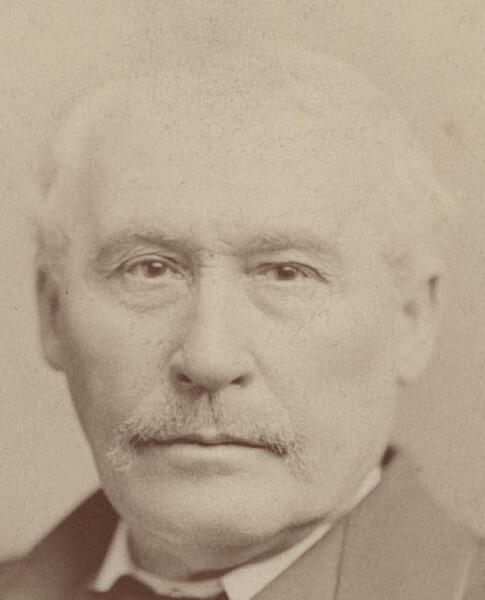
Here you will find contact information for Representative Martin Russell Thayer, including email address, phone number, and mailing address.
| Name | Martin Russell Thayer |
| Position | Representative |
| State | Pennsylvania |
| District | 5 |
| Party | Republican |
| Status | Former Representative |
| Term Start | December 7, 1863 |
| Term End | March 3, 1867 |
| Terms Served | 2 |
| Born | January 27, 1819 |
| Gender | Male |
| Bioguide ID | T000150 |
About Representative Martin Russell Thayer
Martin Russell Thayer (January 27, 1819 – October 14, 1906) was an American lawyer, jurist, author, and Republican politician who served two terms as a member of the United States House of Representatives from Pennsylvania from 1863 to 1867. His congressional service coincided with the American Civil War and the beginning of Reconstruction, during which he represented the interests of his Pennsylvania constituents and contributed to the legislative process in a period of profound national crisis. His grandnephew was John B. Thayer, who later perished in the sinking of the RMS Titanic in 1912.
Thayer was born in Dinwiddie County, Virginia, near the city limits of Petersburg. He pursued his early education in New England, attending the Mount Pleasant Classical Institute in Amherst, Massachusetts, and subsequently Amherst College. In 1837 he moved with his father to Philadelphia, Pennsylvania, a relocation that would shape the remainder of his professional and public life. He graduated from the University of Pennsylvania in 1840, after which he studied law. Thayer was admitted to the bar in 1842 and commenced the practice of law in Philadelphia, establishing himself in the city’s legal community.
By the early 1860s, Thayer had become sufficiently prominent in Pennsylvania legal and political circles to be entrusted with important public responsibilities. In 1862 he served as a commissioner to revise the revenue laws of Pennsylvania, participating in efforts to modernize and rationalize the state’s fiscal framework at a time when the Civil War was placing extraordinary demands on public finance. That same year he published works reflecting his engagement with the great issues of the day, including “The Duties of Citizenship” and “A Reply to Mr. Charles Ingersoll’s ‘Letter to a Friend in a Slave State,’” both issued in Philadelphia in 1862, which addressed questions of loyalty, Union, and slavery.
Thayer was elected as a Republican to the Thirty-eighth and Thirty-ninth Congresses, serving in the U.S. House of Representatives from Pennsylvania from 1863 to 1867. During his two terms in Congress, he served on the committee on the bankrupt law and was chairman of the United States House Committee on Private Land Claims, playing a role in shaping legislation in those areas. His tenure in Congress occurred during the Civil War and the immediate postwar period, when questions of national finance, reconstruction of the Union, and the status of former Confederate states and freedpeople dominated the legislative agenda. As a member of the House of Representatives, he participated actively in the democratic process and represented the interests of his Pennsylvania constituents at a time of intense political and constitutional debate.
One of Thayer’s most notable legislative interventions concerned the use of portraits of living persons on United States currency. Disturbed by what he regarded as an abuse of the Treasury’s discretion in selecting portraits for federal notes and securities, he publicly criticized the practice on the House floor. Spearheaded by Thayer, Congress enacted legislation on April 7, 1866, specifically providing “that no portrait or likeness of any living person hereafter engraved, shall be placed upon any of the bonds, securities, notes, fractional or postal currency of the United States.” This measure helped establish a lasting norm in U.S. monetary design. Thayer declined to be a candidate for re-election in 1866 and, upon the expiration of his second term, resumed the practice of law in Philadelphia.
Following his congressional service, Thayer embarked on a distinguished judicial career. He served as a judge of the district court of Philadelphia from 1867 to 1874, presiding over a wide range of civil and criminal matters in one of the nation’s largest cities. In 1874 he was elevated to the position of president judge of the court of common pleas of Philadelphia, a leading trial court of general jurisdiction, and he held that office until his resignation in 1896. His long tenure on the bench reflected both his legal acumen and the confidence placed in him by the Pennsylvania judiciary and bar.
Thayer’s public service extended beyond the courtroom. In 1873 he was appointed to the board of visitors to the United States Military Academy at West Point and was responsible for writing the board’s report, thus contributing to oversight of the nation’s premier military educational institution. This appointment had a family resonance: some forty years earlier, his cousin Sylvanus Thayer had served as superintendent of West Point and was widely credited with professionalizing the academy. In 1877 Martin Russell Thayer was elected a member of the American Philosophical Society, one of the oldest learned societies in the United States, reflecting his standing in intellectual and professional circles. In 1896, after resigning from the bench, he was elected by the judges of the court of common pleas as prothonotary of Philadelphia, assuming responsibility for important administrative and record-keeping functions of the court.
In addition to his legal and political work, Thayer engaged in extensive literary pursuits. Over several decades he authored a number of books and pamphlets on law, history, political thought, and public institutions. Among his works were “The Duties of Citizenship” (Philadelphia, 1862); “A Reply to Mr. Charles Ingersoll’s ‘Letter to a Friend in a Slave State’” (Philadelphia, 1862); “The Great Victory: its Cost and Value” (1865), reflecting on the outcome of the Civil War; “The Law considered as a Progressive Science” (1870), a meditation on legal development; “On Libraries” (1871); “The Life and Works of Francis Lieber” (1873), a study of the prominent jurist and political philosopher; and “The Battle of Germantown” (1878), a historical account of the Revolutionary War engagement near Philadelphia. These writings underscored his interest in civic education, legal theory, and American history.
Martin Russell Thayer spent his later years in Philadelphia, remaining a respected figure in the city’s legal, intellectual, and civic life. He died in Philadelphia on October 14, 1906. He was buried in the churchyard of the Church of St. James the Less in Philadelphia, a historic Episcopal parish whose cemetery contains the graves of many notable Philadelphians.