Representative Marvin Henry Edwards
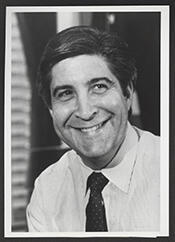
Here you will find contact information for Representative Marvin Henry Edwards, including email address, phone number, and mailing address.
| Name | Marvin Henry Edwards |
| Position | Representative |
| State | Oklahoma |
| District | 5 |
| Party | Republican |
| Status | Former Representative |
| Term Start | January 4, 1977 |
| Term End | January 3, 1993 |
| Terms Served | 8 |
| Born | July 12, 1937 |
| Gender | Male |
| Bioguide ID | E000077 |
About Representative Marvin Henry Edwards
Marvin Henry “Mickey” Edwards (born July 12, 1937) is an American politician, author, and academic who served as a Republican member of the United States House of Representatives from Oklahoma from 1977 to 1993. Representing Oklahoma’s 5th congressional district for eight consecutive terms, he played a prominent role in House Republican leadership and in the development of the modern conservative movement. Over the course of his public life he became a notable critic of the rightward, personality-driven turn of the Republican Party, ultimately leaving the GOP in 2021 and publicly supporting Democratic presidential candidates in 2020 and 2024.
Edwards was born in Cleveland, Cuyahoga County, Ohio, on July 12, 1937, and spent most of his early years in the southside Capitol Hill section of Oklahoma City, where his father, Eddie Edwards, managed a shoe store. At age 19, while taking the store’s earnings to a bank, he was confronted by a gunman armed with a sawed-off rifle; when Edwards told the man to “Go to hell,” the assailant shot him twice near the heart. Edwards survived and was discharged from the hospital after three days. He later recalled this episode as a formative experience. Raised in a Jewish family, Edwards would go on to become one of the notable Jewish members of the United States Congress.
Edwards attended the University of Oklahoma, where he earned a Bachelor of Arts degree in journalism in 1958. During his collegiate years he joined the OU Young Republicans, which he later remembered as “easily the smallest club on campus” at a time when the Republican Party was almost nonexistent in Oklahoma. Shortly after graduating, he registered to vote as a Republican despite efforts by registration officials to dissuade him, in an era when Democrats held both U.S. Senate seats, a majority of the state’s congressional delegation, every statewide elected office, and a nine-to-one supermajority in the state legislature. He later pursued legal studies at Oklahoma City University School of Law, receiving a J.D. in 1969 and gaining admission to the Oklahoma bar in 1970.
Before entering elective office, Edwards built a career in journalism, communications, and political organizing. From 1958 to 1963 he worked as a reporter and editor at the Oklahoma City Times. He then engaged in advertising and public relations from 1963 to 1968 and served as a magazine editor from 1968 to 1973. While working for the Times, he became increasingly active in Republican politics, serving as chairman of the Oklahoma City Young Republicans, then chairman of the Oklahoma Young Republicans, and later as national vice chairman of the Young Republicans. During this period he was elected to the national board of the nascent American Conservative Union. His political activism grew so extensive that the managing editor of the Times eventually told him he would have to choose between journalism and politics; Edwards chose politics. From 1973 to 1974 he served in Washington, D.C., as a legislative assistant for the Republican Steering Committee in the House of Representatives, and in 1976 he was an instructor in law and journalism at Oklahoma City University.
Edwards first sought a seat in Congress in 1974, running as a Republican against long-serving Democratic incumbent John Jarman in Oklahoma’s 5th district. In a year dominated by the Watergate scandal and adverse to Republicans nationally, Edwards raised almost no money and spent only about $30,000 for the entire campaign, yet held Jarman to 51 percent of the vote. His campaign slogan, “Take a bite out of Big Government,” was dramatized in advertisements showing him biting an apple on camera. Oklahoma City, meanwhile, was trending increasingly Republican. In January 1975, Jarman switched parties and became a Republican in protest of senior conservative Democrats being stripped of committee chairmanships, but he chose not to seek reelection in 1976. That year Edwards defeated former Oklahoma Attorney General G. T. Blankenship for the Republican nomination and narrowly won the general election over Democratic businessman Tom Dunlap by about 3,900 votes. He became the first Republican elected to represent the district in more than half a century; thereafter, in a district that rapidly became one of the most reliably Republican urban constituencies in the country, he would not face another general election as close.
From January 3, 1977, to January 3, 1993, Edwards served eight terms in the U.S. House of Representatives as the member from Oklahoma’s 5th congressional district. During this significant period in American political history, he participated actively in the legislative process and represented the interests of his Oklahoma constituents while helping to shape the emerging conservative agenda in Congress. He served on the House Budget Committee and the powerful Appropriations Committee, and he became the ranking member of the Appropriations Subcommittee on Foreign Operations, where he helped oversee U.S. foreign assistance and international programs. Within the House Republican Conference, Edwards rose to a leadership position as chairman of the House Republican Policy Committee, the fourth-ranking post in the party’s House hierarchy, giving him a central role in formulating Republican legislative and political strategy during the late 1970s and 1980s.
Edwards’s congressional career came to an end in 1992, when he was defeated in the Republican primary, which by then was the decisive contest in the heavily Republican 5th district. He finished third in the primary behind state representative Ernest Istook and former federal prosecutor Bill Price and did not advance to the runoff; Istook went on to win the general election. Edwards’s loss was largely attributed to his involvement in the House banking scandal, in which he had written some 386 overdrafts totaling approximately $54,000 on his House bank account. His defeat closed a 16-year tenure in Congress during which he had been closely identified with the conservative movement and with Republican efforts to challenge long-standing Democratic control of the House.
Parallel to and beyond his congressional service, Edwards was deeply involved in the institutional infrastructure of American conservatism and in broader constitutional and governance issues. He was one of three founding trustees of The Heritage Foundation and served as national chairman of the American Conservative Union, as well as chairman for five years of the annual Conservative Political Action Conference. He directed the congressional policy task forces that advised Ronald Reagan’s 1980 presidential campaign. In later years he co-chaired Citizens for Independent Courts, alongside former White House Counsel Lloyd Cutler, to advocate for judicial independence, and co-chaired Citizens for the Constitution with former White House Counsel Abner Mikva, focusing on limiting the use of constitutional amendments as substitutes for ordinary legislation. He also served as co-chairman of a Brookings Institution/Council on Foreign Relations Task Force on Resources for International Affairs and of the Brookings Working Group on Campaign Finance Reform, and sat on the board of directors of the Constitution Project.
After leaving Congress, Edwards embarked on an extensive academic and teaching career. He joined Harvard University, where for 11 years he taught at the John F. Kennedy School of Government and at Harvard Law School, becoming the first John Quincy Adams Lecturer in Legislative Politics. At Harvard he taught courses on Congress, political leadership, issue advocacy, election strategies, conservative political theory, and the constitutional separation of powers, and in 1997 he was selected by students as the outstanding teacher at the Kennedy School. He later served as a visiting professor at Georgetown University and as a lecturer in public and international affairs at Princeton University’s Woodrow Wilson School of Public and International Affairs, where he taught courses such as “How to Win Elections” and “Congress and the Constitution” and participated in the Princeton Project on National Security. Edwards became a vice president of the Aspen Institute and director of the Aspen Institute–Rodel Fellowships in Public Leadership, a program designed to foster principled leadership among rising public officials. As of 2009 he was teaching courses on national security policy and the politics of U.S. foreign policy at the Elliott School of International Affairs at George Washington University, and in 2013 he was appointed a National Constitution Center–Penn Law Visiting Fellow.
Edwards also developed a substantial career as a commentator, columnist, and author. A notable dissident Republican voice frequently critical of Republican officeholders, he was a regular political commentator on National Public Radio’s “All Things Considered.” His newspaper columns have appeared in the Chicago Tribune and Los Angeles Times, for which he was a regular weekly columnist, and he has written frequently for The New York Times, The Washington Post, The Boston Globe, the San Francisco Examiner, the Miami Herald, The Wall Street Journal, and other major publications. A widely sought public speaker, he has lectured at numerous colleges and universities, including Boston College, Tulane University, the United States Military Academy at West Point, the University of Notre Dame, Duke University, Grinnell College, New York University, the Massachusetts Institute of Technology, Georgetown University, American University, the University of Southern California, the University of Iowa, and the University of Texas, among many others.
As an author, Edwards has written and co-written numerous books and essays on politics, conservatism, and constitutional governance. His works include “Hazardous to Your Health: A New Look at the Health Care Crisis in America” (1972); “Behind Enemy Lines: A Rebel in Congress Proposes a Bold New Politics for the 1980s” (1983); “Foreign Assistance and Foreign Policy (The Heritage Lectures)” (1987); “Is Congress Gaining the Upper Hand? – Or is the Power of the President Dominant – A Century Foundation Essay” (2003); “The Modern Conservative Movement” (2006); “Reclaiming Conservatism” (2008); and “The Parties Vs. the People: How to Turn Republicans and Democrats into Americans” (2012), published by Yale University Press. He co-authored “Financing America’s Leadership: Protecting American Interests and Promoting American Values” (1997) and “Winning the Influence Game: What Every Business Leader Should Know About Government” (2001). His writings often argue for a return to constitutional principles, a rebalancing of power among the branches of government, and a politics less dominated by rigid party structures.
Over time, Edwards became increasingly critical of what he viewed as constitutional abuses and ideological extremism within his own party. In 2002 he made a $250 contribution to Tom Cole, a Republican candidate for Congress from Oklahoma; according to Federal Election Commission records, this was his only contribution to a Republican candidate in the three decades following his 1992 primary defeat, averaging about $8 per year. In a 2008 interview on the radio program “Fresh Air” with Terry Gross, he stated that he had voted for Democrat Barack Obama in the 2008 presidential election. In 2009, along with former Representative Chris Shays of Connecticut, he criticized the Republican Party for neglecting what they characterized as constitutional abuses by the George W. Bush administration. He later became a contributor to The Bulwark, an anti-Trump news and opinion website. On January 13, 2021, in an article in The Bulwark, he chronicled his decades-long commitment to the Republican Party and announced that he had left the GOP, describing it as having become “a cult” devoted to Donald Trump and citing false claims of fraud in the 2020 election as a principal reason. He endorsed Joe Biden in 2020 and Kamala Harris ahead of the 2024 election, and he has publicly described himself as a critic of the rightward turn of the Republican Party.
In his personal life, Edwards has been married and divorced five times. He was previously married to Lisa Reagan, Miss Oklahoma, a singer and composer from Oklahoma City. He is presently married to Elizabeth A. Sherman, a professor of politics at American University. Edwards has three children and four grandchildren. His papers and related materials are preserved in collections such as the Mickey Edwards Collection and Photograph Collection at the Carl Albert Center, and he is profiled in reference works including the Biographical Directory of the United States Congress and the Encyclopedia of Oklahoma History and Culture.