Representative Mary Teresa Norton
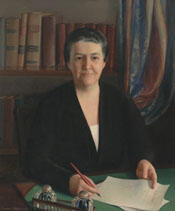
Here you will find contact information for Representative Mary Teresa Norton, including email address, phone number, and mailing address.
| Name | Mary Teresa Norton |
| Position | Representative |
| State | New Jersey |
| District | 13 |
| Party | Democratic |
| Status | Former Representative |
| Term Start | December 7, 1925 |
| Term End | January 3, 1951 |
| Terms Served | 13 |
| Born | March 7, 1875 |
| Gender | Female |
| Bioguide ID | N000153 |
About Representative Mary Teresa Norton
Mary Teresa Norton (née Hopkins; March 7, 1875 – August 2, 1959) was an American Democratic Party politician who represented Jersey City and Bayonne, New Jersey, in the United States House of Representatives from 1925 to 1951. A member of the Democratic Party, she served 13 consecutive terms in Congress, from the 69th through the 81st Congresses, and was the first woman member of the Democratic Party elected to Congress as well as the first woman elected to represent New Jersey, or any state in the Northeast. Over the course of her long tenure, she chaired four House committees and became known as a labor advocate and a supporter of women’s rights.
Norton was born Mary Teresa Hopkins in Jersey City, New Jersey, on March 7, 1875. She attended local parochial schools and then Jersey City High School, later renamed William L. Dickinson High School. Seeking practical training for office work, she enrolled at Packard Business College in New York City, from which she graduated in 1896. Her education prepared her for administrative and organizational roles that would later prove important in her political career. In 1909 she married Robert Francis Norton, and she continued to be known publicly and politically as Mary T. Norton.
Before entering elective office, Norton was active in civic and charitable work in Jersey City. From 1916 to 1927 she served as president of the Queen’s Daughters’ Day Nursery Association of Jersey City, an organization focused on the care of children and support for working families. Her leadership in local social service work helped establish her reputation in the community and brought her into closer contact with the city’s Democratic political network. This experience, combined with her administrative background, laid the groundwork for her entry into formal party politics.
Norton’s political career in the Democratic Party began in earnest in the early 1920s. In 1920 she was appointed to represent Hudson County on the New Jersey Democratic State Committee. The following year she was elected a member of that committee and served as its vice chairperson from 1921 to 1931. She went on to chair the New Jersey Democratic State Committee from 1932 to 1935 and again from 1940 to 1944, playing a key role in organizing and strengthening the party in the state during the New Deal era. She also served as vice chairman of the Hudson County Democratic Committee, further consolidating her influence in local and state politics. In 1922 she was elected to the Hudson County Board of Chosen Freeholders, marking her entry into elective office. Her growing prominence in the party was reflected in her selection as a delegate at large to the Democratic National Conventions of 1924, 1928, 1932, 1936, 1940, 1944, and 1948, and later as a delegate to the International Labor Conference in Paris, France, in 1945.
Norton was elected as a Democrat to the United States House of Representatives in 1924 and took office on March 4, 1925, in the 69th Congress. She originally represented New Jersey’s 12th congressional district, then composed largely of Jersey City and Bayonne, and later, following reapportionment, represented the 13th district. She was reelected to the 70th, 71st, 72nd, 73rd, 74th, 75th, 76th, 77th, 78th, 79th, 80th, and 81st Congresses, serving continuously until January 3, 1951. Her service in Congress spanned a significant period in American history, including the Roaring Twenties, the Great Depression, the New Deal, World War II, and the early Cold War. Throughout these years she participated in the legislative process and represented the interests of her urban, industrial constituents in northern New Jersey.
During her long congressional career, Norton rose to positions of substantial responsibility and influence. She chaired the House Committee on the District of Columbia during the 72nd through 75th Congresses, overseeing legislation affecting the governance and public services of the nation’s capital. She then served as chairperson of the Committee on Labor from the 75th through the 79th Congresses, where she became a prominent advocate for workers’ rights and improved labor standards. In addition, she chaired the Committee on Memorials during the 77th Congress and later the Committee on House Administration in the 81st Congress, one of the key committees responsible for the internal operations of the House. As a labor advocate, she played an important role in the passage of the Fair Labor Standards Act of 1938, working closely with Clara Mortenson Beyer, Secretary of Labor Frances Perkins, and Mary La Dame as part of a group informally known as the “Ladies’ Brain Trust.” Her support for labor protections and for women’s rights made her a leading female voice in Congress during a period when women were still a small minority in the House.
Norton chose not to be a candidate for renomination in 1950 and left Congress at the conclusion of her term on January 3, 1951. After her congressional service, she continued to be involved in public affairs at the national level. From 1951 to 1952 she served as a “Womanpower Consultant” for the Women’s Advisory Committee on Defense Manpower in the United States Department of Labor, advising on the mobilization and utilization of women in the workforce during the early Cold War period. She also remained active in Democratic Party politics; for the 1952 Democratic National Convention, she led an effort to nominate party vice chairwoman India Edwards as a candidate for the vice presidential nomination, reflecting her longstanding commitment to expanding women’s roles in national political leadership.
Mary Teresa Norton died on August 2, 1959, in Greenwich, Connecticut, at the age of 84. She was interred in Holy Name Cemetery in Jersey City, returning in death to the city where she had been born and had launched her public career. Her memoir, titled Madame Congressman, was never published, but her legacy as a pioneering woman in Congress, a powerful figure in New Jersey Democratic politics, and a steadfast advocate for labor and women’s rights endures in the historical record of the United States House of Representatives.