Representative Mason Summers Peters
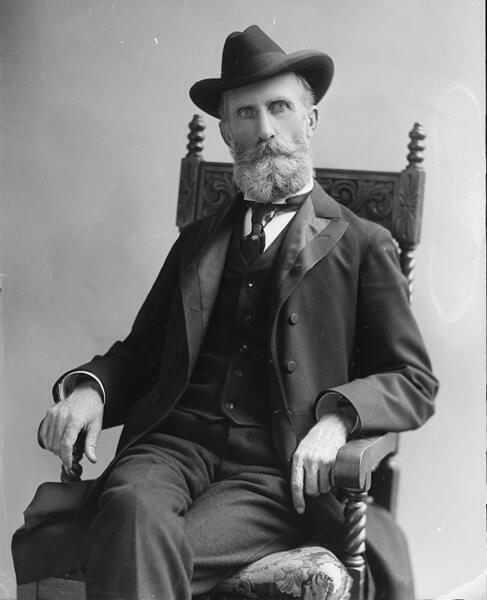
Here you will find contact information for Representative Mason Summers Peters, including email address, phone number, and mailing address.
| Name | Mason Summers Peters |
| Position | Representative |
| State | Kansas |
| District | 2 |
| Party | Populist |
| Status | Former Representative |
| Term Start | March 15, 1897 |
| Term End | March 3, 1899 |
| Terms Served | 1 |
| Born | September 3, 1844 |
| Gender | Male |
| Bioguide ID | P000254 |
About Representative Mason Summers Peters
Mason Summers Peters (September 3, 1844 – February 14, 1914) was a U.S. Representative from Kansas and a member of the Populist Party who served one term in the United States Congress from 1897 to 1899. He served during a significant period in American political history marked by agrarian unrest, monetary policy debates, and the rise of third-party movements, and he participated in the legislative process as a representative of Kansas constituents in the House of Representatives.
Peters, whose name is also recorded as Marcus Summers Peters, was born on September 3, 1844, in Clay County, Missouri, near Kearney. He grew up in a region that would later be notable as the home area of the James brothers and other figures of post–Civil War Missouri, and his early life was shaped by the rural and agricultural character of the county. He pursued his education locally and attended William Jewell College in Liberty, Missouri, an institution founded by Baptist leaders that served as a prominent center of higher learning in western Missouri during the mid-nineteenth century.
After completing his studies, Peters began his professional life in education. He taught in the grammar schools of Clay County, Missouri, from 1867 to 1870, contributing to the development of public education in the post–Civil War era. Transitioning from teaching to public administration, he was elected clerk of the court of Clinton County, Missouri, serving from 1870 to 1874. In this capacity, he gained experience in legal procedure and county governance, responsibilities that helped prepare him for later work in the law and in public office.
While serving in county government, Peters studied law and was admitted to the bar in 1875. He commenced the practice of law in Plattsburg, Missouri, where he built a legal career in a small but active county seat. His work as an attorney in Missouri during the late nineteenth century placed him in close contact with farmers, merchants, and local officials at a time when economic pressures and political discontent were growing in the rural Midwest. Seeking broader opportunities, he moved westward to Wyandotte County, Kansas, in 1886, settling in the Kansas City, Kansas, area, which was emerging as a major commercial and transportation hub.
In Kansas, Peters expanded his activities beyond the practice of law into business and commercial ventures. Reflecting the importance of the livestock and rail industries to the regional economy, he organized the Union Live Stock Commission Company in 1895. This enterprise operated in the stockyards trade that linked Midwestern producers to national markets, and his involvement in such business pursuits deepened his understanding of the economic concerns of farmers, ranchers, and small producers—constituencies that would form the core of the Populist movement in Kansas and surrounding states.
Peters entered national politics as a member of the Populist Party, which had gained strength in Kansas as a vehicle for agrarian and reform interests. He was elected as a Populist to the Fifty-fifth Congress and served as a Representative from Kansas from March 4, 1897, to March 3, 1899. During his single term in the U.S. House of Representatives, he participated in the democratic process and contributed to the legislative work of Congress at a time when issues such as monetary policy, railroad regulation, and agricultural relief were at the forefront of national debate. Representing his Kansas district, he sought to advance the interests of his constituents within the broader Populist program. He was an unsuccessful candidate for reelection in 1898 to the Fifty-sixth Congress, as the Populist Party’s influence began to wane amid changing political alignments.
After leaving Congress, Peters resumed his business and professional pursuits in Kansas City, Kansas. He continued to be active in the commercial life of the region, drawing on his combined experience in law, business, and public service. Remaining in the Kansas City area, he witnessed the continued growth of the metropolitan region that straddled the Kansas–Missouri border and had been central to his career since the 1880s.
Mason Summers Peters died on February 14, 1914, in Kansas City, Missouri. He was interred at Forest Hill Calvary Cemetery in Kansas City. His career, spanning education, county administration, law, business, and national office, reflected the trajectory of many late nineteenth-century Midwestern leaders who moved from local service to participation in the broader political movements that shaped the era.