Senator Matt Whitaker Ransom
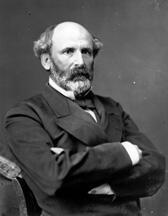
Here you will find contact information for Senator Matt Whitaker Ransom, including email address, phone number, and mailing address.
| Name | Matt Whitaker Ransom |
| Position | Senator |
| State | North Carolina |
| Party | Democratic |
| Status | Former Representative |
| Term Start | January 1, 1872 |
| Term End | March 3, 1895 |
| Terms Served | 4 |
| Born | October 8, 1826 |
| Gender | Male |
| Bioguide ID | R000062 |
About Senator Matt Whitaker Ransom
Matthew Whitaker Ransom (October 8, 1826 – October 8, 1904) was a general in the Confederate States Army during the American Civil War and a Democratic U.S. senator from the state of North Carolina. He served as a Senator from North Carolina in the United States Congress from 1871 to 1895, contributing to the legislative process during four terms in office. His service in Congress occurred during a significant period in American history, and as a member of the Senate he participated in the democratic process and represented the interests of his constituents.
Ransom was born in Warren County, North Carolina, to Robert and Priscilla Whitaker Ransom. He was the elder brother of General Robert Ransom, a Confederate officer, and a cousin to fellow Confederate officer and later U.S. Congressman Wharton J. Green, as well as a cousin to physician and aviation pioneer William Whitney Christmas. He attended the University of North Carolina, graduating in 1847, where he was a member of the Philanthropic Society. On January 19, 1853, he married Martha Anne “Pattie” Exum of Northampton County, North Carolina. The couple resided at Verona, the Exum family’s plantation on the banks of the Roanoke River, and had at least eight children: Matt W. Jr., Joseph E., George E., Esther, Patrick Exum, and Robert, among others.
Before the Civil War, Ransom established himself in public life as a lawyer and politician. He served as North Carolina Attorney General and as a member of the North Carolina General Assembly, roles that brought him into the forefront of state politics in the turbulent years preceding secession. In 1861, as the Southern states organized the Confederacy, he was chosen as one of three commissioners from North Carolina to the Confederate government at Montgomery, Alabama, reflecting his prominence and the confidence placed in him by state leaders.
With the outbreak of the Civil War, Ransom entered Confederate military service. He was commissioned lieutenant colonel of the 1st North Carolina Infantry Regiment and later became colonel of the 35th North Carolina Infantry. This regiment was part of his brother Robert’s brigade, which Matthew Ransom later commanded. He was promoted to brigadier general on June 13, 1863. During the war he saw action in many of its major Eastern Theater engagements, including the battles of Seven Pines, the Seven Days Battles, Antietam, Fredericksburg, Suffolk, Plymouth, Weldon, and the siege of Petersburg. Ransom was wounded three times during the conflict and ultimately surrendered with Confederate forces at Appomattox in April 1865.
After the war, Ransom resumed civilian life in a South undergoing Reconstruction. In 1866 he moved to Weldon, North Carolina, where he worked as a planter and lawyer while rebuilding his fortunes and influence. A slaveholder before emancipation, he also fathered two children with Emma Outland, one of the women of African descent whom he had enslaved. Their children, Douglas Ransom (born 1859) and Alice Ransom, survived into the postwar era; Alice later married Edward “Ned” Rawles, who became one of North Carolina’s first African American state legislators. Ransom continued to maintain Verona, his wife’s family estate, as a working plantation and family residence.
Ransom entered national politics as a Democrat during the Reconstruction era. In 1872 he was elected to the United States Senate to fill the vacancy in the term commencing March 4, 1871. He was re-elected in 1876, 1883, and 1889, serving from January 30, 1872, to March 4, 1895. Across these four terms in office, he represented North Carolina during the end of Reconstruction, the rise of the “New South,” and the realignment of national politics in the late nineteenth century. A member of the Democratic Party, he contributed to the legislative process on issues affecting his state and region and participated in debates over economic development, federal-state relations, and postwar reconciliation. During the 53rd Congress he served briefly as President pro tempore of the Senate, underscoring his seniority and standing among his colleagues.
At the close of his Senate career, Ransom continued in public service on the international stage. In 1895 he was appointed United States Minister to Mexico, a diplomatic post he held until 1897. His tenure coincided with efforts to maintain stable relations and promote economic ties between the United States and Mexico during the long presidency of Porfirio Díaz. Following his term as ambassador, Ransom retired to Verona, his estate near Jackson and Garysburg in Northampton County, North Carolina, where he engaged in agricultural pursuits and local affairs.
Matthew Whitaker Ransom died near Garysburg, North Carolina, on his seventy-eighth birthday, October 8, 1904. He was buried on his estate near Jackson, North Carolina. Verona, the family plantation where he spent much of his adult life and to which he retired after his diplomatic service, was listed on the National Register of Historic Places in 1975, reflecting its association with his long and complex career in law, war, politics, and diplomacy.