Senator Matthew Hale Carpenter
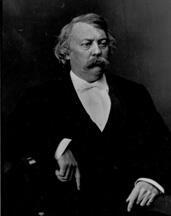
Here you will find contact information for Senator Matthew Hale Carpenter, including email address, phone number, and mailing address.
| Name | Matthew Hale Carpenter |
| Position | Senator |
| State | Wisconsin |
| Party | Republican |
| Status | Former Representative |
| Term Start | March 4, 1869 |
| Term End | December 31, 1881 |
| Terms Served | 2 |
| Born | December 22, 1824 |
| Gender | Male |
| Bioguide ID | C000171 |
About Senator Matthew Hale Carpenter
Matthew Hale Carpenter served as a Senator from Wisconsin in the United States Congress from 1869 to 1881. A member of the Republican Party, Matthew Hale Carpenter contributed to the legislative process during 2 terms in office.
Matthew Hale Carpenter’s service in Congress occurred during a significant period in American history. As a member of the Senate, Matthew Hale Carpenter participated in the democratic process and represented the interests of constituents.
Matthew Hale Carpenter (born Decatur Merritt Hammond Carpenter; December 22, 1824 – February 24, 1881) was an American lawyer, politician, and Wisconsin pioneer. He represented Wisconsin for eight years as a United States senator, from 1869 to 1875 and again from 1879 until his death in 1881. He was recognized as an authority on constitutional law, and made some of the most important legal arguments of 19th-century America, presenting several cases before the United States Supreme Court involving such matters as states’ rights and regulation of corporations; during the American Civil War, he argued many important cases establishing the legal framework for President Abraham Lincoln’s war powers and the postwar Reconstruction Acts. Originally a Democrat, he evolved into a Republican during the Civil War, and helped perpetuate the party’s political machinery in Wisconsin. His sustained support for President Ulysses S. Grant’s administration despite allegations of corruption lost him the backing of reformers, and his legal arguments in favor of Democratic candidate Samuel J. Tilden in the disputed presidential election of 1876 outraged many Republicans. A gifted orator, he was dubbed “the Webster of the West.”