Representative Matthew Griswold
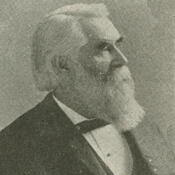
Here you will find contact information for Representative Matthew Griswold, including email address, phone number, and mailing address.
| Name | Matthew Griswold |
| Position | Representative |
| State | Pennsylvania |
| District | 26 |
| Party | Republican |
| Status | Former Representative |
| Term Start | December 7, 1891 |
| Term End | March 3, 1897 |
| Terms Served | 2 |
| Born | June 6, 1833 |
| Gender | Male |
| Bioguide ID | G000487 |
About Representative Matthew Griswold
Matthew Griswold was a Republican member of the United States House of Representatives from Pennsylvania who served two terms in Congress from 1891 to 1897. Known formally as Matthew Griswold (congressman) to distinguish him from other notable figures of the same name, he represented the interests of his Pennsylvania constituents during a significant period in American political and economic history and contributed to the legislative process as a member of the House of Representatives.
Born in 1833, Matthew Griswold belonged to a wider American family in which the name was associated with public service and civic prominence. The Griswold name had earlier been borne by Matthew Griswold (1715–1799), who served as Governor of Connecticut in the late eighteenth century, and in later generations by individuals in the arts, including Matthew Griswold, an American singer and songwriter. Although these men were distinct individuals, the recurrence of the name in public life underscores the broader historical presence of the Griswold family in American affairs.
Details of Matthew Griswold’s early life and education are not extensively documented in the surviving public record, but his eventual rise to national office indicates that he attained the standing and experience necessary to secure election in a competitive political environment. Coming of age in the mid-nineteenth century, he would have been shaped by the era’s major events, including the sectional conflicts preceding the Civil War, the war itself, and the subsequent decades of Reconstruction and industrial expansion that transformed Pennsylvania into a center of manufacturing and commerce.
By the late nineteenth century, Griswold had aligned himself with the Republican Party, which at that time was closely associated with industrial development, protective tariffs, and a strong national government. His political career advanced to the national level when he was elected as a Representative from Pennsylvania to the United States Congress. Taking his seat in 1891, he entered the House of Representatives at a time when the country was grappling with issues such as monetary policy, labor unrest, and the regulation of interstate commerce, all of which bore directly on the interests of his constituents.
Griswold served two consecutive terms in the House, remaining in office until 1897. During these years, he participated in the democratic process by debating and voting on legislation that affected both Pennsylvania and the nation as a whole. His tenure coincided with the Fifty-second and Fifty-third Congresses, a period marked by the economic dislocation surrounding the Panic of 1893 and by contentious debates over currency, tariffs, and federal economic policy. As a Republican representative, he would have been engaged in these discussions from the perspective of his party and the industrial communities he represented.
After leaving Congress in 1897, Matthew Griswold lived into the early twentieth century, witnessing the continued evolution of the United States into a modern industrial power. He died in 1919, closing a life that had spanned from the antebellum era through World War I. Remembered primarily for his service as a U.S. Congressman from Pennsylvania, his career forms part of the broader historical record of Republican leadership during a transformative period in American history.