Representative Matthew Joseph Merritt
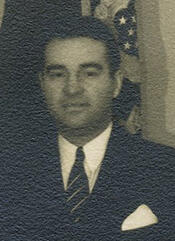
Here you will find contact information for Representative Matthew Joseph Merritt, including email address, phone number, and mailing address.
| Name | Matthew Joseph Merritt |
| Position | Representative |
| State | New York |
| District | At-Large |
| Party | Democratic |
| Status | Former Representative |
| Term Start | January 3, 1935 |
| Term End | January 3, 1945 |
| Terms Served | 5 |
| Born | April 2, 1895 |
| Gender | Male |
| Bioguide ID | M000661 |
About Representative Matthew Joseph Merritt
Matthew Joseph Merritt (April 2, 1895, New York City – September 29, 1946, Malba, Queens, New York City) was an American businessman, World War I veteran, and Democratic politician from New York who served five terms in the United States House of Representatives from 1935 to 1945. Born in New York City, he was educated in the public and parochial schools of the city, laying the foundation for a career that combined military service, private enterprise, and public office.
During World War I, Merritt enlisted in the United States Army and served in the American Expeditionary Forces. He rose to the rank of sergeant in Company C, 327th Tank Battalion, a unit of the newly organized Tank Corps. His service placed him among the early American soldiers trained in armored warfare, a new and evolving branch of the military at the time. This wartime experience contributed to his public standing and informed his later work as a legislator during another era of global conflict.
Following his discharge from military service, Merritt entered private business in New York City. From 1926 to 1933 he engaged in the real estate and insurance businesses, building a professional reputation in those fields. As the Great Depression deepened, he moved into public service related to economic recovery, working with the New York loan agency of the Reconstruction Finance Corporation in 1933 and 1934. In that role, he participated in efforts to stabilize businesses and financial institutions, experience that would prove relevant to his subsequent legislative career during the New Deal period.
Merritt was elected as a Democrat to the United States House of Representatives in 1934, and was subsequently re-elected in 1936, 1938, 1940, and 1942. He represented New York at-large in the 74th, 75th, 76th, 77th, and 78th Congresses, serving from January 3, 1935, to January 3, 1945. As a member of the House of Representatives during a significant period in American history, he participated in the legislative process at the height of the New Deal and throughout most of World War II. During his five terms in office, Merritt contributed to the democratic process and represented the interests of his New York constituents while the federal government expanded its role in economic recovery, social welfare, and wartime mobilization.
Merritt’s congressional service coincided with major national debates over economic reform, labor policy, social security, and foreign affairs as the United States moved from isolation to active participation in World War II. As a Democratic member of Congress during the administrations of Franklin D. Roosevelt, he was part of the legislative majority that considered and enacted many of the central measures of that era. Although detailed records of his specific committee assignments and sponsored legislation are limited in the surviving summaries, his decade in office placed him at the center of federal policymaking during one of the most consequential periods of the twentieth century.
After leaving Congress in January 1945, Merritt returned to private life in New York. He resumed his work in the real estate and insurance businesses, continuing the professional pursuits he had maintained before his election to Congress. He lived in Malba, a neighborhood in Queens, New York City, during his later years, remaining connected to the metropolitan area that had shaped his early life and political career.
Matthew Joseph Merritt died on September 29, 1946, in Malba, Queens, New York City. He was interred at Mount St. Mary’s Cemetery in Whitestone, New York. His career reflected a trajectory common to many mid-twentieth-century legislators: military service in World War I, engagement in business and economic recovery efforts during the Great Depression, and a decade of congressional service during the transformative years of the New Deal and World War II.