Representative Maude Elizabeth Kee
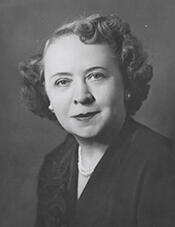
Here you will find contact information for Representative Maude Elizabeth Kee, including email address, phone number, and mailing address.
| Name | Maude Elizabeth Kee |
| Position | Representative |
| State | West Virginia |
| District | 5 |
| Party | Democratic |
| Status | Former Representative |
| Term Start | January 3, 1951 |
| Term End | January 3, 1965 |
| Terms Served | 7 |
| Born | June 7, 1895 |
| Gender | Female |
| Bioguide ID | K000040 |
About Representative Maude Elizabeth Kee
Maude Elizabeth Kee (née Simpkins; June 7, 1895 – February 15, 1975), known generally as Elizabeth Kee, was a U.S. Democratic politician and the first woman elected to the U.S. House of Representatives from West Virginia. She represented West Virginia’s Fifth Congressional District from July 17, 1951, to January 3, 1965, serving seven terms in the 82nd through the 88th Congresses. Over the course of her congressional career she became particularly known for her work on veterans’ affairs and unemployment issues, and for her efforts to promote economic redevelopment in southern West Virginia.
Kee was born Maude Elizabeth Simpkins on June 7, 1895, in Radford, Virginia, one of eleven children of John Jesse Wade Simpkins and Cora French Hall Simpkins. Raised in a conservative household, she was exposed early to strong traditional and religious views, which she increasingly questioned as she matured. Although brought up in the strict Baptist faith of her parents, she rejected that upbringing and converted to Catholicism, a decision that reflected both her independence of mind and willingness to challenge prevailing norms in her family and community.
During her youth, Kee moved with her family to Roanoke, Virginia, where she pursued business training at the National Business College. By around 1916 she had entered the workforce, first serving as a secretary in the business office of the Roanoke Times and later working as a court reporter for a local law firm. These early positions provided her with practical experience in administration, communications, and legal procedure, skills that would later prove valuable in her political and congressional career.
Kee’s early adult life included a brief and unsuccessful first marriage to James Alan Frazier, a railway clerk. The marriage ended in divorce, and during the proceedings she became acquainted with attorney John Kee, who represented Frazier. She later married John Kee, and she, her new husband, and her two children from her first marriage settled in Bluefield, West Virginia. John Kee entered public life and was elected to the U.S. House of Representatives from West Virginia’s Fifth Congressional District in 1932. From the beginning of his congressional service, Elizabeth Kee worked closely with him as his executive secretary, a role she held until his death in 1951. In this capacity she gained extensive familiarity with legislative processes, constituent services, and the political concerns of the district.
Following John Kee’s death in 1951, Elizabeth Kee sought to continue his work in Congress. Running as a Democrat, she won a special election to fill the remainder of his term and thereby became the first woman elected to the U.S. House of Representatives from West Virginia. She was subsequently elected to six full terms, serving continuously from July 17, 1951, to January 3, 1965. As a member of the House of Representatives, Kee participated actively in the democratic process and represented the interests of her constituents during a significant period in American history marked by the Cold War, the early civil rights movement, and shifting economic conditions in Appalachia.
In Congress, Kee served on several key committees, including the House Government Operations Committee, the Interior and Insular Affairs Committee, and the Veterans’ Affairs Committee. On the latter, she chaired the Veterans’ Hospitals Subcommittee, underscoring her specialization in veterans’ issues. She also focused on unemployment and economic hardship in her largely coal-producing district. During the Eisenhower Administration she struggled to secure federal support for redevelopment initiatives in southern West Virginia, but she became an early and strong supporter of John F. Kennedy’s 1960 presidential campaign. After Kennedy’s election, she worked to channel federal resources to her state, notably through the Accelerated Public Works Act and the Area Redevelopment Administration, which directed millions of dollars in economic assistance and job-creation projects to West Virginia.
Kee’s voting record on civil rights reflected a moderate stance for a Southern and border-state Democrat of her era. She declined to sign the 1956 Southern Manifesto, a document opposing the Supreme Court’s decision in Brown v. Board of Education. She voted in favor of the Civil Rights Act of 1957 and the Civil Rights Act of 1960, as well as the Twenty-fourth Amendment to the U.S. Constitution, which abolished the poll tax in federal elections. However, she voted “present” on the landmark Civil Rights Act of 1964, indicating neither support nor opposition on the final measure. Throughout her tenure, she remained closely identified with veterans’ benefits, employment programs, and regional economic development, while maintaining a pragmatic approach to the evolving national debate over civil rights.
Maude Elizabeth Kee did not seek re-election in 1964, concluding her congressional service at the end of the 88th Congress on January 3, 1965. She was succeeded in the House by her son, James Kee, thereby extending the family’s representation of West Virginia’s Fifth District. After retiring from public office, she returned to Bluefield, West Virginia, where she lived quietly for the remainder of her life. She died there on February 15, 1975. In recognition of her service and pioneering role as West Virginia’s first female member of Congress, the Elizabeth Kee Federal Building in Bluefield, West Virginia, was named in her honor.