Representative Maurice Connolly
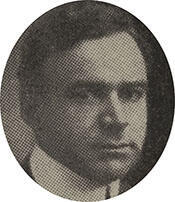
Here you will find contact information for Representative Maurice Connolly, including email address, phone number, and mailing address.
| Name | Maurice Connolly |
| Position | Representative |
| State | Iowa |
| District | 3 |
| Party | Democratic |
| Status | Former Representative |
| Term Start | April 7, 1913 |
| Term End | March 3, 1915 |
| Terms Served | 1 |
| Born | March 13, 1877 |
| Gender | Male |
| Bioguide ID | C000699 |
About Representative Maurice Connolly
Maurice Connolly (March 13, 1877 – May 28, 1921) was an American lawyer, businessman, military aviation officer, and Democratic politician who represented Iowa’s 3rd congressional district in the United States House of Representatives from March 4, 1913, to March 3, 1915. Elected in 1912 during a period of significant political realignment, he served a single term in Congress before relinquishing his seat to make an unsuccessful bid for the United States Senate in 1914. He later served as an aviation officer in World War I and died in a plane crash in 1921.
Connolly was born in Dubuque, Iowa, on March 13, 1877, the son of Tom Connolly, a successful carriage maker, and Ellen Brown Connolly. He attended the common schools of Dubuque before pursuing higher education in the East. Connolly graduated from Cornell University in Ithaca, New York, in 1897, where he was a member of the Quill and Dagger society, an honorary senior society recognizing leadership and scholarship. He then studied law in New York City, earning his degree from New York University School of Law in 1898 at the age of twenty-one. Admitted to the bar in 1899, he undertook postgraduate studies at Balliol College, Oxford, in England and at the University of Heidelberg in Germany, further broadening his legal and intellectual training.
In 1903, following the sudden death of his father, Connolly returned to Dubuque to assume ownership and management of the Connolly Carriage Company, continuing the family’s long-established business. Under his direction, he remained active in local commercial affairs and later expanded his interests into the insurance and banking fields. He became associated with the Dubuque Fire and Insurance Company, eventually serving in an executive capacity. These business activities, combined with his legal background and education, helped establish his prominence in Dubuque and provided a foundation for his entry into Democratic Party politics in a region long dominated by Republicans.
Connolly emerged as a significant Democratic candidate in the 1912 election cycle, running for Congress from Iowa’s 3rd congressional district against incumbent Republican Charles E. Pickett. His home city of Dubuque was a Democratic-leaning enclave on the edge of a strongly Republican district that, in his lifetime, had elected only Republicans to Congress. Statewide, Republicans had captured either all or all but one of Iowa’s eleven House seats in every election since 1890, while also holding both U.S. Senate seats. In 1912, however, the Republican vote was split between President William Howard Taft and former President Theodore Roosevelt, who ran on the Progressive “Bull Moose” ticket. Connolly closely aligned himself with Democratic presidential nominee Woodrow Wilson and, along with Democrats Irvin S. Pepper in the 2nd district and Sanford Kirkpatrick in the 6th district, was elected to the Sixty-third Congress. As a member of the House of Representatives from 1913 to 1915, Connolly participated in the legislative process during a transformative period in American political and economic life, representing the interests of his Iowa constituents as a member of the Democratic majority.
The ratification of the Seventeenth Amendment in 1913, providing for the direct election of U.S. senators, reshaped Iowa politics and soon altered Connolly’s career trajectory. In 1913, Congressman Irvin S. Pepper, then thirty-seven and widely regarded as the leading Democratic contender to challenge incumbent Republican Senator Albert B. Cummins, died unexpectedly in December. Connolly entered the race for the Democratic nomination for the U.S. Senate in 1914, choosing not to seek reelection to his House seat. He defeated Edwin T. Meredith, a prominent publisher and future U.S. Secretary of Agriculture, in the Democratic primary but was defeated by Senator Cummins in the general election. In the 3rd district, Connolly was succeeded in the House by Republican Burton E. Sweet, who defeated Democrat J. C. Murtagh, restoring the seat to Republican control.
After his Senate defeat, Connolly returned to Dubuque and resumed leadership of the Connolly Carriage Company while continuing his work in insurance and banking. He remained active in Democratic politics, serving as an at-large delegate to the 1916 Democratic National Convention. President Woodrow Wilson later appointed him postmaster of Dubuque, a position that reflected both his party loyalty and his standing in the community. These roles kept Connolly engaged in public service at the local and national levels even after his departure from Congress.
With the entry of the United States into World War I in 1917, Connolly enlisted in the military and entered the Aviation Section of the U.S. Signal Corps. He earned his flight wings and rose from captain to major, serving in a series of important administrative and command assignments at key training installations. Connolly served as adjutant, executive officer, and commanding officer at Chanute Field in Rantoul, Illinois; Wilbur Wright Field in Dayton, Ohio; and Hazelhurst Field in Mineola, New York. After the armistice in November 1918, he was assigned to Washington, D.C., where he assisted Major General William L. Kenly, the first head of the United States Army Air Service, in the organization and administration of the nation’s emerging air arm. Connolly also participated in one of the wartime “flying circuses,” groups of aviators who performed aerial demonstrations to promote and raise funds for the Liberty Loan program. He and future New York City mayor Fiorello H. La Guardia were the only former members of Congress to earn their wings as military aviators during World War I.
Following the war, Connolly remained closely connected to aviation. He became the Washington representative for the Curtiss Aeroplane and Motor Company, one of the leading American aircraft manufacturers of the era, working at the intersection of industry, government, and the rapidly developing field of military and civil aviation. On May 28, 1921, he was killed in an airplane accident near Indian Head, Maryland. Connolly was one of two civilian passengers, along with five Army Air Service officers, including Medal of Honor recipient Lieutenant Colonel Archie Miller, who died when their Army Curtiss Eagle, converted for use as an air ambulance, crashed during a wind and electrical storm while returning to Washington, D.C. At the time, the crash was regarded as the worst aviation accident in United States history. Connolly was 44 years old at the time of his death, closing a career that had spanned law, business, elective office, and pioneering service in American military aviation.