Senator Max Baucus
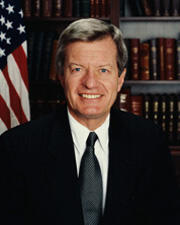
Here you will find contact information for Senator Max Baucus, including email address, phone number, and mailing address.
| Name | Max Baucus |
| Position | Senator |
| State | Montana |
| Party | Democratic |
| Status | Former Representative |
| Term Start | January 14, 1975 |
| Term End | February 6, 2014 |
| Terms Served | 9 |
| Born | December 11, 1941 |
| Gender | Male |
| Bioguide ID | B000243 |
About Senator Max Baucus
Maxwell Sieben Baucus (né Enke; born December 11, 1941) is an American politician and diplomat who represented Montana in the United States Senate from 1978 to 2014 and later served as the 11th United States Ambassador to the People’s Republic of China from 2014 to 2017. He was born in Helena, Montana, and spent part of his childhood on his family’s ranch near Helena before attending school in California and Washington, D.C. His parents divorced when he was young, and he was adopted by his stepfather, John J. Baucus, taking his surname. He graduated from Gonzaga Preparatory School in Spokane, Washington, and maintained close ties to Montana through his extended family and the family ranch.
Baucus attended Stanford University, where he earned a Bachelor of Arts degree in economics in 1964. He remained at Stanford for law school, receiving his Juris Doctor in 1967. After finishing law school, Baucus spent two years working as a staff attorney for the Civil Aeronautics Board and then two years as a lawyer at the Securities and Exchange Commission in Washington, D.C. In 1971 he returned to his native Montana, where he served as executive director of the state’s Constitutional Convention and opened a law office in Missoula. His work on the convention and his legal practice helped establish his reputation in state politics and public policy.
Baucus entered elective office in 1972, when he was elected to the Montana House of Representatives as a state representative from Missoula, serving from 1973 to 1974. In November 1974 he was elected to the United States House of Representatives from Montana’s 1st congressional district and was re-elected in 1976. During his tenure in the House, he focused on issues important to Montana, including natural resources, agriculture, and public lands, and he quickly emerged as a rising figure in the state’s Democratic Party. His early congressional service laid the groundwork for his subsequent statewide campaigns and his long career in the Senate.
On November 7, 1978, Baucus was elected to the United States Senate for the term beginning January 3, 1979. Before that term commenced, Montana’s Democratic governor, Thomas Lee Judge, appointed him to the seat on December 15, 1978, to fill the brief vacancy created by Senator Paul G. Hatfield’s resignation. A member of the Democratic Party, Baucus went on to serve in the Senate for over 35 years, making him the longest-serving U.S. senator in Montana history. On April 23, 2013, a Democratic official confirmed that Baucus would not seek a seventh term, and he left the Senate at the conclusion of his term in January 2015.
Throughout his Senate career, Baucus was generally regarded as a conservative or centrist Democrat who frequently broke with his party on taxes, environmental regulation, health care, and gun control. The website That’s My Congress gave him a 23 percent rating on the progressive issues it tracked, while the United States Chamber of Commerce rated him as having a 74 percent pro-business voting record. He twice voted to make filing bankruptcy more difficult for debtors, supporting measures in July 2001 and March 2005 that restricted personal bankruptcy and added means-testing. He voted for the Bush tax cuts in 2001, usually opposed efforts to repeal portions of those tax cuts, and in 2008 voted in favor of permanently repealing the estate tax. At the same time, he voted in March 2005 against repealing tax subsidies benefiting companies that outsource U.S. jobs offshore. NARAL Pro-Choice America’s political action committee endorsed him during his 2008 election campaign, reflecting his generally pro-choice stance on abortion rights.
As a senior senator, Baucus held several influential committee assignments. He served as chairman of the Senate Committee on Finance, where he played a central role in federal tax, trade, and health care policy and was a key architect of the Affordable Care Act. He also chaired the Joint Committee on Taxation, served on the Senate Committee on Agriculture, Nutrition and Forestry and the Senate Committee on Environment and Public Works, and chaired the Subcommittee on Transportation and Infrastructure. On January 4, 2007, he wrote an editorial in The Wall Street Journal calling on Democrats to renew President George W. Bush’s fast-track authority for international trade deals, a position that drew criticism in Montana; the Montana State Senate responded by passing a resolution, 44–6, urging Congress to replace the fast-track system. On October 27, 2009, he introduced the Foreign Account Tax Compliance Act of 2009 together with Representative Charles Rangel, a measure aimed at combating offshore tax evasion. On August 9, 2011, Senate Majority Leader Harry Reid appointed Baucus to the United States Congress Joint Select Committee on Deficit Reduction.
Baucus’s role in health care reform drew particular national attention. As chairman, the Baucus-headed Finance Committee was widely viewed by advocates and news organizations as the toughest obstacle for President Barack Obama’s health care priorities, in part because it contained moderate and conservative members and in part because many members, including Baucus, had close ties to the health care and insurance industries. His committee received substantial campaign contributions from those sectors, and several former staffers became lobbyists for health care interests, prompting criticism and charges of conflicts of interest. Baucus described his goal as a “uniquely American solution” to health reform and argued that the country was not yet ready for a single-payer system, a phrase that mirrored language used by the insurance trade association America’s Health Insurance Plans (AHIP), which promoted private insurance over a government-backed program. Critics noted that Medicare already functioned as a de facto single-payer system. Years after his departure from the Senate, Baucus stated that it would make sense to seriously consider a single-payer system. In 2013 he was sharply critical of the implementation of the Affordable Care Act, warning that it could become a “train-wreck” and expressing concern that small businesses did not understand the law’s requirements, even as he emphasized his strong support for the law’s goals, noting that he had spent two years working on it and wanted it to succeed.
Baucus’s electoral campaigns and fundraising practices were also the subject of scrutiny. The 2002 Montana Senate race drew national attention when his Republican opponent, state senator Mike Taylor, accused Baucus of implying in a campaign advertisement that Taylor was gay. The ad, paid for by the Democratic Senatorial Campaign Committee rather than the Baucus campaign, alleged that Taylor had embezzled funds from a cosmetology school he once owned and showed footage from the early 1980s of Taylor massaging another man’s face while wearing a tight suit with an open shirt. Taylor withdrew from the race, and Baucus won re-election with 63 percent of the vote. In his 2008 re-election campaign, Baucus raised a record amount of money, with 91 percent of contributions coming from individuals living outside Montana. According to OpenSecrets, his 2008 campaign raised $11.6 million, only 13 percent of which came from Montana donors; the remainder included millions from health care and other industries overseen by the Finance Committee and his other assignments. As a result of this significant fundraising advantage, in the week he announced his intention to run for re-election he opened eight state campaign offices—one more than his number of official Senate offices in the state—and hired 35 full-time campaign staff members. He won re-election in 2008 in a landslide, receiving 73 percent of the vote and carrying every county in Montana.
Over the course of his Senate career, Baucus cultivated an image of close connection to Montana’s workplaces and industries. He frequently visited places of employment within the state and personally participated in activities he called “Work Days,” during which he would spend time working alongside constituents in various jobs. His voting record reflected a blend of business-friendly positions and populist concerns about outsourcing and trade, and he often positioned himself as a pragmatic dealmaker. At the same time, his long tenure and committee influence led to recurring criticism that he was too closely aligned with corporate and industry interests, particularly in the health insurance and pharmaceutical sectors. His career also drew controversy when he faced charges of conflicts of interest related to his ties to those industries and for his nomination of his girlfriend to be a U.S. Attorney, an episode that raised ethical questions about his use of political influence.
On December 20, 2013, President Barack Obama announced his intent to nominate Baucus as U.S. Ambassador to the People’s Republic of China, to succeed Gary Locke. Obama formally submitted the nomination to the Senate on January 7, 2014. The Senate Committee on Foreign Relations held a hearing on January 28, 2014, and reported the nomination to the full Senate on February 4, 2014. On February 6, 2014, the Senate confirmed Baucus by a vote of 96–0, with Baucus himself voting “Present.” He was sworn in by Vice President Joe Biden on February 21, 2014, officially ending Locke’s ambassadorship. Although Baucus did not speak Mandarin Chinese, which was historically unusual for the post, he brought decades of experience in trade and international economic policy to the position. He served as ambassador until January 2017, when his tenure concluded as President Donald Trump nominated Iowa Governor Terry Branstad to serve as the next U.S. Ambassador to China.