Representative Melville Clyde Kelly
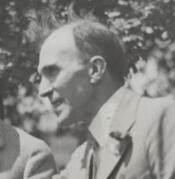
Here you will find contact information for Representative Melville Clyde Kelly, including email address, phone number, and mailing address.
| Name | Melville Clyde Kelly |
| Position | Representative |
| State | Pennsylvania |
| District | 31 |
| Party | Republican |
| Status | Former Representative |
| Term Start | April 7, 1913 |
| Term End | January 3, 1935 |
| Terms Served | 10 |
| Born | August 4, 1883 |
| Gender | Male |
| Bioguide ID | K000076 |
About Representative Melville Clyde Kelly
Melville Clyde Kelly (August 4, 1883 – April 29, 1935) was an American politician, publisher, and member of the Republican Party who served as a Representative from Pennsylvania in the United States Congress from 1913 to 1935. Over the course of ten terms in the House of Representatives, he contributed to the legislative process during a significant period in American history and represented the interests of his constituents in western Pennsylvania.
Kelly was born in Bloomfield, Muskingum County, Ohio, on August 4, 1883. He was educated in Ohio and attended Muskingum College in New Concord, Ohio, an institution that provided the foundation for his later work in journalism and public service. His early years in the Midwest and his collegiate experience helped shape his interest in public affairs and communication, which would become central to his professional life.
By the early twentieth century, Kelly had moved to Pennsylvania and embarked on a career in newspaper publishing. In 1903 he became engaged in newspaper work in Braddock, Pennsylvania, a growing industrial community near Pittsburgh. Demonstrating entrepreneurial initiative, he established the Braddock Leader in 1904. In 1907 he expanded his publishing interests by purchasing the Daily News and the Evening Herald and consolidating them into a single publication, the Daily News-Herald. His prominence as a publisher in Braddock brought him into close contact with local political and economic issues and helped launch his political career.
Kelly entered elective office at the state level as a member of the Pennsylvania House of Representatives, serving from 1910 to 1913. In that role he gained legislative experience and built a political base that would support his move to national office. In 1912 he was elected as a Republican to the Sixty-third Congress, beginning his first term in the U.S. House of Representatives on March 4, 1913. He served this initial term as a Republican Representative from Pennsylvania but was an unsuccessful candidate for reelection in 1914. After leaving Congress, he returned to his newspaper enterprises in Braddock, continuing his involvement in publishing and local affairs.
Kelly reentered national politics in the context of the Progressive Era realignments. He was elected as a Progressive to the Sixty-fifth Congress, returning to the U.S. House of Representatives in 1917. After this term, he was reelected as a Republican to the eight succeeding Congresses, serving continuously through the Sixty-sixth to the Seventy-third Congresses. His congressional service thus extended, with the exception of the brief interruption after 1914, from 1913 to 1935. During these years he participated in the democratic process in the House of Representatives through World War I, the 1920s, and the early years of the Great Depression, aligning primarily with Republican policies while having earlier ties to the Progressive movement. He was an unsuccessful candidate for reelection in 1934, bringing his long tenure in Congress to a close.
During his time in Congress, Kelly became particularly noted for his role in the development of commercial aviation policy. He introduced a resolution to permit private contracting of airmail service, legislation that became known as the Air Mail Act of 1925. Signed into law on February 2, 1925, this act authorized the Post Office Department to contract with private airlines to carry mail, thereby encouraging private enterprise in aviation. The law prompted many companies, including Boeing, Douglas, and Pratt & Whitney, to venture into the aviation field. The Airmail Act of 1925 is widely regarded as a foundational measure upon which the modern commercial aviation industry was built, and Kelly’s sponsorship of this legislation stands as his most significant national legislative achievement.
After his congressional career ended, Kelly resumed his former business pursuits in the newspaper and publishing field in Pennsylvania. He remained associated with the communities he had long represented and continued to be identified with both journalism and public service. On April 29, 1935, he was accidentally shot while cleaning a rifle and died in a hospital at Punxsutawney, Pennsylvania. Melville Clyde Kelly was interred in Mahoning Union Cemetery near Marchand, Pennsylvania, closing the life of a publisher-legislator whose work in Congress, particularly on airmail and aviation, had a lasting impact on American transportation and commerce.