Representative Melvin Riley Baldwin
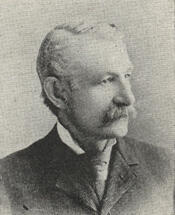
Here you will find contact information for Representative Melvin Riley Baldwin, including email address, phone number, and mailing address.
| Name | Melvin Riley Baldwin |
| Position | Representative |
| State | Minnesota |
| District | 6 |
| Party | Democratic |
| Status | Former Representative |
| Term Start | August 7, 1893 |
| Term End | March 3, 1895 |
| Terms Served | 1 |
| Born | April 12, 1838 |
| Gender | Male |
| Bioguide ID | B000094 |
About Representative Melvin Riley Baldwin
Melvin Riley Baldwin (April 12, 1838 – April 15, 1901) was an American railroad engineer, Civil War veteran, and Democratic politician who served one term as a Representative from Minnesota in the United States Congress from 1893 to 1895. He was born near Chester, Vermont, on April 12, 1838, and in 1847 moved with his parents to Oshkosh, in what was then the Wisconsin Territory. There he attended the local common schools and, showing early academic promise, entered Lawrence University in Appleton, Wisconsin, in 1855. Although he initially studied law, he ultimately chose to pursue civil engineering as his profession, a decision that would shape much of his later career.
Before the outbreak of the Civil War, Baldwin was employed as a civil engineer on the Chicago & North Western Railway. His work on the expanding railroad network of the Midwest provided him with technical expertise and managerial experience. This early engagement with transportation infrastructure laid the groundwork for his later prominence in railroad operations in the postwar period and helped establish his reputation as a capable engineer and administrator.
With the onset of the Civil War, Baldwin left his railroad position and enlisted on April 19, 1861, as a private in Company E of the 2nd Wisconsin Infantry Regiment, one of the regiments that formed part of the famed Iron Brigade of the Army of the Potomac. He rose through the ranks and was commissioned captain of his company. Baldwin served through most of the war with the Iron Brigade, participating in some of its most significant campaigns. At the Battle of Gettysburg he was captured by Confederate forces and subsequently confined as a prisoner of war in several locations, including Libby Prison in Richmond, Virginia, as well as facilities at Macon, Georgia, and at Charleston and Columbia, South Carolina. He remained a prisoner for approximately eighteen months before the conclusion of his military service.
Following the war, Baldwin resumed his work in the railroad industry, engaging in operative railway work in Kansas. He advanced to the position of general superintendent, a role he held for four years, overseeing operations and contributing to the development of regional rail lines during a period of rapid expansion in the American West. In 1885 he moved to Duluth, Minnesota, a growing port and rail hub on Lake Superior. There he continued his involvement in railroad affairs and became increasingly active in public life, aligning himself with the Democratic Party and emerging as a prominent figure in the community.
Baldwin’s political career culminated in his election as a Democrat to the Fifty-third Congress, representing Minnesota in the United States House of Representatives. His term extended from March 4, 1893, to March 3, 1895. During this single term in office, he participated in the legislative process at a time of significant economic and political change in the United States, including the aftermath of the Panic of 1893 and debates over monetary policy and economic reform. As a member of the House of Representatives, Baldwin represented the interests of his Minnesota constituents and contributed to the work of the Democratic majority in that Congress. He sought reelection in 1894 to the Fifty-fourth Congress but was unsuccessful, thus concluding his formal congressional service after one term.
Even after leaving Congress, Baldwin remained engaged in public affairs. From 1894 to 1897 he served as chairman of the Chippewa Indian Commission, a federal body charged with negotiating and administering matters related to the lands and rights of the Chippewa (Ojibwe) people. In this capacity he played a role in implementing federal Indian policy during a period marked by allotment and significant changes in tribal landholdings. His work on the commission extended his record of public service beyond the confines of electoral office and reflected the broader responsibilities entrusted to former members of Congress.
In November 1897, Baldwin traveled to Alaska, likely drawn by the opportunities and economic activity associated with the late-nineteenth-century development of the region. In his later years he faced serious financial difficulties, and on April 15, 1901, while in Seattle, Washington, he died by suicide as a result of financial failure. He was 63 years old. Baldwin’s body was returned to Minnesota, and he was interred in Forest Hill Cemetery in Duluth, Minnesota, the city that had been his home during his mature professional and political life.