Representative Menalcus Lankford
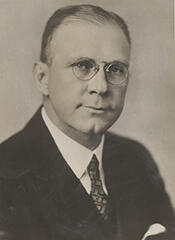
Here you will find contact information for Representative Menalcus Lankford, including email address, phone number, and mailing address.
| Name | Menalcus Lankford |
| Position | Representative |
| State | Virginia |
| District | 2 |
| Party | Republican |
| Status | Former Representative |
| Term Start | April 15, 1929 |
| Term End | March 3, 1933 |
| Terms Served | 2 |
| Born | March 14, 1883 |
| Gender | Male |
| Bioguide ID | L000080 |
About Representative Menalcus Lankford
Menalcus (“Mack”) Lankford (March 14, 1883 – December 27, 1937) was a Virginia lawyer, naval aviator, and Republican politician who served two terms as a United States Representative from Virginia’s 2nd congressional district, whose largest city is Norfolk. His service in Congress, from 1929 to 1933, occurred during a significant period in American history, spanning the onset of the Great Depression and the final years of the Hoover administration.
Lankford was born on March 14, 1883, on the Bowers plantation near Franklin in Southampton County, Virginia, to Dr. Livius Lankford (1854–1917) and the former Mary Conway Burnley (1851–1895). He had an elder brother, Dr. Burnley Lankford (1880–1926), who also survived to adulthood. During his childhood the family moved from Southampton County to Norfolk, Virginia, where he attended local schools and graduated from the segregated Norfolk High School. He then pursued higher education in the state capital and elsewhere, graduating from the University of Richmond in 1904 and from the law department of the University of Virginia at Charlottesville in 1906, preparing for a professional career in the law.
After completing his legal studies, Lankford was admitted to the Virginia bar in 1906 and began practicing law in Norfolk, where he established himself as a member of the city’s legal community. In 1909 he married Nancy Waddill, the daughter of Congressman and judge Edmund Waddill Jr. and granddaughter of Edmund Waddill, who had long served as clerk of the Charles City County circuit court. This marriage connected Lankford to a prominent Virginia legal and political family and further anchored his professional and political life in the Tidewater region.
During the First World War, Lankford served his country as an ensign in the aviation service of the United States Navy, becoming a naval aviator at a time when military aviation was still in its early development. After the war he returned to Norfolk and resumed his legal practice while also turning his attention to partisan politics. A committed Republican in a state dominated by Democrats, he worked to revitalize the Republican Party in Tidewater Virginia. He ran unsuccessfully for Congress in 1920 for the Sixty-seventh Congress and again in 1924 for the Sixty-ninth Congress, but these early defeats did not deter his political ambitions.
Lankford’s persistence was rewarded in the 1928 election, when he was elected as a Republican to the U.S. House of Representatives from Virginia’s 2nd congressional district, becoming the first Republican elected in that district in three decades. In that election he defeated Democrat Joseph T. Deal and Independent E. L. Breden, winning 55.89 percent of the vote. He took his seat in the Seventy-first Congress on March 4, 1929. In 1930 he was re-elected to the Seventy-second Congress, again defeating Democrat Joseph T. Deal, this time with 54.41 percent of the vote. As a member of the House of Representatives from 1929 to 1933, Lankford participated in the legislative process during two terms in office, representing the interests of his constituents in Norfolk and the surrounding region. Among his notable achievements was securing a new post office and courthouse for Norfolk and obtaining almost $2 million in construction contracts for federal buildings in the city, reflecting his focus on federal investment and infrastructure in his district.
Lankford’s congressional service unfolded amid shifting political currents and the deepening economic crisis of the Great Depression. Within the Republican Party, he was regarded as an influential figure in federal appointments affecting his region. After President Herbert Hoover promoted U.S. District Judge D. Lawrence Groner—who had ruled for Black plaintiffs in two voting-rights cases—to the U.S. Court of Appeals for the District of Columbia Circuit, some observers expected that Lankford might be nominated to fill the vacancy as U.S. District Judge for the Eastern District of Virginia, a court on which his father-in-law had served. However, with Republicans holding only a slim majority in the House after the 1930 elections, Lankford’s vote became crucial on various matters, and he instead worked for the nomination of his former campaign manager and Assistant U.S. Attorney, Luther B. Way, to the district court judgeship. In 1932, as the Great Depression intensified and the Democratic Byrd Organization consolidated its power in Virginia, the state held an at-large election for all of its congressional seats. The at-large system produced a Democratic sweep, and Lankford was defeated for re-election by the statewide Democratic ticket, ending his service in Congress on March 3, 1933.
Following his departure from the House, Lankford remained active in Republican politics and public service. He served as a delegate to the Republican National Conventions in both 1932 and 1936, maintaining his role in national party affairs even after losing his seat. After his at-large election defeat in 1932, President Hoover appointed him Referee in Bankruptcy for the Norfolk division of the United States District Court for the Eastern District of Virginia. In that capacity he reported to District Judge Luther B. Way, whose elevation to the bench he had previously supported while in Congress. Lankford held the bankruptcy refereeship from his appointment until his death, continuing his involvement in the federal judicial system and the administration of bankruptcy law in the Tidewater region.
Menalcus Lankford died at his home in Norfolk on December 27, 1937, at the age of 54, after suffering a heart attack. His funeral, held in his Baptist church, was very well attended, reflecting his prominence in the community and the respect he had earned through his legal, military, and political careers. He was interred in Norfolk’s historic Forest Lawn Cemetery, closing the life of a Virginia lawyer, naval aviator, and Republican congressman who had played a notable role in the political life of his state during the early twentieth century.