Representative Merrill Moores
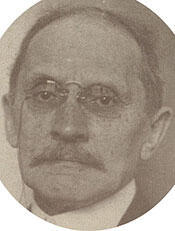
Here you will find contact information for Representative Merrill Moores, including email address, phone number, and mailing address.
| Name | Merrill Moores |
| Position | Representative |
| State | Indiana |
| District | 7 |
| Party | Republican |
| Status | Former Representative |
| Term Start | December 6, 1915 |
| Term End | March 3, 1925 |
| Terms Served | 5 |
| Born | April 21, 1856 |
| Gender | Male |
| Bioguide ID | M000928 |
About Representative Merrill Moores
Merrill Moores (April 21, 1856 – October 21, 1929) was an American lawyer and Republican politician who served five terms as a U.S. Representative from Indiana from 1915 to 1925. Over the course of a decade in the House of Representatives, he participated actively in the legislative process during a significant period in American history and represented the interests of his Indiana constituents in the national government.
Born on April 21, 1856, Moores came of age in the post–Civil War era, a time of rapid political, economic, and social change in the United States. Details of his early life, including his family background and upbringing, placed him within the broader context of Indiana’s development in the latter half of the nineteenth century, when the state was transitioning from a largely agrarian society to a more diversified economy. This environment helped shape his interest in public affairs and the law, setting the stage for his later professional and political career.
Moores pursued a legal education and entered the practice of law, establishing himself as an American lawyer before embarking on a career in elective office. His legal training provided the foundation for his work in public service, equipping him with a detailed understanding of statutory interpretation, constitutional issues, and the practical implications of legislation. As a practicing attorney, he developed the professional reputation and community connections that would support his eventual election to Congress.
A member of the Republican Party, Moores was elected to the United States House of Representatives from Indiana and began his congressional service in 1915. He served continuously until 1925, completing five terms in office. His tenure in Congress coincided with a transformative decade that included World War I, the immediate postwar period, and the early years of the 1920s. During this time, he contributed to the legislative process, took part in debates over war and peace, domestic economic policy, and social issues, and worked within the committee system that structured much of the House’s work. As a representative, he participated in the democratic process by voting on major national measures and advocating for the needs and priorities of his constituents in Indiana.
Moores’s decade in Congress placed him among the lawmakers who helped guide the United States through wartime mobilization and the transition to peacetime conditions. His service from 1915 to 1925 spanned the administrations of Presidents Woodrow Wilson and Warren G. Harding, as well as the beginning of Calvin Coolidge’s presidency, a period marked by shifting attitudes toward international engagement, economic regulation, and federal responsibility. Within this context, he aligned with Republican Party principles of the era and contributed to shaping federal policy through his legislative work.
After leaving Congress in 1925, Moores returned to private life, drawing on his long experience as both a lawyer and a legislator. His post-congressional years reflected a continued engagement with civic and professional affairs, characteristic of former members who remained influential in their communities even after their formal service in Washington ended. He lived to see the later 1920s, a time of continued economic expansion and political change in the United States.
Merrill Moores died on October 21, 1929, closing a life that had spanned from the immediate aftermath of the Civil War to the eve of the Great Depression. Remembered as an American lawyer and Republican politician who represented Indiana in the U.S. House of Representatives for five consecutive terms, his career illustrated the role of early twentieth-century legislators in navigating the nation through war, reconstruction of the international order, and the social and economic transformations of the 1910s and 1920s.