Representative Meyer London
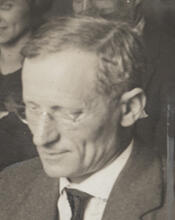
Here you will find contact information for Representative Meyer London, including email address, phone number, and mailing address.
| Name | Meyer London |
| Position | Representative |
| State | New York |
| District | 12 |
| Party | Socialist |
| Status | Former Representative |
| Term Start | December 6, 1915 |
| Term End | March 3, 1923 |
| Terms Served | 3 |
| Born | December 29, 1871 |
| Gender | Male |
| Bioguide ID | L000408 |
About Representative Meyer London
Meyer London (December 29, 1871 – June 6, 1926) was a Lithuanian-born Jewish American lawyer, labor advocate, and Socialist politician from New York City who served as a Representative from New York in the United States Congress from 1915 to 1923. One of only two members of the Socialist Party of America ever elected to Congress, he represented the Lower East Side of Manhattan for two nonconsecutive terms and became a prominent figure in early twentieth-century American radical politics. His career was marked by influential work in the labor movement, outspoken opposition to American entry into World War I, and controversial positions on Zionism that ultimately limited his political prospects.
London was born in Kalvarija, Lithuania, then part of the Russian Empire, on December 29, 1871. His father, Efraim London, was a former Talmudic scholar who had become politically radical and philosophically agnostic, while his mother remained a devout Jew. The family later lived in Zenkov, a small town in the Poltava province of Ukraine, where Efraim worked as a grain merchant but struggled financially. In 1888, Efraim London emigrated to the United States with Meyer’s younger brother, leaving Meyer and the rest of the family behind in the Russian Empire. Meyer attended a traditional Jewish cheder, where he learned Hebrew, and then entered Russian-language schools, beginning a secular education that exposed him to broader intellectual currents.
In 1891, at the age of 20, London and the rest of his family followed his father to the United States and settled in New York City’s largely Jewish Lower East Side. In America, Efraim London had become a commercial printer, producing work in Yiddish, Russian, and English and publishing his own radical weekly, Morgenstern. The print shop functioned as a gathering place for Jewish radical intellectuals from across the city, and the young Meyer absorbed their debates and ideas. To support himself, London worked as a tutor, teaching literature and related subjects at irregular hours, and later obtained a position as a librarian. The latter job afforded him time to read extensively in history and politics and to begin the study of law. He also attended radical meetings, where he gradually developed skill as a public speaker and debater, laying the foundation for his later political career.
London entered formal legal training in 1896, when he was accepted to the law school of New York University. He attended most of his classes at night while continuing to work, and he completed the program and was admitted to the New York bar in 1898. From the outset he devoted himself to civil law, becoming a labor lawyer who took on cases challenging injunctions and defending tenants against abuses by landlords. He did not handle criminal cases, instead focusing his practice on matters that advanced the interests of workers and the poor. His legal work brought him into close contact with the burgeoning labor movement and helped establish his reputation as an advocate for social and economic justice.
Politically, London became active in socialist circles during the 1890s. He joined the Socialist Labor Party of America and stood as its candidate for the New York State Assembly in 1896. Drawn to the ideas of Eugene V. Debs and the new Social Democracy of America, he resigned from the Socialist Labor Party in 1897 and helped establish Local Branch No. 1 of the Social Democracy in New York. He served as a delegate to the June 1898 convention of the Social Democracy of America in Chicago and joined the political action-oriented minority that bolted the convention to form the Social Democratic Party of America after a dispute over colonization strategies. That same year he again ran for the New York Assembly in the old 4th Assembly District, this time as the Social Democratic Party’s candidate. In 1901, when the Chicago-based Social Democratic Party merged with dissident former members of the Socialist Labor Party to create the Socialist Party of America, London transferred his allegiance to the new organization. He ran a third time for the 4th Assembly District seat in 1904 under the Socialist Party banner. The Russian Revolution of 1905 deeply inspired him as a former subject of the tsarist regime, and he spoke at mass meetings to raise funds for Jewish victims of pogroms and for the Bund, the Yiddish-language revolutionary movement in Jewish regions of the Russian Empire.
London’s most prominent early role in the labor movement came during the 1910 New York Cloakmakers strike, when the International Ladies’ Garment Workers’ Union (ILGWU) led some 50,000 workers in a successful struggle for higher wages and improved working conditions. Serving as legal counsel to the ILGWU, London drafted and published a manifesto in the name of the strike committee that denounced employers for ruining a trade built by industrious immigrants and for corrupting the morale of cloakmakers through treachery, slavishness, and espionage. He characterized the general strike as an “irresistible movement of the people” and an effort to end the “anarchy and chaos” that left some workers laboring sixteen hours a day in the hottest months while others had no work at all. London argued against an injunction issued against the strikers before the New York Supreme Court and helped secure a favorable outcome after a labor action that lasted nearly two months. His prominent role in the cloakmakers’ strike made him one of the best-known Socialist figures in New York City and provided a platform for his subsequent electoral campaigns.
Over the course of three runs for Congress, London built a durable coalition among the immigrant and working-class voters of the Lower East Side, overcoming the entrenched power of Tammany Hall. In the election of 1914, despite violence and fraud associated with the campaign of his Tammany-backed Democratic opponent, he was elected to the U.S. House of Representatives, becoming the second Socialist ever elected to Congress, after Victor Berger of Wisconsin. London served as a Representative from New York from 1915 to 1923, holding office during a significant period in American history that encompassed World War I and its aftermath. A member of the Socialist Party, he contributed to the legislative process during three terms in office and participated in the democratic process as a voice for labor, civil liberties, and his largely immigrant constituency on the Lower East Side.
In Congress, London was one of 50 representatives and six senators who voted against American entry into World War I. Once the United States entered the conflict, however, he believed he was obliged to support the nation’s war effort, a stance that placed him at odds with many in his own party. He strongly opposed the Espionage Act of 1917 and the Sedition Act of 1918, which criminalized criticism of the president or the war, and he ultimately cast the only vote in the House of Representatives against the Sedition Act of 1918. These positions angered different segments of his constituency and the broader public. Reflecting on the political cost of his actions, London remarked, “I wonder whether I am to be punished for having had the courage to vote against the war or for standing by my country’s decision when it chose war.” Within the Socialist Party, his support for aspects of the Wilson administration’s war effort was denounced as a betrayal of the party’s anti-militarist program. Party opponents charged that he had ignored the party’s St. Louis antiwar resolution, refused to introduce bills suggested by the National Executive Committee, and failed to manifest the Socialist Party’s official attitude in Congress, and some called for his recall after he sent a telegram to revolutionary Russia urging it not to conclude a separate peace.
London’s position as a Jewish Socialist further complicated his political standing through his nuanced views on Zionism. He refused to introduce into the House a resolution endorsing the Balfour Declaration, thereby upsetting socialist Labor Zionists and uniting many Zionists against him. While he did not oppose the right of Jews to live “a separate and distinct national existence fortified by a Jewish state,” and believed in the possibility of a specifically socialist Jewish state if it could be achieved “without violating the Socialist principle which forbids forcible annexation,” he insisted that Zionist advocates should not speak in the name of all Jews. His refusal to sponsor the resolution, combined with his socialism and his lack of religious observance, fragmented Jewish opinion in his district. Orthodox Jews opposed him because he was not religious, while affluent and influential Jews, including Jacob Schiff, Louis Marshall, Nathan Straus, and Rabbi Stephen S. Wise, worked for his defeat, urging Jews to repudiate him. As a result, London found himself attacked simultaneously as a dangerous radical and as a traitor to radicalism; as un-American and pro-German on one hand, and as an American nationalist and abettor of militarism on the other; as subordinating the Socialist program to Jewish concerns and, conversely, as neglecting Jewish national aspirations in favor of socialist internationalism.
These cross-pressures ultimately proved politically damaging. In the 1918 election, with the Democratic and Republican parties uniting behind a single “fusion” candidate and London’s own base divided, he narrowly lost reelection to Democrat Henry M. Goldfogle by a vote of 7,269 to 6,519. Two years later, in 1920, the Lower East Side returned him to Congress, and he again took his seat in the House of Representatives, defeating Goldfogle by a margin of 10,212 to 8,054. During this later period of his congressional service, on September 21, 1922, Congress passed a joint resolution stating its support for a homeland in Palestine for the Jewish people, a development that intersected with the debates over Zionism in which London had been so controversially involved. He was defeated for reelection in 1922 by Samuel Dickstein, bringing his congressional career to a close after three terms, served between 1915 and 1923.
London’s personal life reflected his immersion in the world of radical politics and professional achievement. In 1899 he married Anna Rosenson, a fellow Socialist, immigrant from the Russian Empire, and practicing dentist. The couple had one daughter, Isabel, who became a physician and later served as an intern at Bellevue Hospital. London was also part of an extended family that included notable figures in American intellectual and activist circles. He was an uncle of civil liberties attorney Ephraim London, and through Ephraim was connected to activist Sheila Michaels, as well as to Harriet Fraad and Rosalyn Baxandall, whose mother, Irma, was Meyer London’s sister. Historian Tony Judt later noted in an article for The New York Review of Books that London was a relative of his, writing that “our cousin Meyer London had emigrated in 1891 to New York from a nearby village; there he was elected in 1914 as the second Socialist congressman before being ousted by an ignominious alliance of wealthy New York Jews disturbed by his socialism and American Zionists aghast at his well-publicized suspicion of their project.”
On June 6, 1926, London died in New York City as the result of an automobile accident. While crossing Second Avenue at 15th Street on a Sunday, he became confused amid heavy traffic moving in both directions and stopped in the middle of the roadway, where he was struck by a car. The driver, whom London later insisted should not be punished, rushed him to Bellevue Hospital, where his daughter was serving as an intern. London’s only expressed concern upon seeing her was for the driver, whom he described as a poor man not at fault. Despite the efforts of physicians, who worked for 11 hours to save him, London died at 10:00 p.m. that night at the age of 54 from internal injuries. News of his death spread rapidly, and crowds gathered at Bellevue Hospital, at the London family home, and at the building of The Jewish Daily Forward. The following day, his body was taken to the Forward building, where it lay in state as approximately 25,000 men, women, and children filed past his casket. On Wednesday, June 10, 1926, New York City witnessed one of the greatest mass displays of public mourning in its history: an estimated 500,000 people observed the funeral procession, which included some 50,000 marchers, while hundreds of thousands more crowded windows, fire escapes, and sidewalks along a route jammed six people deep. London was interred at Mount Carmel Cemetery in Glendale, Queens.
London’s legacy endured beyond his death in both symbolic and tangible forms. Despite his votes against American participation in World War I, a World War II Liberty ship launched in 1943 was named the USS Meyer London in his honor. On the Lower East Side of Manhattan, one of the buildings of the Hillman Housing Corporation, a cooperative founded by the Amalgamated Clothing Workers of America, bears his name, as does a K–5 public elementary school, P.S. 2, also known as the Meyer London School. Through these commemorations, as well as through the continuing historical interest in his unique role as a Socialist congressman and labor lawyer, Meyer London remains associated with the struggles of immigrant workers, the complexities of American radicalism, and the political life of New York’s Lower East Side in the early twentieth century.