Representative Michael Darr Barnes
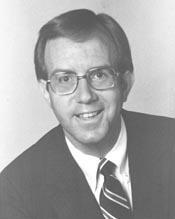
Here you will find contact information for Representative Michael Darr Barnes, including email address, phone number, and mailing address.
| Name | Michael Darr Barnes |
| Position | Representative |
| State | Maryland |
| District | 8 |
| Party | Democratic |
| Status | Former Representative |
| Term Start | January 15, 1979 |
| Term End | January 3, 1987 |
| Terms Served | 4 |
| Born | September 3, 1943 |
| Gender | Male |
| Bioguide ID | B000160 |
About Representative Michael Darr Barnes
Michael Darr Barnes (born September 3, 1943) is an American lawyer and politician who represented the eighth district of Maryland in the United States House of Representatives from 1979 to 1987. A member of the Democratic Party, he served four terms in Congress and contributed to the legislative process during a significant period in American history, participating in the democratic process and representing the interests of his Maryland constituents.
Barnes was born in Washington, D.C., to John P. Barnes, former general counsel to the Chesapeake and Potomac (C&P) Telephone Company, and Vernon S. Barnes. His family had a notable legal background; his grandfather, also named John P. Barnes, served as a judge on the United States District Court for the Northern District of Illinois. Barnes spent his early childhood in the Washington area and moved at age thirteen to Chevy Chase in Montgomery County, Maryland. He attended the Landon School in Bethesda, Maryland, and later Principia High School in St. Louis, Missouri, from which he graduated in 1962.
After high school, Barnes pursued higher education at the University of North Carolina at Chapel Hill, where he earned a Bachelor of Arts degree in 1965 and was a member of the Delta Upsilon fraternity. He then studied abroad at the Graduate Institute of International Studies (now the Geneva Graduate Institute) in Geneva, Switzerland, from 1965 to 1966, gaining early exposure to international affairs. Following his return to the United States, he entered military service and served in the United States Marine Corps from 1967 to 1969, being discharged with the rank of corporal. After his military service, he enrolled at George Washington University Law School in Washington, D.C., and obtained his Juris Doctor degree in 1972, beginning a career that combined law, public service, and politics.
Barnes’s early professional career included both private legal practice and government service. Prior to his election to Congress, he served as a Commissioner of the Maryland Public Service Commission from 1975 to 1979, where he was involved in the regulation of public utilities in the state. He also served as vice chairman of the Washington Metropolitan Area Transit Commission, helping oversee regional transit issues in the Washington metropolitan area. In 1976, he was executive director of the Democratic Party platform committee, playing a key role in shaping the party’s national policy positions during that election year. During this period, he practiced law in both private and governmental capacities, building the policy and legal experience that would underpin his later legislative work.
In 1978, Barnes was elected as a Democrat to the United States House of Representatives from Maryland’s eighth congressional district, taking office on January 3, 1979. He served four consecutive terms, remaining in the House until January 3, 1987. His tenure in Congress coincided with major developments in domestic and foreign policy during the late 1970s and 1980s. During the first session of the 99th Congress, he was chairman of the Subcommittee on Western Hemisphere Affairs of the House Committee on Foreign Affairs. In that role, he became particularly active on issues relating to Latin America and the Caribbean. Barnes was generally an outspoken critic of President Ronald Reagan’s policies in Central America, voicing concerns about U.S. involvement in regional conflicts. At the same time, he demonstrated a nuanced approach to foreign policy; after a personal trip to Grenada in 1983, he publicly described the United States invasion of Grenada as “justified.” In 1986, rather than seek reelection to the House, he ran for the Democratic nomination for the United States Senate from Maryland. He lost that primary contest to Barbara Mikulski and subsequently retired from Congress at the end of his term, returning to private legal practice.
Following his congressional service, Barnes remained active in public policy, law, and civic affairs. He joined the Washington, D.C., law firm of Covington & Burling, where he served as Senior Of Counsel and focused on regulatory, public policy, and international matters; he retired as senior counsel from Covington & Burling LLP in December 2010. From 2000 through 2006, he served as president of the Brady Campaign to Prevent Gun Violence and the Brady Center to Prevent Gun Violence, leading one of the nation’s most prominent gun violence prevention organizations. He also served as chair of the Center for National Policy, a Washington-based think tank, and as chair of the Governor’s Commission on Growth in the Chesapeake Bay Region, where he worked on issues related to environmental protection, land use, and sustainable development in the Chesapeake Bay watershed.
Barnes has held numerous board and advisory positions in organizations concerned with public policy, international affairs, and civic engagement. He has been a member of the boards of directors of the Metropolitan Washington Airports Authority, the University of Maryland Foundation, the Center for International Policy, Public Voice, and the Overseas Development Council. In April 2011, he joined the Board of Directors of the Washington Metropolitan Area Transit Authority (WMATA) as the principal director representing Montgomery County and the State of Maryland, serving until 2013; he was preceded in that role by Peter Benjamin and succeeded by Michael Goldman. He has served as a senior fellow at the Center for International Policy in Washington, D.C., and is a member of the Inter-American Dialogue, reflecting his long-standing engagement with Western Hemisphere issues. He is also a member of the ReFormers Caucus of Issue One, a bipartisan group of former elected officials advocating for political and campaign finance reform. On January 23, 2013, Speaker of the House John Boehner appointed Barnes to succeed Abner Mikva as an alternate member of the Office of Congressional Ethics, extending his involvement in congressional standards and oversight.
In his personal life, Barnes married Claudia Dillon Fangboner in 1970. The couple has two daughters, Dillon and Garrie. Throughout his career in law, politics, and advocacy, Barnes has remained closely associated with the Washington, D.C., and Maryland region, while maintaining a national and international profile through his work on foreign policy, transportation, environmental issues, and gun violence prevention.