Representative Michael Bilirakis
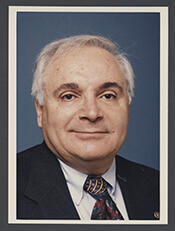
Here you will find contact information for Representative Michael Bilirakis, including email address, phone number, and mailing address.
| Name | Michael Bilirakis |
| Position | Representative |
| State | Florida |
| District | 9 |
| Party | Republican |
| Status | Former Representative |
| Term Start | January 3, 1983 |
| Term End | January 3, 2007 |
| Terms Served | 12 |
| Born | July 16, 1930 |
| Gender | Male |
| Bioguide ID | B000463 |
About Representative Michael Bilirakis
Michael Bilirakis (born July 16, 1930) is an American politician and lawyer from Florida who served as a Republican member of the United States House of Representatives from 1983 to 2007, representing Florida’s 9th congressional district. Over the course of 12 consecutive terms in office, he contributed to the legislative process during a significant period in American history, participating in the democratic process and representing the interests of his constituents in the U.S. Congress.
The son of Greek immigrants, Michael Bilirakis was born in Tarpon Springs, Florida, but spent most of his childhood in Clairton, Pennsylvania. He graduated from Douglas Business College in McKeesport, Pennsylvania, in 1949. During the Korean War era, he served in the United States Air Force from 1951 to 1955, rising to the rank of staff sergeant. After his military service, he pursued higher education, earning a bachelor’s degree from the University of Pittsburgh in 1959, where he was a member of the Sigma Pi fraternity. He undertook further study at George Washington University in 1960 and went on to earn a Juris Doctor degree from the University of Florida Levin College of Law in 1963, preparing for a professional career in law and public service.
Before entering Congress, Bilirakis worked as a lawyer and became active in his community in Florida, building a reputation that would later support his bid for federal office. Drawing on his background as the son of immigrants, a military veteran, and a trained attorney, he developed a political profile that emphasized public service, national security, and responsiveness to local concerns. His legal training and military experience informed his approach to policy, particularly in areas related to veterans’ affairs, health, and regulatory matters.
Bilirakis made his first run for elective office in 1982, contesting the newly created 9th congressional district in Florida. In that election he defeated State Representative George Sheldon by approximately 4,300 votes, securing a seat in the U.S. House of Representatives. He took office in January 1983 and was subsequently reelected with 78 percent of the vote in 1984. Over the next two decades he was reelected 10 more times and never faced serious opposition, reflecting his strong standing in the district. He ran unopposed in 1988, 1994, 1998, and 2004, underscoring the depth of his electoral support and the continuity of his service.
During his tenure in Congress, Bilirakis served on several key committees, most notably the House Committee on Energy and Commerce, and he held the position of vice chairman of the House Committee on Veterans’ Affairs. In these roles he became known as an active legislator and a specialist in health, regulatory, and veterans’ issues. National Journal’s Almanac of American Politics described him as one of the most “legislatively productive” members of Congress, a characterization that reflected both the volume and the significance of the bills he sponsored or helped shepherd into law.
Bilirakis played a key role in the enactment of the Public Health Security and Bioterrorism Preparedness and Response Act, legislation designed to strengthen the nation’s capacity to prevent, prepare for, and respond to bioterrorism and other public health emergencies. He was also instrumental in the reauthorization of the Prescription Drug User Fee Act, which governs the fees paid by pharmaceutical companies to support the Food and Drug Administration’s review of new drugs. As the lead congressional sponsor of the Nurse Reinvestment Act of 2002, he sought to address the national nursing shortage through education, recruitment, and retention initiatives. In addition, he authored the Organ Donation Improvement Act, aimed at increasing organ donation rates and improving the organ procurement system, further cementing his legacy in health policy.
After more than two decades in the House of Representatives, Bilirakis retired from Congress in 2006, concluding his service at the end of his 12th term in January 2007. His departure opened the way for his son, Gus Bilirakis, then a member of the Florida House of Representatives, to seek the seat. In the 2006 congressional race for the elder Bilirakis’s House district, Gus Bilirakis defeated Democrat Phyllis Busansky, ensuring continuity of representation by the Bilirakis family in Florida’s 9th district.
In the years following his retirement from the House, Michael Bilirakis remained a respected figure in Florida Republican politics and national policy circles. In August 2009, he was shortlisted by Florida Governor Charlie Crist as a potential appointee to the United States Senate to fill the vacancy created by the resignation of Senator Mel Martínez. Although Crist ultimately appointed George LeMieux to the seat, Bilirakis’s consideration for the position reflected his longstanding stature and experience in federal legislative affairs.