Representative Michael Joseph Gill
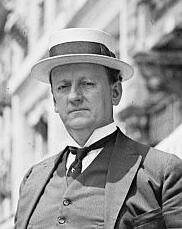
Here you will find contact information for Representative Michael Joseph Gill, including email address, phone number, and mailing address.
| Name | Michael Joseph Gill |
| Position | Representative |
| State | Missouri |
| District | 12 |
| Party | Democratic |
| Status | Former Representative |
| Term Start | April 7, 1913 |
| Term End | March 3, 1915 |
| Terms Served | 1 |
| Born | December 5, 1864 |
| Gender | Male |
| Bioguide ID | G000190 |
About Representative Michael Joseph Gill
Michael Joseph Gill (December 5, 1864 – November 1, 1918) was an American politician, labor official, and glass-industry executive who represented Missouri in the United States House of Representatives from 1914 to 1915. A member of the Democratic Party, he served one term in Congress during a period of significant political and social change in the early twentieth century, participating in the legislative process and representing the interests of his St. Louis–area constituents.
Gill was born in Covington, Kenton County, Kentucky, on December 5, 1864. He attended the common schools in his youth and later pursued further studies at Oberlin College in Oberlin, Ohio. His education provided the foundation for a career that combined business, labor organization, and public service. After leaving Oberlin, Gill entered the glass manufacturing industry, a major sector in the industrializing economy of the late nineteenth century.
By the early 1890s, Gill had become a prominent figure in the glass trade. He engaged in the glass manufacturing business and emerged as an executive member of the National Bottle Blowers’ Association, serving in that capacity from 1892 to 1912. His long tenure with the association reflected both his familiarity with industrial labor issues and his growing reputation as an organizer and negotiator within a key manufacturing field. This experience in labor and industry would later inform his work in government and as a labor conciliator.
Gill moved to St. Louis, Missouri, where he entered Democratic politics at the state level. He was elected to the Missouri House of Representatives and served from 1892 to 1896, participating in state legislative affairs during a time when Missouri was grappling with questions of industrial regulation, urban growth, and party realignment. In 1898 he sought to extend his political career to the national level by running for Congress in Missouri’s 10th Congressional District, but he was unsuccessful in that bid. Remaining active in party affairs, he later served as a delegate to the Democratic National Convention in 1912, aligning himself with the national Democratic organization at the outset of the Woodrow Wilson era.
In 1912 Gill again ran for Congress, this time in Missouri’s 12th Congressional District. Initially, he appeared to have lost the election to Republican Leonidas C. Dyer. Gill contested the result, alleging fraud in the conduct of the election. During the broader investigation into contested elections in the district, including the 1910 race, it was revealed that Gill himself had voted for Dyer over the Democratic nominee, Thomas Kinney, in the earlier contest. This revelation, which came to light only after Kinney’s death and after Gill had been nominated as the Democratic candidate in 1912, provoked anger among Democratic leaders. Kinney’s brother and other party figures retaliated by illegally scratching Gill’s name from many ballots. A House committee later determined that “the evidence establishes the fact that a conspiracy was formed and existed between the judges and clerks of election in many of the precincts of the fifth ward to deprive Gill of votes cast for him and if possible to count him out.” Once fraudulent votes were excluded, Gill was declared the rightful winner of the contest.
Gill was seated in the Sixty-third Congress and took the oath of office on June 19, 1914, serving until March 3, 1915. His tenure placed him in the House of Representatives during a transformative period in American politics, as the Wilson administration and a Democratic Congress advanced progressive-era legislation on banking, tariffs, and antitrust regulation. As a Democratic Representative from Missouri, Gill participated in the legislative process and represented the interests of his urban, industrial constituency in St. Louis. Although his time in Congress was limited to a single term, it was marked by the unusual circumstances of his contested election and ultimate seating by decision of the House.
Following his service in Congress, Gill remained active in public affairs and labor relations. In 1914, 1916, and 1918 he sought to return to the House, running again for his former seat, but he was defeated in the Democratic primary each time, although he nevertheless became the Democratic nominee in 1916. In addition to his electoral efforts, he briefly served the federal government as a labor conciliator, reflecting his long-standing involvement with labor and industrial issues. He held this position from March 31 to May 31, 1916, and again from July 1 to October 2, 1916, working to mediate disputes in an era of increasing labor unrest and federal concern with industrial peace.
Michael Joseph Gill died in St. Louis, Missouri, on November 1, 1918. He was interred in Calvary Cemetery in St. Louis. His career spanned state and national politics, industrial organization, and labor conciliation, and his single term in Congress, secured after a highly contested election, placed him among the Missouri Democrats who helped shape federal policy in the years immediately preceding the United States’ full engagement in World War I.