Representative Michael Griffin
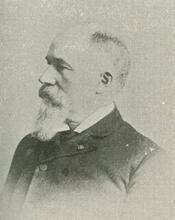
Here you will find contact information for Representative Michael Griffin, including email address, phone number, and mailing address.
| Name | Michael Griffin |
| Position | Representative |
| State | Wisconsin |
| District | 7 |
| Party | Republican |
| Status | Former Representative |
| Term Start | August 7, 1893 |
| Term End | March 3, 1899 |
| Terms Served | 3 |
| Born | September 9, 1842 |
| Gender | Male |
| Bioguide ID | G000464 |
About Representative Michael Griffin
Michael Griffin, an Irish-born American politician, served as a Republican Representative from Wisconsin in the United States Congress from 1893 to 1899. He was born in 1842 in Ireland, during a period marked by social and economic upheaval that would spur significant Irish emigration to North America. Like many of his contemporaries, Griffin left his homeland and settled in the United States, where growing immigrant communities, particularly in the Midwest, were beginning to shape local and national politics. His Irish origins and subsequent American experience positioned him within a broader narrative of 19th-century immigrant participation in public life.
Details of Griffin’s early formal education are not extensively documented in the public record, but his later professional and political achievements indicate that he acquired sufficient schooling and practical training to enter public affairs with competence and credibility. As was common for many immigrants of his generation, his education likely combined basic formal instruction with substantial self-education and on-the-job learning, particularly in civic and legal matters. This blend of experience and learning helped prepare him for the responsibilities of public office in a rapidly developing state such as Wisconsin.
Griffin’s career in the United States developed against the backdrop of Wisconsin’s growth after the Civil War, when the state was expanding its infrastructure, industry, and agricultural base. As he established himself in his adopted country, he became involved in Republican Party politics, aligning with a political organization that, in the late 19th century, was closely associated with Union victory in the Civil War, economic modernization, and protective tariffs. His rise within the party reflected both his personal abilities and the increasing political influence of immigrant communities in the Upper Midwest.
In 1893, Michael Griffin was elected as a Republican to the United States House of Representatives from Wisconsin, beginning the first of three consecutive terms in Congress. He served in the House during a significant period in American history, one marked by the economic turmoil of the Panic of 1893, debates over monetary policy, and the nation’s transition toward a more industrial and urban society. As a member of the House of Representatives, Griffin participated in the democratic process at the federal level and contributed to the legislative work of the 53rd, 54th, and 55th Congresses. From 1893 to 1899, he represented the interests of his Wisconsin constituents, engaging with issues that affected both his district and the broader nation, and taking part in the deliberations that shaped federal policy in the closing years of the 19th century.
During his six years in Congress, Griffin’s role as a legislator placed him at the intersection of regional concerns and national priorities. Wisconsin’s economy, rooted in agriculture, lumber, and emerging industry, required attentive representation in matters such as tariffs, transportation, and banking. As a Republican, Griffin worked within a party that generally favored policies designed to support industrial growth and protect domestic production. His service contributed to the ongoing refinement of federal legislation during a time when the United States was consolidating its position as an expanding economic power.
After leaving Congress in 1899, Michael Griffin’s public career came to a close in the same year. He died in 1899, bringing an end to a life that had spanned from pre-Famine Ireland through the American Civil War era and into the dawn of the 20th century. His trajectory—from Irish immigrant to three-term United States Representative from Wisconsin—illustrates the opportunities and responsibilities that accompanied political life in the Gilded Age. Griffin’s congressional service remains a part of the historical record of Wisconsin’s representation in the national legislature and of the broader story of immigrant participation in American governance.