Representative Michael R. McNulty
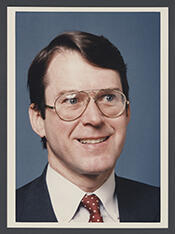
Here you will find contact information for Representative Michael R. McNulty, including email address, phone number, and mailing address.
| Name | Michael R. McNulty |
| Position | Representative |
| State | New York |
| District | 21 |
| Party | Democratic |
| Status | Former Representative |
| Term Start | January 3, 1989 |
| Term End | January 3, 2009 |
| Terms Served | 10 |
| Born | September 16, 1947 |
| Gender | Male |
| Bioguide ID | M000590 |
About Representative Michael R. McNulty
Michael Robert McNulty (born September 16, 1947) is a retired American politician from the state of New York who served as a Democratic Representative in the United States House of Representatives from 1989 to 2009. Over the course of 10 consecutive terms, he represented New York’s Capital District—initially designated the 23rd congressional district and renumbered the 21st district after the 1990 census—and played an active role in the legislative process. During the 110th Congress he served as chairman of the House Subcommittee on Social Security, a key panel of the Committee on Ways and Means.
McNulty was born in Troy, New York, and attended Troy public schools. He was educated at La Salle Institute and graduated from St. Joseph’s Institute in 1965. He pursued further studies abroad at the Loyola University Rome Center in Rome, Italy, from 1967 to 1968, and in 1969 he graduated from the College of the Holy Cross in Worcester, Massachusetts. He is a member of the third generation of a Catholic, Irish-American family long prominent in Capital District politics. His grandfather, Jack McNulty Sr., served as chairman of the Green Island Democratic Party from 1919 to 1969 and as Albany County Sheriff, and his father, Jack McNulty Jr., succeeded him as party chairman and also served as sheriff, embedding Michael McNulty in local political life from an early age.
Before entering elective office, McNulty worked as an insurance broker. He was first elected to public office in November 1969 as town supervisor of Green Island, New York. At age 22, he was the youngest town supervisor in the state, marking the beginning of a long career in public service. In 1976 he sought a seat in the New York State Assembly from the 106th Assembly District, challenging Republican incumbent Neil Kelleher; he lost that race by a margin of 55 percent to 46 percent. The following year, he succeeded his father as chairman of the Green Island Democratic Party and was elected mayor of the village of Green Island, a position he held until 1982, further consolidating his role in local governance and party leadership.
After redistricting in 1982, Assemblyman Neil W. Kelleher of the old 106th Assembly District ran in the newly drawn 100th District, while McNulty ran in the new 106th District. McNulty was elected and served in the New York State Assembly from 1983 to 1988, sitting in the 185th, 186th, and 187th New York State Legislatures. His tenure in the Assembly provided him with legislative experience and a broader political profile in the Capital District, setting the stage for his subsequent election to Congress.
In 1988, U.S. Representative Samuel S. Stratton announced his withdrawal from the race for New York’s 23rd congressional district due to health issues. McNulty was selected to replace him on the ballot and was elected handily in what was then one of the few reliably Democratic areas in Upstate New York. He was reelected nine more times without serious difficulty, even as the district was renumbered as the 21st after the 1990 census. Over his 10 terms in office, from January 3, 1989, to January 3, 2009, McNulty represented the interests of his constituents in the Capital District and participated actively in the democratic process in the House of Representatives.
During his congressional career, McNulty served on the powerful Committee on Ways and Means. In the 110th Congress he was chairman of the Subcommittee on Social Security and also served on the Subcommittee on Income Security and Family Support. He held a leadership role as an At-Large Whip in the House Democratic Caucus. A moderate Democrat by New York standards, he was consistently endorsed by both the Conservative Party and the Working Families Party, two influential third parties in New York. His voting record earned him an “A” on the Drum Major Institute’s 2005 Scorecard on middle-class issues. On foreign policy, he voted in favor of the authorization for the War in Iraq but later changed his stance and cosponsored Representative John Murtha’s resolution calling for a phased withdrawal from the region.
McNulty’s long tenure in Congress was not without controversy. On the night of August 2, 2007, he presided over a vote to recommit an agricultural appropriations bill that included a provision to prevent illegal immigrants from receiving food stamps. McNulty declared the vote tied at 214–214 with members changing their votes after the allotted time had expired, and then gaveled the vote down and tallied it at 212–216 against the motion to recommit. Republicans contended that the electronic tally on the House screen showed the motion passing 215–213, chanted “Shame,” and later walked out of the chamber in protest. McNulty and House Majority Leader Steny Hoyer apologized on the House floor the following morning for prematurely gaveling down the vote. In May 2008, a bipartisan investigation panel, including Representatives Bill Delahunt and Mike Pence, began reviewing whether the vote had been tallied correctly and what, if any, action should be taken. A year later, the panel concluded that the vote had indeed been improperly tallied.
Despite his generally secure position, McNulty did face electoral challenges. In 1996 he confronted a primary challenge from Lee H. Wasserman, which proved to be the closest contest of his career, closer than any of his general elections. In 2004 he was challenged in the general election by Republican/Libertarian candidate Warren Redlich, who would later run for governor in 2010. McNulty faced Redlich again in 2006 and was reelected with 78 percent of the vote, the widest margin of his congressional career. In October 2007, he announced that he would not seek an 11th term in Congress. Paul Tonko, who had served alongside McNulty in the New York State Assembly from 1983 to 1989, won the Democratic nomination to succeed him. In the September 9, 2008, Democratic primary, Tonko defeated four other candidates, and in the November 4 general election he decisively defeated Republican Schenectady County Legislator James Buhrmaster. Although the seat was open, the race was not considered competitive; both Congressional Quarterly and the Cook Political Report rated it “Safe Democratic,” reflecting the 21st district’s status as the most Democratic district in the state outside of New York City-based districts and Western New York.
Since leaving Congress in January 2009, McNulty has lived in retirement from elective office. His two decades in the House, preceded by service as a town supervisor, mayor, and state assemblyman, marked a continuous public career rooted in the political traditions of New York’s Capital District and in the multigenerational involvement of the McNulty family in local and state politics.