Representative Mike McIntyre
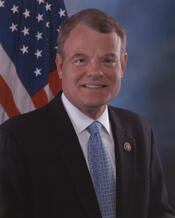
Here you will find contact information for Representative Mike McIntyre, including email address, phone number, and mailing address.
| Name | Mike McIntyre |
| Position | Representative |
| State | North Carolina |
| District | 7 |
| Party | Democratic |
| Status | Former Representative |
| Term Start | January 7, 1997 |
| Term End | January 3, 2015 |
| Terms Served | 9 |
| Born | August 6, 1956 |
| Gender | Male |
| Bioguide ID | M000485 |
About Representative Mike McIntyre
Douglas Carmichael “Mike” McIntyre II (MAC‑in‑tire; born August 6, 1956) is an American attorney and Democratic politician who represented North Carolina’s 7th congressional district in the U.S. House of Representatives from January 3, 1997, to January 3, 2015. First elected in 1996, he served nine consecutive terms, contributing to the legislative process during a significant period in American history. A member of the Blue Dog Coalition, he became known as a centrist Democrat with a strong focus on agriculture, rural development, coastal issues, national defense, and constituent services.
McIntyre was born and raised in Lumberton, North Carolina, where he attended public schools. At Lumberton High School he demonstrated an early interest in leadership and public service, serving first as Student Body Treasurer and later as Student Body President before graduating in 1974. His interest in politics developed further when he served as a page for the North Carolina Senate in 1971, attended Boys State in 1973—where he was elected mayor of his city—and participated in the Washington Workshops Congressional Seminar in the summers of 1973 and 1974, including its advanced seminar. These formative experiences introduced him to legislative procedure and national politics at a young age.
A Morehead Scholar at the University of North Carolina at Chapel Hill, McIntyre majored in political science and graduated Phi Beta Kappa in 1978. During his senior year, the university chancellor presented him with the Algernon Sydney Sullivan Award, recognizing him as the student who best exemplified “unselfish interest in the welfare of his fellow man” during his collegiate career. He continued at UNC to study law, earning his Juris Doctor in 1981. While a law student, he was selected as one of North Carolina’s youngest delegates to the 1980 Democratic National Convention, where he supported President Jimmy Carter, further cementing his engagement with Democratic Party politics.
After law school, McIntyre returned to his native Robeson County to practice law, a career he maintained until his election to Congress. During the 1980s he became increasingly active in civic and public policy work at the state level. In 1987, the North Carolina Jaycees named him one of the state’s Five Outstanding Young North Carolinians of the Year. A strong advocate on issues affecting families, he was a charter member of both the North Carolina Commission on Children & Youth and the North Carolina Commission on the Family. In 1989, he received the Governor’s Award for Outstanding Volunteer Service in recognition of his longstanding commitment to children and educators as a volunteer in the public school system. Deeply involved in community, church, and civic life, he held leadership roles in the Lumberton Area Chamber of Commerce, coached three All-American Drug-Free Sports Teams, and was active in the Rotary Club, Boy Scouts, the Parent-Teacher Association, and Young Life. A lay leader in the First Presbyterian Church of Lumberton, he served as an Elder, Deacon, Sunday school teacher, and Chairman of the Weekday School and Day Care Committee. In June 1982 he married Dee Strickland; the couple has two sons, Joshua and Stephen, both of whom later attended the University of North Carolina at Chapel Hill on scholarships and became attorneys.
Elected to Congress in 1996, McIntyre took office in January 1997 as the representative of a largely rural and economically diverse district that included coastal communities, farm families, and major military installations. He quickly secured a seat on the House Committee on Agriculture, reflecting the central importance of agriculture and rural economic development to his constituents. Over his 18 years in Congress he rose to become the second highest-ranking Democrat on the Agriculture Committee by the time of his retirement. He served on multiple agriculture subcommittees, including General Farm Commodities, Livestock and Horticulture; Conservation, Energy and Forestry; Livestock, Rural Development and Credit; and Conservation, Credit, Energy and Research. In 2009 he was elected Chairman of the Subcommittee on Rural Development, Biotechnology, Specialty Crops, and Foreign Agriculture. He also chaired the Rural Caucus Task Force on Jobs, Economic Development and Transportation and later served as Co-Chairman of the entire Rural Caucus, underscoring his leadership on rural policy.
McIntyre’s legislative work in agriculture and rural development was highlighted by his co-authorship and co-sponsorship, with Representative Bill Jenkins of Tennessee, of the Fair and Equitable Tobacco Reform Act, commonly known as the “tobacco buyout.” Enacted as part of the American Jobs Creation Act of 2004, this landmark legislation ended the longstanding federal tobacco quota and price support system and provided $10.1 billion in payments over ten years to tobacco quota owners and growers. The Tobacco Transition Payment Program, which made its final payment in January 2014, enabled farmers to reduce debt and diversify or expand into other agricultural enterprises, including vineyards and non-tobacco crops. Beyond tobacco policy, McIntyre championed business and economic development initiatives, particularly for small and microenterprises. As Chairman of the Subcommittee on Rural Development, he supported the Microenterprise Business and Rural Entrepreneur Program to assist businesses employing fewer than ten people. Working closely with USDA Rural Development, he helped secure funding for town halls, public works facilities, day care centers, fire and rescue stations, police departments, courthouses, small businesses, housing assistance, health care facilities, and hospitals throughout southeastern North Carolina. He also worked on legislation to establish the Southeast Crescent Regional Commission, authorized in the 2008 Farm Bill, to alleviate poverty and promote economic growth in distressed areas of the southeastern United States through grants for infrastructure, education and training, entrepreneurship, and leadership development.
Throughout his congressional career, McIntyre placed a strong emphasis on economic development and regional collaboration. He became well known for organizing the annual North Carolina Business and Economic Summit in Washington, originally called “The Washington Perspective” and later “Taking Care of Business.” Held each September, the summit regularly attracted approximately 250 business leaders, Chamber of Commerce representatives, and civic officials and was co-hosted by other members of the North Carolina congressional delegation, eventually involving nearly the entire delegation. His efforts in job creation and workforce training earned him the first-ever international public policy award from the International Association of Personnel in Employment Security. The National Association of Development Organizations honored him for leadership in regional economic development, and the Southern Economic Development Council named him to its Legislative Honor Roll five times. In 2002, he received the North Carolina Employment Security Advancing Workforce Development Award. His service to agriculture was recognized by the American Farm Bureau Federation, the National Farmers Union, and AgFirst Farm Credit Bank. In 1998 he received the Distinguished Service to Agriculture Award from the Robeson County Crop Promotion Association, and in 2007 he was named National Legislator of the Year by the National Farm Service Agency Employees Association. In 2014 the North Carolina Farm Bureau presented him with the North Carolina Distinguished Service to Agriculture Award.
Representing a district with significant coastline, McIntyre also became a leading advocate for coastal and waterway issues. He was instrumental in securing more than half a billion dollars in federal funding to maintain and improve the beaches, waterways, inlets, and ports of North Carolina’s 7th district. He founded and co-chaired the Congressional Waterways Caucus, co-chaired the Congressional Boating Caucus, and belonged to the House Coastal Caucus and House Oceans Caucus. His work earned him numerous honors, including Coastal Advocate of the Year from the American Shore and Beach Preservation Association, the Admiral’s Circle Award from the National Marine Manufacturers Association, the Conservationist Award from the North Carolina Coastal Land Trust, the J.W. Pate Award from the Cape Fear River Assembly, and recognition as Beach Preservationist of the Year by the Oak Island Beach Preservation Society.
McIntyre’s committee assignments extended beyond agriculture to national defense and foreign policy. He served on the House Armed Services Committee for his entire tenure in Congress and, by the time of his retirement, was its third highest-ranking Democrat. Over the years he served on the Subcommittee on Seapower and Projection Forces, where he was the Ranking Member; the Subcommittee on Tactical Air and Land Forces; and the Subcommittee on Terrorism, Unconventional Threats and Capabilities. He was Vice-Chairman of the Special Oversight Panel on Terrorism and a member of the Commission on Security and Cooperation in Europe (the U.S. Helsinki Commission). Representing a district that initially included four major military installations—Camp Lejeune, Marine Corps Air Station New River, Fort Bragg, and Pope Air Force Base—as well as Military Ocean Terminal Sunny Point, three Coast Guard stations, and several National Guard armories, he made support for the armed forces and veterans a central priority. He co-founded and co-chaired the Special Operations Forces Caucus to highlight the role of U.S. Special Operations Command and special operations forces in national security missions. For his defense and veterans advocacy, he received recognition from the Air Force Association, American Legion, Association of the U.S. Army, Disabled American Veterans, Navy League, Special Forces Charitable Trust, and Veterans of Foreign Wars. In 2000 he was awarded the Charles Dick Medal of Merit by the North Carolina National Guard, was inducted as an Honorary Member of the Fleet Reserve Association, made an Honorary Life Member of the North Carolina Chapter of the Military Officers Association of America, and received the Distinguished Public Service Award from the U.S. Secretary of the Navy, the Navy’s highest civilian honor.
In addition to his committee work, McIntyre became known for his extensive participation in congressional caucuses. At one point he was said to be a member of more caucuses than any other House member. He founded or co-founded, and often co-chaired, numerous caucuses, including the Adopt a Country Caucus, Air Force Caucus, Congressional Boating Caucus, Congressional Caucus on Youth Sports, Congressional Prayer Caucus, Congressional United Kingdom Caucus, Congressional Waterways Caucus, Friends of Scotland Caucus, National Task Force on Fatherhood, Rural Caucus, Rural Healthcare Coalition, Special Operations Forces Caucus, and the Congressional Constitution Caucus. These caucuses reflected his broad policy interests in national security, international relations, rural issues, faith and family, youth sports, and constitutional governance.
Health care, particularly in rural areas, was another major focus of McIntyre’s congressional service. He was a member and former co-chairman of the House Rural Health Care Coalition, which advocates for rural priorities in federal health policy. He also participated in caucuses dedicated to disease prevention and medical research, including the Congressional Community Pharmacy Caucus, Congressional Diabetes Caucus, House Cancer Caucus, House Vision Caucus, and Youth Sports Caucus. For his work on rural health initiatives, the National Association of Community Health Centers named him a “Super Hero” six times. The National Rural Health Association presented him with its Legislative Award in 2000—when he was one of five representatives so honored—and again in 2003, when he was the only House member to receive the award. He played a key role in securing funds for several new Veterans Affairs clinics, including a dialysis center in Fayetteville, North Carolina, and advocated successfully for the establishment of additional veterans’ health clinics in Robeson and Brunswick counties, as well as a new regional veterans health center in Wilmington. In recognition of his advocacy for veterans, he was named National Legislator of the Year in 2008 and received the All-American Hero Award in 2009 and 2013. He supported annual Military Construction and VA Appropriations bills that expanded services for veterans, backed authorization for five new polytrauma centers and three Centers of Excellence in Mental Health nationwide, and was an original co-sponsor of the Joshua Omvig Veterans Suicide Prevention Act, which mandated outreach, education, and training for VA staff to improve mental health care for veterans.
McIntyre also took an interest in science and space policy, publicly supporting NASA and the U.S. space program. He emphasized the practical benefits of space exploration, citing advances such as GPS, pacemakers, microwave ovens, advanced computing systems, water purification, search and rescue technologies, cancer therapy, robotics, lightweight durable materials, energy generation, telecommunications, solar cells, batteries, and improvements in weather prediction, storm monitoring, agricultural production, and global transportation. He framed space exploration as both a driver of technological innovation and a source of inspiration and education, reflecting his view that “there are no limits to space exploration and the discoveries made by the human spirit.”
Throughout his congressional service, McIntyre was widely regarded as attentive to constituent needs. He made constituent service a top priority in both his Washington and district offices, assisting veterans in obtaining medals they had earned, helping seniors navigate Social Security and Medicare benefits, aiding citizens with passport issues, and personally welcoming visitors from his district to the nation’s capital. A sign in the entry area of his office declared, “This Office Belongs to the People of the Seventh Congressional District,” encapsulating his approach to representation. His advocacy for senior citizens earned him symbolic boxing gloves from the National Committee to Preserve Social Security and Medicare, recognizing his efforts to protect those programs. In 2004 he received the M.V.P. Award for the entire Congress from the TREA Senior Citizens League, and in 2012 he was honored with the Seniors Advocate Award for his legislative leadership on behalf of older Americans.
After serving nine terms, McIntyre left Congress in January 2015 at the conclusion of the 113th Congress. Over the course of his 18-year tenure, he established a record as a centrist Democrat focused on agriculture, rural and coastal development, national defense, veterans’ affairs, health care, and economic opportunity, while maintaining deep ties to his home community in Lumberton and southeastern North Carolina.