Representative Milford Wriarson Howard
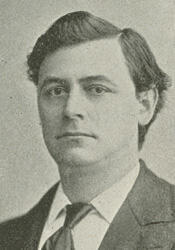
Here you will find contact information for Representative Milford Wriarson Howard, including email address, phone number, and mailing address.
| Name | Milford Wriarson Howard |
| Position | Representative |
| State | Alabama |
| District | 7 |
| Party | Populist |
| Status | Former Representative |
| Term Start | December 2, 1895 |
| Term End | March 3, 1899 |
| Terms Served | 2 |
| Born | December 18, 1862 |
| Gender | Male |
| Bioguide ID | H000843 |
About Representative Milford Wriarson Howard
Milford Wriarson Howard (December 18, 1862 – December 28, 1937) was a United States Representative from Alabama, attorney, author, and later a political activist whose career spanned the Populist movement of the 1890s and the rise of fascist ideology in the interwar period. He was born near Rome, Floyd County, Georgia, and moved with his family in childhood to Alabama, where he was raised in a rural environment shaped by the social and economic dislocation of the post–Civil War South. His early life in the agrarian South, amid widespread dissatisfaction with prevailing economic conditions, helped form the outlook that later drew him to the Populist cause.
Howard was educated in the common schools of Alabama and read law as a young man. He was admitted to the bar and began the practice of law in Fort Payne, DeKalb County, Alabama. Establishing himself as an attorney in this growing town in northeastern Alabama, he became active in local affairs and gained prominence as a spokesman for agrarian and reform interests. His legal practice and involvement in public life brought him into the orbit of the People’s Party, or Populist Party, which was gaining strength among farmers and small-town professionals in the early 1890s.
Howard entered national politics as a member of the Populist Party and was first elected to the U.S. House of Representatives in 1894, defeating Democratic incumbent William H. Denson to represent Alabama’s 8th Congressional District. He took his seat in the Fifty-fourth Congress on March 4, 1895. Running again as a Populist in 1896, he was reelected in a three-way race, prevailing despite receiving only 35.8 percent of the vote, and served in the Fifty-fifth Congress from March 4, 1897, to March 3, 1899. During his two terms, Howard aligned with the Populist program of monetary and economic reform, reflecting the discontent of many Southern farmers with the gold standard and existing financial institutions. He did not seek another term in 1898, and when he left office at the end of his second term he was the last Populist to hold congressional office from Alabama, marking the effective end of the Populist Party’s representation from the state.
After his congressional service, Howard returned to Fort Payne, Alabama, where he resumed the practice of law and remained a notable public figure. He also turned increasingly to writing and political commentary. In 1908, his national profile within reform and third-party circles led to his name being placed in nomination for the presidency at the first convention of the Independence Party in Chicago. In the balloting he finished third, losing the nomination to Thomas L. Hisgen, a Massachusetts oil businessman, but his candidacy underscored his continuing association with insurgent political movements outside the two major parties.
In 1918, Howard moved to California, where he devoted himself to literary efforts and became involved in the burgeoning motion picture industry. He worked briefly in the silent movie business, an unusual path for a former congressman and one that reflected both his interest in public communication and the experimental nature of early Hollywood. During this period he wrote and pursued projects that blended his political ideas with popular media, and he remained engaged in debates over national and international affairs.
By the late 1920s, Howard’s political views had shifted markedly. Traveling in Europe, he met Benito Mussolini in Italy, an encounter that profoundly influenced him. Impressed by Mussolini’s regime, Howard became a committed fascist for the remainder of his life, publicly praising fascism as a model of political and social organization. In the 1930s he associated with American admirers of European authoritarian movements. In 1934, he was one of the editors of The Awakener, a publication that promoted fascist and authoritarian ideas in the United States and reflected his transformation from Populist reformer to advocate of fascism.
Howard spent his final years in California, continuing his literary and political activities until his health declined. He died in Los Angeles, California, on December 28, 1937. Following his death, his cremated remains were returned to Alabama and interred, along with those of his first wife, in a large rock near Mentone, in DeKalb County. Into this rock was built the Sallie Howard Memorial Chapel, commonly known as the Sallie Howard Chapel, a memorial to his first wife and a distinctive landmark in the region that also serves as his final resting place.