Senator Millard Evelyn Tydings
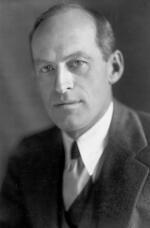
Here you will find contact information for Senator Millard Evelyn Tydings, including email address, phone number, and mailing address.
| Name | Millard Evelyn Tydings |
| Position | Senator |
| State | Maryland |
| Party | Democratic |
| Status | Former Representative |
| Term Start | December 3, 1923 |
| Term End | January 3, 1951 |
| Terms Served | 6 |
| Born | April 6, 1890 |
| Gender | Male |
| Bioguide ID | T000446 |
About Senator Millard Evelyn Tydings
Millard Evelyn Tydings (April 6, 1890 – February 9, 1961) was an American attorney, author, soldier, and state legislator who became one of Maryland’s most prominent Democratic lawmakers in the first half of the twentieth century. He served as a Democratic Representative and Senator in the United States Congress from Maryland, representing the state in the U.S. House of Representatives from 1923 to 1927 and in the U.S. Senate from 1927 to 1951. Over six terms in Congress, he contributed to the legislative process during a significant period in American history, participating in debates over the New Deal, World War II, decolonization, and early Cold War anticommunism, while representing the interests of his Maryland constituents.
Tydings was born in Havre de Grace, Harford County, Maryland, the son of Mary Bond (O’Neill) Tydings and Millard Fillmore Tydings. He attended the public schools of Harford County and went on to Maryland Agricultural College (now the University of Maryland, College Park), from which he graduated in 1910. After college, he worked as a civil engineer with the Baltimore and Ohio Railroad in West Virginia in 1911. He then studied law at the University of Maryland School of Law in Baltimore, was admitted to the bar, and began practicing law in Havre de Grace in 1913. These early professional experiences in engineering and law provided the technical and legal grounding that would later inform his legislative work.
Tydings entered public life in Maryland state politics before his national career. In 1916 he was elected to the Maryland House of Delegates, where he quickly rose in influence and was chosen by his colleagues to serve as Speaker of the House from 1920 to 1922. He subsequently served in the Maryland State Senate during 1922–1923. Parallel to his state legislative service, Tydings served in the U.S. Army during World War I. He was promoted to lieutenant colonel and division machine-gun officer in 1918, served on the Western Front with the American Expeditionary Forces, and received both the Distinguished Service Cross and the Army Distinguished Service Medal for his wartime service. His military record enhanced his public standing and shaped his later interest in national defense and foreign affairs.
In 1922, Tydings was elected as a Democrat to the 68th Congress and was re-elected to the 69th Congress, representing Maryland’s second congressional district in the U.S. House of Representatives from March 4, 1923, to March 3, 1927. During this period he participated actively in the legislative process but declined to seek renomination to the House in 1926, choosing instead to run for the United States Senate. He won election to the Senate in 1926 and was subsequently re-elected in 1932, 1938, and 1944, serving from March 4, 1927, to January 3, 1951. Throughout his Senate career he became known for taking principled, often controversial and sometimes unusual stands on major issues. A centrist Democrat, he cautiously backed President Franklin D. Roosevelt’s New Deal programs while using the patronage opportunities they created to strengthen his political base in Maryland. He was an early and strong critic of Prohibition prior to its repeal in 1933, and in 1935, concerned about the growing flexibility of the U.S. Treasury in managing federal debt, he proposed a constitutional amendment that would have prohibited appropriations in excess of revenues without a specific new debt authorization and would have required that any new debt be liquidated over a fifteen-year period.
Tydings’s Senate career was marked by significant committee leadership and major legislative initiatives. He served as chairman of the United States Senate Committee on Territories and Insular Affairs during the 73rd through 79th Congresses, and later chaired the U.S. Senate Committee on Armed Services in the 81st Congress. With Representative John McDuffie of Alabama, he co-sponsored the Philippine Independence Act, commonly known as the Tydings–McDuffie Act, which established a ten-year Commonwealth period for the Philippines, intended to culminate in the withdrawal of American sovereignty and the recognition of full Philippine independence. In 1936 he introduced a bill in Congress calling for independence for Puerto Rico, though it was opposed by Luis Muñoz Marín, a leading figure in Puerto Rico’s pro-independence Liberal Party, and the measure did not pass. Following World War II and the use of atomic weapons against Japan, Tydings sponsored a bill calling for the United States to lead the world in nuclear disarmament, reflecting his concern about the implications of atomic warfare.
On foreign policy and civil liberties, Tydings often took positions that placed him at odds with prevailing currents. In January 1934, he introduced a Senate resolution condemning Nazi oppression of Jews in Germany and asking President Roosevelt to inform Adolf Hitler’s government that the United States was profoundly distressed by its antisemitic measures; the resolution, however, was bottled up in the Senate Foreign Relations Committee and did not advance. In 1937 he broke with President Roosevelt by opposing the president’s proposal to expand, or “pack,” the U.S. Supreme Court. Roosevelt retaliated in 1938 by personally campaigning in eastern Maryland for Tydings’s primary opponent, Congressman David J. Lewis. The state’s newspapers overwhelmingly supported Tydings and denounced what they viewed as presidential interference in Maryland politics, and Tydings was easily re-elected. Contemporary and later observers, including historian Philip A. Grant Jr., concluded that Tydings’s victory was based largely on his own record and merits, and that Roosevelt’s politicking had limited effect, even though Maryland voters continued to support the New Deal and Roosevelt in 1940.
In the early Cold War era, Tydings became a central figure in the national debate over anticommunism. During the 81st Congress he chaired the Subcommittee on the Investigation of Loyalty of State Department Employees, widely known as the Tydings Subcommittee or Tydings Committee, which was created in March 1950 to investigate Senator Joseph McCarthy’s allegations of widespread Communist penetration of the federal government and the U.S. Army. The hearings, held from March to July 1950, focused on McCarthy’s charges that the fall of the Kuomintang regime in China had been caused by alleged Soviet spies in the State Department and his claim that scholar Owen Lattimore was a “top Russian agent.” The proceedings were contentious and attracted extensive media attention. In McCarthy’s first 250 minutes on the witness stand, Tydings interrupted him 85 times with questions and demands for substantiation, provoking McCarthy’s ire; the Wisconsin senator denounced Tydings as an “egg-sucking liberal.” The drama intensified when former Communist Louis F. Budenz appeared as a surprise witness in support of some of McCarthy’s claims. In July 1950, the committee issued its report, concluding that McCarthy’s accusations were spurious and condemning his charges as an intentionally nefarious hoax.
The 1950 Senate election in Maryland became a referendum on McCarthyism as well as on Tydings’s long tenure. Running for re-election, Tydings repeatedly dismissed McCarthy’s claims of Communist infiltration of the State Department as “a fraud and a hoax.” McCarthy’s supporters mounted an aggressive campaign against him, distributing a composite photograph that falsely suggested a close association between Tydings and Earl Browder, the former head of the Communist Party USA. The image combined a 1938 photograph of Tydings listening to a radio with a 1940 photograph of Browder delivering a speech, and was captioned with a technically accurate but misleading quotation—Tydings’s polite “Thank you, sir” to Browder’s testimony before the Tydings Committee—implying a degree of amity that did not exist. In the charged political climate of 1950, Tydings was defeated by Republican John Marshall Butler. He attempted a return to the Senate in 1956 and was nominated as the Democratic candidate, but he withdrew before the general election because of ill health. Biographer Caroline H. Keith later observed that Tydings’s intense vitriol, harshness, and personal arrogance had left him an isolated figure in politics with relatively few close allies, a factor that may have contributed to his vulnerability in the 1950 contest.
After leaving the Senate, Tydings returned to private life in Maryland, maintaining his legal practice and his involvement in civic affairs. The law firm he had formed with Morris Rosenberg continued its practice in Baltimore, Maryland, carrying forward his professional legacy in the legal field. His family remained prominent in public life: his adopted son, Joseph Tydings, was elected to the U.S. Senate from Maryland in 1964 and served from 1965 to 1971 before being defeated for re-election in 1970. Tydings’s wife, Eleanor Tydings Ditzen, was the daughter of Joseph E. Davies, who served as U.S. Ambassador to the Soviet Union, Belgium, and Luxembourg, linking the family to broader currents in American diplomatic history. His granddaughter, Alexandra Tydings, later became known as an actress.
Millard E. Tydings died on February 9, 1961, at his farm “Oakington,” near Havre de Grace, Maryland. He was buried in Angel Hill Cemetery in Havre de Grace; his gravestone, however, incorrectly records the year of his Senate election, 1926, as the start of his Senate service, which formally began on March 4, 1927. His name endures in several public memorials in Maryland. The Millard E. Tydings Memorial Bridge, which carries Interstate 95 across the Susquehanna River, commemorates his long service to the state and nation. At the University of Maryland, College Park, Millard E. Tydings Hall, which houses the departments of Government and Politics and Economics, is named in his honor, reflecting both his alma mater’s recognition of his achievements and his lasting association with public service and legislative leadership.