Representative Mills Gardner
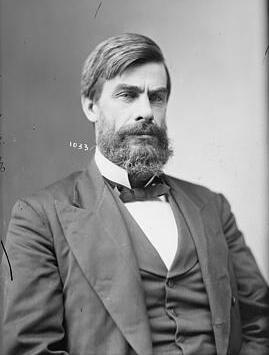
Here you will find contact information for Representative Mills Gardner, including email address, phone number, and mailing address.
| Name | Mills Gardner |
| Position | Representative |
| State | Ohio |
| District | 3 |
| Party | Republican |
| Status | Former Representative |
| Term Start | October 15, 1877 |
| Term End | March 3, 1879 |
| Terms Served | 1 |
| Born | January 30, 1830 |
| Gender | Male |
| Bioguide ID | G000059 |
About Representative Mills Gardner
Mills Gardner (January 30, 1830 – February 20, 1910) was an American attorney, Republican politician, and member of the United States House of Representatives from Ohio, serving one term in Congress from 1877 to 1879. His congressional service occurred during a significant period in American history in the aftermath of the Civil War and Reconstruction, when he participated in the legislative process and represented the interests of his constituents in Ohio’s Third Congressional District.
Gardner was born on January 30, 1830, in Russellville, Brown County, Ohio, the son of Seth Gardner, who had served as a captain in the War of 1812. He was raised in southern Ohio and attended the public schools of Highland County. Seeking further education, he studied at Rankins Academy in Ripley, Ohio, a noted local institution. As a young man, Gardner clerked in a dry goods store for several years, an experience that introduced him to business and community affairs while he prepared for a legal career.
While working as a clerk, Gardner read law under the guidance of his uncle, Judge Nelson Barrere of Hillsboro, Ohio, who had been the last Whig candidate for governor of Ohio. This apprenticeship provided him with a thorough grounding in the law and in the political currents of the time. In 1854 Gardner relocated to Fayette County, Ohio, and in 1855 he was admitted to the bar. He established his law practice in Washington Court House, the county seat, where he quickly built up a large and successful practice. That same year he was elected prosecuting attorney of Fayette County, a position he held for two terms from 1855 to 1859, gaining experience in public service and criminal law.
An early adherent of the new Republican Party, Gardner was an “original Republican,” casting his first presidential vote for John C. Frémont in 1856. He remained steadfastly loyal to the party, voting for every Republican presidential nominee from Frémont through the end of his life. His political career advanced with his election to the Ohio Senate in 1861 on the Republican ticket, placing him in state office at the outset of the Civil War. During this period, he became known as an active and prominent supporter of the Union cause.
Throughout the Civil War, Gardner took a vigorous role in rallying public opinion in behalf of the Union and the Republican national administration. He was particularly noted for his efforts in opposing and exposing the activities and arguments of Clement Vallandigham and other critics of the Lincoln administration. In recognition of his standing within the party, Gardner served as a presidential elector for Ohio in the 1864 election that returned Abraham Lincoln to the presidency. After the war, his state-level service continued when he was elected to the Ohio House of Representatives in 1865, further solidifying his reputation as a capable legislator. In 1872 he was chosen as a member of the Ohio constitutional convention, participating in the revision of the state’s fundamental law.
Gardner’s long involvement in Republican politics and state government led to his election to the United States House of Representatives. In 1876 he was elected as a Republican to the Forty-fifth Congress from Ohio’s Third District, serving from 1877 to 1879. As a member of the House of Representatives, he contributed to the legislative process during a pivotal era marked by the close of Reconstruction and the nation’s adjustment to postwar realities. He served one term in Congress and declined renomination in 1878, choosing not to seek a second term.
In addition to his public offices, Gardner was active in local affairs in Washington Court House. He owned land in the city and, in 1875, sold a south-side lot to a new resident; this property later became the site of the Jacob Light House, a notable local residence. After leaving Congress in 1879, Gardner resumed the practice of law in Washington Court House, where he continued to be a respected figure in the legal and civic life of Fayette County. He practiced law until his death on February 20, 1910, in Washington Court House. Mills Gardner was interred in Washington Cemetery in that city, closing a long career of legal practice and public service at the local, state, and national levels.