Representative Milton Anthony Candler
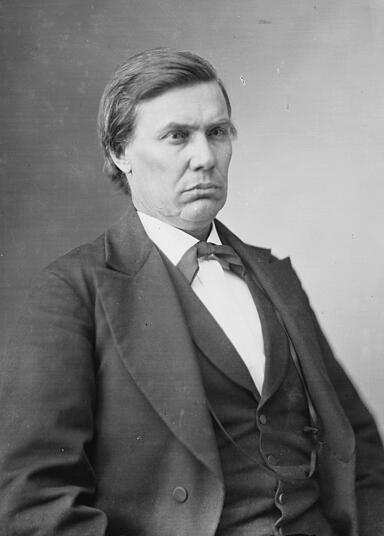
Here you will find contact information for Representative Milton Anthony Candler, including email address, phone number, and mailing address.
| Name | Milton Anthony Candler |
| Position | Representative |
| State | Georgia |
| District | 5 |
| Party | Democratic |
| Status | Former Representative |
| Term Start | December 6, 1875 |
| Term End | March 3, 1879 |
| Terms Served | 2 |
| Born | January 11, 1837 |
| Gender | Male |
| Bioguide ID | C000112 |
About Representative Milton Anthony Candler
Milton Anthony Candler (January 11, 1837 – August 8, 1909) was an American lawyer, Confederate officer, and Democratic politician from an influential Georgia family of businessmen and officeholders. He served as a Representative from Georgia in the United States Congress from 1875 to 1879, completing two terms in the U.S. House of Representatives during a significant period in American history following the Civil War and Reconstruction. Over the course of his public life, he held positions in both houses of the Georgia legislature, participated in state and national Democratic politics, and helped shape the political fortunes of a prominent Southern family whose members would continue to play major roles in Georgia’s civic and economic life.
Candler was born in Campbellton, then the seat of Campbell County (now part of Fulton County), Georgia. He was the first child of Martha Bernetta Beall (1819–1897), of Bartow County, and Samuel Charles Candler (1809–1873), of Columbia County. His father served in both houses of the Georgia legislature and became a substantial slaveholding farmer, owning slaves in Carroll County by 1840 and holding 12 enslaved people by 1850. By 1860, Samuel C. Candler owned $5,700 in real estate and $13,250 in personal property, which included 17 enslaved people, and he leased an additional 19 enslaved people from D. B. Chapman. Milton Candler’s great-grandfather, Colonel William Candler (1730–1784), had led Georgia troops during the American Revolutionary War and later served as a state legislator, and his uncle Ezekiel S. Candler (1815–1869) served as Georgia’s comptroller general from 1849 to 1854. After Milton’s birth, his father moved the family to Villa Rica, in Carroll and Douglas Counties in western Georgia, following the expulsion of the local Creek Indians on the Trail of Tears, further entrenching the family in the social and economic structures of the antebellum South.
As the firstborn son in a politically connected household, Candler received a private education before attending the University of Georgia in Athens, from which he graduated in 1854. He read law and was admitted to the bar in 1856, beginning his legal practice in Cassville, then the county seat of Bartow County, where his mother’s family and Congressman Cooper resided. In 1857 he married Elizabeth Murphey, daughter of Georgia U.S. Representative Charles Murphey, thereby strengthening his ties to the state’s political elite. The couple had twelve children, including Charles Murphey Candler (1857–1935), Samuel Charles Candler (1859–1924), Milton Anthony Candler Jr. (1861–1893), Laura Eliza Candler (1864–1880), Florence Candler Cowles (1867–1940), Maury Lee Candler (1873–1889), Claude Candler McKinney (1877–1972), and Ruth Candler Pope (1880–1960). In 1857 Candler moved his law practice to Decatur, the county seat of DeKalb County, Georgia, where he would live for most of the remainder of his life and establish himself as a leading local attorney and political figure.
On the eve of the Civil War, Candler’s family suffered a personal and political loss when his father‑in‑law, former Representative Charles Murphey, died in January 1861. In Murphey’s honor, the Candler family outfitted a company of Confederate troops from DeKalb County known as the “Murphey Guards.” During the war, Candler combined legislative service with military duty. DeKalb County voters elected him to the Georgia House of Representatives, where he served from 1861 through 1863, representing his constituents in the state legislature of the Confederacy. In 1863 he accepted a commission as captain in the 10th Regiment Georgia Cavalry, State Guards, a battalion organized in August 1863 to serve as mounted infantry for local defense in the portion of the state west of the Chattahoochee River. His service as a Confederate officer reflected both his family’s standing and his alignment with the Confederate cause during the conflict.
Following the Civil War, Candler played an active role in Georgia’s political reconstruction and the reorganization of the Democratic Party. In 1865 he served as a delegate to Georgia’s state constitutional convention, which sought to reestablish civil government under federal requirements. He was elected to the Georgia Senate, serving from 1868 until 1872. During this period he was instrumental in the illegal expulsion of 33 newly elected African American members of the Georgia Legislature in 1868, an episode that drew national attention and highlighted the intense resistance to Black political participation in the postwar South. With the intervention and support of President Ulysses S. Grant and abolitionist leader Frederick Douglass, the expelled legislators were ultimately reinstated in 1870. Candler also emerged as a figure in national party politics, serving as a delegate to the Democratic National Convention in 1872, 1876, and later in 1896.
In 1874, voters of Georgia’s 5th congressional district elected Candler to the United States House of Representatives as a Democrat, defeating Republican incumbent James C. Freeman. He took his seat in the Forty-fourth Congress on March 4, 1875, and was reelected to the Forty-fifth Congress, serving until March 3, 1879. His tenure in Congress coincided with the closing years of Reconstruction and the consolidation of Democratic control in the South. As a member of the House of Representatives, Milton Anthony Candler participated in the legislative process, represented the interests of his Georgia constituents, and contributed to the broader Democratic effort to shape federal policy in the postwar era. Although he won renomination, he ultimately withdrew from the 1878 race, and fellow ex‑Confederate and former state attorney general Nathaniel Job Hammond succeeded him in the House.
After leaving Congress, Candler returned to his law practice in Decatur and continued to exert influence in Georgia politics, though less directly than during his years in elective office. His family remained deeply involved in public affairs and business. His son Charles Murphey Candler became a lawyer and, beginning in 1886, served in both houses of the Georgia legislature and later on the Georgia Railroad Commission from 1909 to 1922. Among his brothers, William B. Candler (1847–1928) served as mayor of Villa Rica; Asa Griggs Candler (1851–1929) built the Coca-Cola Company into a major enterprise; the Reverend Warren Akin Candler (1857–1941) became president of Emory University; and John S. Candler (1861–1941) served as a justice of the Georgia Supreme Court from 1902 to 1906. His cousin Allen D. Candler, also a former Confederate officer, was elected governor of Georgia in 1898, and his nephew Ezekiel S. Candler Jr. represented Mississippi in the U.S. House of Representatives from 1901 to 1921. Another relative, Thomas S. Candler, later served on the Georgia Supreme Court from 1945 to 1966, underscoring the extended family’s long-standing prominence in state and regional affairs.
Milton A. Candler died in Decatur, Georgia, on August 8, 1909, survived by his widow, who died eight years later, as well as by many of his children and grandchildren. He was buried in the family plot in Decatur Cemetery. His legacy in Georgia is reflected not only in his own legislative and congressional service, but also in the extensive public and commercial careers of his relatives, and in local commemorations such as a street in Decatur that bears his name.