Representative Milton Cline Garber
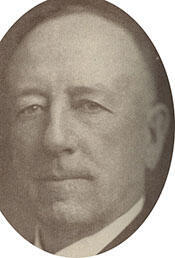
Here you will find contact information for Representative Milton Cline Garber, including email address, phone number, and mailing address.
| Name | Milton Cline Garber |
| Position | Representative |
| State | Oklahoma |
| District | 8 |
| Party | Republican |
| Status | Former Representative |
| Term Start | December 3, 1923 |
| Term End | March 3, 1933 |
| Terms Served | 5 |
| Born | November 30, 1867 |
| Gender | Male |
| Bioguide ID | G000046 |
About Representative Milton Cline Garber
Milton Cline Garber (November 30, 1867 – September 12, 1948) was a U.S. Representative from Oklahoma, a jurist in the Oklahoma Territory and State of Oklahoma, a municipal leader, and a prominent figure in the civic and economic development of Enid and northwestern Oklahoma. A member of the Republican Party, he served five consecutive terms in the United States House of Representatives from 1923 to 1933, contributing to the legislative process during a significant period in American history and representing the interests of his constituents during the 1920s and the onset of the Great Depression. In recognition of his public service and influence in the state’s early development, he was inducted into the Oklahoma Hall of Fame in 1942.
Garber was born on November 30, 1867, in Humboldt County, California, the third child of Martin and Lucy Rine Garber. During his childhood, the family moved to the Midwest, and he grew up on a farm in Eastport, Iowa. This rural upbringing fostered a lasting interest in agriculture that would later be reflected in his civic activities and support for livestock and farming enterprises in Oklahoma. His early life in both frontier California and rural Iowa provided him with firsthand experience of the challenges and opportunities of developing communities in the late nineteenth century.
Garber pursued higher education in Iowa, attending Upper Iowa University at Fayette from 1887 to 1890. He then studied law in the law department of the University of Iowa at Iowa City from 1891 to 1893, preparing for a legal career that would become the foundation of his public life. On October 30, 1900, he married Lucy M. Bradley of Moberly, Missouri. The couple had three daughters—Lucy Ann, Elizabeth, and Ruth—and two sons, Martin D. Garber and Milton B. Garber, several of whom would later participate in the family’s business and publishing interests.
In 1893, Garber joined his father, Martin Garber, and his brother, Bert A. Garber, in the Cherokee Outlet land opening, commonly known as the Land Run of 1893. The family staked claims in what became Garfield County, Oklahoma, and participated in establishing the town of Garber, Oklahoma, which was named for his father. That same year he was admitted to the bar and commenced the practice of law in Guthrie, then the capital of Oklahoma Territory. While his father and brother operated a general store, Garber built a legal practice that soon led to public office. Following the resignation of James K. Beauchamp, he was appointed probate judge of Garfield County in 1902 and was subsequently elected to that office in 1904. In 1906 he was appointed associate justice of the Supreme Court of the Territory of Oklahoma and trial judge of the fifth judicial district, serving in these capacities until Oklahoma achieved statehood in 1907. After statehood, he was elected judge of the twentieth judicial district in 1908 and served until 1912, when he resigned to return to private law practice.
Garber’s public service extended beyond the judiciary into municipal leadership and business development. He moved to Enid, Oklahoma, where he became a central figure in the city’s civic life. From 1919 to 1921 he served as mayor of Enid. During his tenure, Convention Hall was constructed as a memorial to World War I veterans from Garfield County, reflecting his commitment to honoring military service and enhancing the city’s public facilities. In 1920 he purchased the Enid Morning News, and in 1923 that paper merged with the Enid Eagle. Garber became editor and co-publisher of the Enid Publishing Company, a role he continued to hold after his congressional career, helping shape public opinion and local discourse. His son, Milton B. Garber, later succeeded him as editor. Beyond publishing, Garber was a partial owner of the Oxford Hotel and the Enid Radiophone Company and assisted in establishing radio station KCRC, demonstrating his interest in modern communications and regional economic growth. He and his brother also opened the Garber oil fields, and he maintained a strong interest in agriculture, founding the Northwest Oklahoma Junior Livestock Show to promote youth involvement in farming and livestock production.
Garber was elected as a Republican to the Sixty-eighth Congress and was subsequently re-elected to the Sixty-ninth, Seventieth, Seventy-first, and Seventy-second Congresses, serving from March 4, 1923, to March 3, 1933. His decade in the House of Representatives coincided with the post–World War I era, the prosperity of the 1920s, and the beginning of the Great Depression. During his tenure, he served on several key committees, including Expenditures in the Interior Department, Indian Affairs, Irrigation and Reclamation, Public Buildings and Grounds, Roads, and Interstate and Foreign Commerce. Through these assignments he participated in the democratic process at the national level, addressing issues of infrastructure, western development, Native American affairs, and federal administration that were particularly important to Oklahoma and the broader region. In 1932 he was an unsuccessful candidate for re-election to the Seventy-third Congress, and he was succeeded by Democrat E. W. Marland of Ponca City, Oklahoma.
After leaving Congress in 1933, Garber returned to Enid and resumed his leadership in publishing and local business. As editor and co-publisher of the Enid Publishing Company, he remained an influential voice in civic affairs and continued to support agricultural, commercial, and cultural initiatives in northwestern Oklahoma. His earlier establishment of the Northwest Oklahoma Junior Livestock Show and his involvement in oil, hospitality, and broadcasting enterprises underscored his role as both a public servant and a community builder. His induction into the Oklahoma Hall of Fame in 1942 recognized his long record of service in territorial and state courts, municipal government, national office, and regional economic development.
Milton Cline Garber died of a heart attack in Alexandria, Minnesota, on September 12, 1948. His funeral service, held on the anniversary of the Land Run of 1893, was conducted by Reverend Isaac Newton McCash, president emeritus of Phillips University, symbolically linking his life to the formative events of Oklahoma’s settlement. He was interred in Memorial Park Cemetery in Enid, Oklahoma, leaving a legacy as a jurist, legislator, civic leader, and pioneer whose career spanned the transition from territorial days to the modern era.