Representative Milton Andrew Romjue
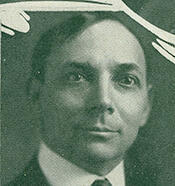
Here you will find contact information for Representative Milton Andrew Romjue, including email address, phone number, and mailing address.
| Name | Milton Andrew Romjue |
| Position | Representative |
| State | Missouri |
| District | 1 |
| Party | Democratic |
| Status | Former Representative |
| Term Start | April 2, 1917 |
| Term End | January 3, 1943 |
| Terms Served | 12 |
| Born | December 5, 1874 |
| Gender | Male |
| Bioguide ID | R000418 |
About Representative Milton Andrew Romjue
Milton Andrew Romjue (December 5, 1874 – January 23, 1968) was a Democratic U.S. Representative from Missouri who served twelve terms in the United States Congress between 1917 and 1943. He was born on December 5, 1874, near Love Lake in Macon County, Missouri, to Andrew Jackson Romjue (1840–1904) and Susan E. (Roan) Romjue (1843–1931). Raised in a rural community, he attended the public rural schools of Macon County before pursuing further education. On July 11, 1900, he married Maude Nickell Thompson; the couple had one son, Lawson, born in 1907, who later followed his father to the University of Missouri, became an attorney, and practiced law for many decades.
Romjue’s formal education began in local schools and continued at the Missouri State Normal School in Kirksville, an institution now known as Truman State University. He subsequently enrolled at the University of Missouri, where he studied law and graduated from the law department in 1904. That same year he was admitted to the Missouri bar, marking the beginning of a long legal and political career rooted in his home region.
Upon admission to the bar in 1904, Romjue commenced the practice of law in Macon, Missouri. His early legal work included service as city attorney for Higbee, Missouri, in 1904 and 1905. Demonstrating an early aptitude for public service and local governance, he was elected judge of the Macon County probate court, a position he held from 1907 to 1915. Active in Missouri Democratic politics since his college years, he built a reputation as a capable lawyer and local official, which laid the groundwork for his entry into national politics.
Romjue was elected as a Democrat to the Sixty-fifth and Sixty-sixth Congresses, serving his first period in the U.S. House of Representatives from March 4, 1917, to March 3, 1921. During these initial terms, he represented his Missouri constituents in the House of Representatives and participated in the legislative process during a significant period in American history that encompassed World War I and its aftermath. He was an unsuccessful candidate for reelection in 1920 to the Sixty-seventh Congress and returned to private law practice in Macon for the next two years.
In 1922, Romjue again secured the Democratic nomination and was elected to the Sixty-eighth Congress, beginning a second, longer stretch of congressional service. He served in the Sixty-eighth and the nine succeeding Congresses, from March 4, 1923, to January 3, 1943. Over these ten consecutive terms, combined with his earlier service, he completed twelve terms in the House. During this extended tenure, he became a significant figure in shaping legislation and representing the interests of his Missouri district. He served as chairman of the Committee on the Post Office and Post Roads in the Seventy-sixth and Seventy-seventh Congresses, where he helped guide reforms and modernization efforts in the U.S. Postal Service, reflecting his interest in infrastructure and public services.
Romjue’s congressional career coincided with the tumultuous years of the Great Depression and the New Deal. As a delegate to the 1928 Democratic National Convention, he became acquainted with Franklin D. Roosevelt, forging a friendship that would influence his legislative priorities. In the 1930s he emerged as a reliable supporter of President Roosevelt’s New Deal program, backing major initiatives such as Social Security, measures to assist farmers, and legislation to aid wounded military veterans. He also worked closely with other Missouri leaders to secure important military installations for the state, including Fort Leonard Wood and Camp Crowder, as the United States prepared for and entered World War II. His efforts contributed both to national defense and to the economic development of Missouri.
Failing to win reelection in 1942 to the Seventy-eighth Congress, Romjue concluded his service in the House on January 3, 1943, and returned to private life in Macon County. He resumed the practice of law and also engaged in farming and livestock production, maintaining close ties to the rural community from which he had risen. He continued to live in Macon, Missouri, for the remainder of his life. Milton Andrew Romjue died on January 23, 1968, in Macon, Missouri, and was interred in Oakwood Cemetery in that city.