Senator Monroe Leland Hayward
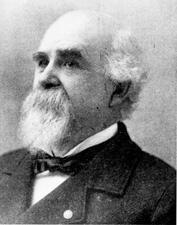
Here you will find contact information for Senator Monroe Leland Hayward, including email address, phone number, and mailing address.
| Name | Monroe Leland Hayward |
| Position | Senator |
| State | Nebraska |
| Party | Republican |
| Status | Former Representative |
| Term Start | December 4, 1899 |
| Term End | December 31, 1899 |
| Terms Served | 1 |
| Born | December 22, 1840 |
| Gender | Male |
| Bioguide ID | H000409 |
About Senator Monroe Leland Hayward
Monroe Leland Hayward (December 22, 1840 – December 5, 1899) was an American lawyer, jurist, and politician from Nebraska who was elected as a Republican to the United States Senate in 1899. Although he was chosen to represent Nebraska in the Senate and his service in Congress occurred during a significant period in American history, he died before taking the oath of office and was therefore never officially seated. His brief tenure as senator-elect nonetheless placed him within the legislative process at a moment of transition for both Nebraska and the nation.
Hayward was born on December 22, 1840, in Willsboro, Essex County, New York. Little is recorded about his early childhood, but he came of age in the antebellum period and entered adulthood as the United States descended into civil war. His formative years in upstate New York preceded a lifetime of public service that would eventually be centered in the emerging state of Nebraska.
During the American Civil War, Hayward served in the Union Army, first in the Twenty-second Regiment, New York Volunteer Infantry, and later in the Fifth Regiment, New York Volunteer Cavalry. His military service placed him among the many volunteers from New York who fought to preserve the Union. The discipline and experience he gained during the war helped shape his subsequent legal and political career in the postwar era.
After the Civil War, Hayward pursued higher education and professional training. He graduated from Fort Edward Collegiate Institute in Fort Edward, New York, in 1865. Following his graduation, he moved west and studied law in Whitewater, Wisconsin. He was admitted to the bar in 1867 and soon thereafter relocated to Nebraska City, Nebraska, where he commenced the practice of law. His move to Nebraska City placed him in a growing community on the Missouri River that was becoming an important center of commerce and politics in the new state.
Hayward quickly became active in Nebraska’s public affairs. In 1873 he served as a member of the Nebraska state constitutional convention, participating in the drafting and shaping of the state’s fundamental law during a critical period of institutional development. His legal reputation continued to grow, and in 1886 he became a judge of the district court of Nebraska. As a district judge, he presided over a wide range of civil and criminal matters, contributing to the establishment of judicial precedent and the administration of justice in a young and rapidly developing state.
A member of the Republican Party, Hayward’s prominence as a lawyer and judge led to his selection for higher office. On March 8, 1899, he was elected by the Nebraska Legislature as a Republican to the United States Senate to fill the vacancy in the term beginning March 4, 1899. The delay between the start of the term and his election was caused by the legislature’s failure to choose a senator by March 4, a not uncommon occurrence in the era before direct election of senators. Hayward’s election placed him in the Senate during a significant period in American history, as the nation grappled with the aftermath of the Spanish–American War and the onset of a more expansive national role abroad. Although he was elected to become a Senator of Nebraska in 1899 and was recognized as senator-elect, his health deteriorated after his election, and the Senate had adjourned, preventing him from taking the oath of office. As a result, while he was elected and intended to serve from 1899 to 1899, he did not formally begin his term and was never officially sworn in as a United States Senator.
Hayward died in Nebraska City, Nebraska, on December 5, 1899, while in a coma, a few months after his election to the Senate. He was interred in Wyuka Cemetery, a prominent burial ground in Nebraska. His death created a vacancy that was filled under circumstances that drew public comment. Although Hayward had been elected as a Republican, the Governor of Nebraska at the time, William A. Poynter, was a member of the Populist Party. Poynter appointed Populist William V. Allen to the Senate seat, prompting contemporary observers to note the partisan implications. The Lincoln Courier remarked: “Ethically as a republican senator was elected and has died a republican should be appointed to take his place, but such transcendental politics is still unheard of in the year of our Lord eighteen hundred and ninety-nine.” Hayward’s name appears in lists of members of the United States Congress who died in office between 1790 and 1899, and the Fifty-sixth Congress later ordered the publication of Memorial Addresses for Monroe L. Hayward in 1900, reflecting the respect accorded to him despite his never having taken his seat.
Hayward’s family continued to play a notable role in American public and cultural life. His son, Colonel William Hayward, commanded the 369th Infantry Regiment during the First World War, a famed African American unit known as the “Harlem Hellfighters,” which distinguished itself in combat under French command. His grandson, Leland Hayward, became a prominent Broadway and Hollywood producer, associated with major theatrical and film productions in the mid-twentieth century. His great-granddaughter, Brooke Hayward, achieved recognition as an actress and writer. Through both his own public service and the subsequent accomplishments of his descendants, Monroe Leland Hayward’s legacy extended well beyond his untaken seat in the United States Senate.