Representative Monroe Henry Kulp
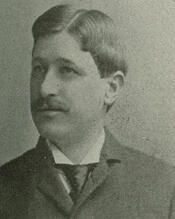
Here you will find contact information for Representative Monroe Henry Kulp, including email address, phone number, and mailing address.
| Name | Monroe Henry Kulp |
| Position | Representative |
| State | Pennsylvania |
| District | 17 |
| Party | Republican |
| Status | Former Representative |
| Term Start | December 2, 1895 |
| Term End | March 3, 1899 |
| Terms Served | 2 |
| Born | October 23, 1858 |
| Gender | Male |
| Bioguide ID | K000338 |
About Representative Monroe Henry Kulp
Monroe Henry Kulp (October 23, 1858 – October 19, 1911) was a Republican member of the U.S. House of Representatives from Pennsylvania who served two terms in Congress from 1895 to 1899. He was born in Barto, Berks County, Pennsylvania, on October 23, 1858, the son of Darlington R. Kulp and Elizabeth (Gilbert) Kulp. During his childhood his family moved to Shamokin, Northumberland County, Pennsylvania, where he was raised and where he would later center his extensive business and political career.
Kulp received his early education in the public schools of Shamokin, Pennsylvania. He pursued further studies at the State Normal College in Lebanon, Ohio, an institution devoted to training teachers, and then completed a course of business studies at Eastman Business College in Poughkeepsie, New York. This combination of local schooling and specialized commercial education prepared him for a career in enterprise and public life in the rapidly industrializing economy of late nineteenth-century Pennsylvania.
After college, Kulp entered the business world, initially working in his father’s enterprises in Shamokin. He became engaged in the coal, lumber, brick, and ice businesses, sectors that were central to the regional economy. Building on this foundation, he organized several ventures of his own, often in partnership with his brother, G. Gilbert Kulp, and his associate D. C. Kaseman. Over time, their interests expanded to include timber lands, railroads, residential and commercial real estate, and banking. Kulp also became involved in a number of Shamokin-area public utilities, including telephone, electric light, water, sewer, and trolley companies, reflecting his role in the development of the town’s infrastructure and industrial growth.
Kulp’s prominence in business and local affairs led to his entry into national politics as a member of the Republican Party. He was elected as a Republican to the Fifty-fourth and Fifty-fifth Congresses, serving as a Representative from Pennsylvania in the United States Congress from March 4, 1895, to March 3, 1899. During these two terms in office, he contributed to the legislative process at a time of significant economic and political change in the United States, representing the interests of his constituents from a district shaped by coal mining, railroads, and emerging industry. His service in Congress occurred during a notable period in American history, and as a member of the House of Representatives he participated in the democratic process and national debates of the era.
After completing his second term, Kulp was not a candidate for renomination in 1898 and returned to his extensive business interests in Shamokin and the surrounding region. He remained active in Republican politics and was chosen as a delegate to the 1900 Republican National Convention, reflecting his continued influence within the party at both the state and national levels. In his personal life, Kulp married Sara Washington Detweiler of Harrisburg, Pennsylvania, in 1897. The couple had no children but were part of the social and civic life of their community.
In his later years, Kulp’s health declined. He suffered from Bright’s disease, rheumatism, and other ailments that increasingly limited his activities. In an effort to regain his health, he traveled extensively, but these measures proved unsuccessful. Monroe Henry Kulp died in Shamokin, Pennsylvania, on October 19, 1911, just four days before his fifty-third birthday. He was interred in Shamokin City Cemetery, closing a life marked by significant involvement in business development, public utilities, and Republican politics, as well as two terms of service in the United States House of Representatives.