Representative Monroe Minor Redden
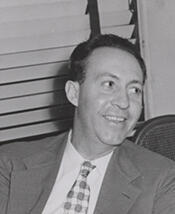
Here you will find contact information for Representative Monroe Minor Redden, including email address, phone number, and mailing address.
| Name | Monroe Minor Redden |
| Position | Representative |
| State | North Carolina |
| District | 12 |
| Party | Democratic |
| Status | Former Representative |
| Term Start | January 3, 1947 |
| Term End | January 3, 1953 |
| Terms Served | 3 |
| Born | September 24, 1901 |
| Gender | Male |
| Bioguide ID | R000104 |
About Representative Monroe Minor Redden
Monroe Minor Redden (September 24, 1901 – December 16, 1987) was a Democratic U.S. Congressman from North Carolina who represented his state in the United States House of Representatives from January 3, 1947, to January 3, 1953. Over the course of three consecutive terms in Congress, he participated actively in the legislative process during a significant period in American history, representing the interests of his constituents as a member of the Democratic Party.
Redden was born in Hendersonville, Henderson County, North Carolina, where he attended the local public schools. He pursued higher education at Wake Forest College in Wake Forest, North Carolina, and completed his legal training at the Wake Forest College law school, from which he graduated in 1923. Soon after his admission to the bar, he returned to his hometown to begin the practice of law, establishing the foundation for a career that combined legal work with sustained involvement in party politics.
Following his graduation, Redden practiced law in Hendersonville, entering into practice with his younger brother, Arthur Redden. Their law practice served the local community and provided Monroe Redden with a platform for civic engagement and political activity. During these early professional years, he became increasingly active in Democratic Party affairs at the county level, building a reputation as an effective organizer and party leader in western North Carolina.
Redden’s formal political career began in party leadership. He served as chairman of the Henderson County Democratic Party from 1930 to 1946, a period that spanned the Great Depression, the New Deal era, and World War II. His work at the county level led to broader responsibilities within the state party. From 1942 to 1944, he chaired the North Carolina Democratic Party executive committee, placing him at the center of statewide party strategy and organization during a critical wartime period. These roles enhanced his visibility and influence within the Democratic Party and positioned him for national office.
In 1946, capitalizing on his long record of party service and local prominence, Redden ran for a seat in the U.S. House of Representatives as a Democrat from North Carolina. He won election and took office on January 3, 1947. Redden served three terms in Congress, remaining in office until January 3, 1953. During his tenure in the House of Representatives, he contributed to the legislative work of the post–World War II era, when the nation was adjusting to peacetime conditions, the onset of the Cold War, and evolving domestic policies. As a member of the House, he participated in the democratic process and represented the interests of his North Carolina constituents in national deliberations.
Redden chose not to seek reelection in 1952 and retired from Congress at the conclusion of his third term. After leaving federal office, he returned to Hendersonville and resumed the practice of law, reestablishing his legal career in his hometown. In addition to his legal work, he entered the business field and served as president of the Southern Heritage Life Insurance Company from 1956 to 1959, reflecting his continued engagement in professional and civic life beyond elective office.
Monroe Minor Redden remained closely tied to Hendersonville throughout his life. He lived and worked there during his early legal and political career, returned there after his service in Congress, and continued to be a figure in the community in his later years. He died in his hometown of Hendersonville, North Carolina, on December 16, 1987, closing a life marked by long service to his party, his state, and the United States Congress.