Senator Montfort Stokes
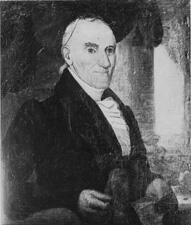
Here you will find contact information for Senator Montfort Stokes, including email address, phone number, and mailing address.
| Name | Montfort Stokes |
| Position | Senator |
| State | North Carolina |
| Party | Republican |
| Status | Former Representative |
| Term Start | December 4, 1816 |
| Term End | March 3, 1823 |
| Terms Served | 2 |
| Born | March 12, 1762 |
| Gender | Male |
| Bioguide ID | S000949 |
About Senator Montfort Stokes
Montfort Stokes (March 12, 1762 – November 4, 1842) was an American Democratic, originally Democratic-Republican, politician who served as a United States Senator from North Carolina from 1816 to 1823 and as the 25th Governor of North Carolina from 1830 to 1832. A member of the Republican (Democratic-Republican) Party in his early national career and later aligned with the Democratic Party of Andrew Jackson, he was an influential figure in North Carolina politics during a formative period in the early republic and antebellum era.
Stokes was born in Lunenburg County, Virginia, the youngest of eleven children of David Stokes, a military officer and judge. At the age of thirteen, he enlisted in the merchant navy. During the American Revolution he was captured by the British and confined for seven months on the prison ship Jersey in New York Harbor, an experience that marked his early life and public reputation. After the war he moved south and ultimately settled in Salisbury, North Carolina, where he farmed, served as clerk of court, and studied law. In Salisbury he first met Andrew Jackson, then a fellow lawyer, beginning an association that would later shape his political trajectory.
Stokes’s early public career developed within North Carolina’s legislative institutions. He served as assistant clerk of the North Carolina Senate from 1786 to 1790 and was a candidate for the United States House of Representatives in 1793. He later became clerk of the North Carolina Senate in 1799, holding that position until 1816. During these years he built a reputation as an able legislative officer and party man. In 1804 he was elected by the legislature to the United States Senate but declined to take the seat at that time. He also served as a major-general of the North Carolina Militia from 1804 to 1816, reflecting his continued involvement in military affairs following his Revolutionary War service.
Stokes entered national office in 1816, when he was elected to the United States Senate from North Carolina to fill the vacancy caused by the resignation of Senator James Turner. He served the remaining few months of Turner’s term and then a full term in the Senate, holding office from 1816 to 1823. As a member of the Senate during a significant period in American history, he participated in the legislative process and represented the interests of his North Carolina constituents during the Era of Good Feelings and the early debates over internal improvements and national policy. During his Senate tenure he changed his residency from Salisbury to Wilkesboro, North Carolina, in the foothills of the Blue Ridge Mountains. Although he sought to continue in national office, he was defeated for re-election by the North Carolina legislature in 1823, ending his two terms in the Senate.
After leaving the United States Senate, Stokes returned to state politics. He was elected to the North Carolina General Assembly and represented Wilkes County in the North Carolina Senate from 1826 to 1827. He later served in the North Carolina House of Commons from 1829 to 1830. In these roles he remained an active participant in the state’s legislative deliberations and helped shape policy in a period of growing sectional and partisan tension. His long experience in both state and national government made him a prominent figure when the question of the governorship came before the General Assembly.
In 1830, the North Carolina General Assembly elected Stokes Governor on the ninth ballot, choosing him over Cadwallader Jones and Richard Dobbs Spaight Jr. He faced Spaight again for re-election the following year and was returned to office by a narrow margin of 98–93. As governor from 1830 to 1832, Stokes supported the construction of canals along the North Carolina coast as part of a broader program of internal improvements intended to stimulate commerce and transportation. During his gubernatorial term he also served simultaneously as president of the Board of Trustees of the University of North Carolina, underscoring his influence in both civic and educational affairs. A strong supporter of President Andrew Jackson, Governor Stokes urged the state legislature to back Jackson’s firm opposition to the doctrine of nullification advanced by South Carolina.
Stokes’s alignment with Jacksonian policy led to his appointment by President Jackson to head the Federal Indian Commission, charged with overseeing the relocation and resettlement of Native American tribes from the American Southeast under the emerging federal policy of Indian removal. To assume this national responsibility, Stokes resigned as governor on November 19, 1832. He then moved to Fort Gibson in the Arkansas Territory, in what is present-day Oklahoma, where he carried out his duties as a federal commissioner. In this capacity he advocated for the Cherokee, Seneca, Shawnee, and Quapaw tribes during a period of forced migration and profound upheaval for Indigenous communities.
In his later years Stokes remained at or near Fort Gibson, continuing his work related to Indian affairs until his death. He died in November 1842 and was buried near Fort Gibson in what is now Oklahoma. He is believed to be the only soldier of the American Revolutionary War buried in Oklahoma, a distinction that links the Revolutionary generation to the later frontier history of the United States. His long public career, spanning service in the militia, the North Carolina legislature, the United States Senate, the governorship, and the Federal Indian Commission, reflected the evolving political landscape of the early nineteenth century.
Stokes married twice. His first marriage was to Mary Irwin, with whom he had one daughter. After her death he married Rachel Montgomery (1776–1862); together they had five sons and five daughters. Among their children was Montfort Sidney Stokes, who served as a major in the Mexican–American War and later as a colonel of the 1st North Carolina Infantry Regiment in the Civil War, in which he died in 1862. Montfort Stokes was also the uncle of General Joseph Montfort Street, an influential Indian agent on the Mississippi River, further extending the family’s involvement in federal Indian affairs. Stokes was remembered in Washington circles for a legendary game of brag with Senate Sergeant-at-Arms Mountjoy Bayly that began on a Thursday afternoon and continued until 10 a.m. the following Monday, when Bayly was compelled to return to work, leaving “the Senator grumbling and declaring that had he supposed that Bailey would have thus prematurely broken up the game he would not have sat down to play with him.” His name was later commemorated in 1943 when a United States Liberty ship, the SS Montfort Stokes, was launched; the vessel was scrapped in 1962.