Representative Morgan Cassius Fitzpatrick
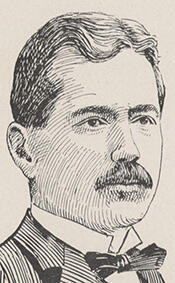
Here you will find contact information for Representative Morgan Cassius Fitzpatrick, including email address, phone number, and mailing address.
| Name | Morgan Cassius Fitzpatrick |
| Position | Representative |
| State | Tennessee |
| District | 4 |
| Party | Democratic |
| Status | Former Representative |
| Term Start | November 9, 1903 |
| Term End | March 3, 1905 |
| Terms Served | 1 |
| Born | October 29, 1868 |
| Gender | Male |
| Bioguide ID | F000176 |
About Representative Morgan Cassius Fitzpatrick
Morgan Cassius Fitzpatrick (October 29, 1868 – June 25, 1908) was an American politician, lawyer, and newspaper editor who served as a Democratic Representative from Tennessee in the United States Congress from 1903 to 1905. He represented Tennessee’s 4th congressional district in the Fifty-eighth Congress and contributed to the legislative process during one term in office, participating in the democratic process and representing the interests of his constituents during a significant period in American history.
Fitzpatrick was born on October 29, 1868, near Carthage, in Smith County, Tennessee. He attended the common schools of the area before pursuing further education outside his home state. In 1887 he studied at Lebanon University in Ohio, an experience that broadened his academic background and prepared him for a professional career in law and public service. He subsequently enrolled in the law department of Cumberland University in Lebanon, Tennessee, an important regional center for legal education in the late nineteenth century.
In 1891 Fitzpatrick graduated from the law department of Cumberland University and was admitted to the bar the same year. He commenced the practice of law in Hartsville, Tennessee, where he quickly became involved in local civic and political affairs. In addition to his legal practice, he edited a newspaper in Hartsville, using the press as a platform to engage in public discourse and Democratic Party politics. In 1894 he married Maggie Mae De Bow, establishing a family life that ran parallel to his increasingly active public career.
Fitzpatrick entered state politics as a member of the Tennessee House of Representatives, in which he served from 1895 to 1899. During his tenure he rose rapidly in influence, and in 1897 he was elected Speaker of the Tennessee House of Representatives on the first ballot, defeating A. H. Pettibone. His leadership in the state legislature coincided with a period of political realignment and debate over economic and educational policy in Tennessee, and he became recognized as a prominent Democratic figure in state government.
After his legislative service, Fitzpatrick continued his work in public education and party leadership. From 1899 to 1903 he served as state superintendent of public instruction for Tennessee, overseeing the administration of the public school system at a time when the state was working to expand and standardize educational opportunities. He also served as chairman of the state Democratic executive committee, a position that placed him at the center of party organization, candidate selection, and campaign strategy in Tennessee.
Building on his state-level prominence, Fitzpatrick was elected as a Democrat to the United States House of Representatives for the Fifty-eighth Congress. He represented Tennessee’s 4th congressional district from March 4, 1903, to March 3, 1905. During his single term in Congress, he took part in the legislative deliberations of the early twentieth century, a period marked by growing national attention to economic regulation, infrastructure, and the evolving role of the federal government. He did not seek renomination in 1904 and, upon the expiration of his term, returned to Tennessee to resume the practice of law.
In his later years, Fitzpatrick continued his legal work and remained a figure of note within Tennessee’s Democratic circles, though his national political career had concluded. He died in Nashville, Tennessee, on June 25, 1908, at the age of 39. He was interred at Gallatin Cemetery in Gallatin, Tennessee. His career, though brief in national office, reflected a steady progression from local lawyer and editor to state legislative leader, educational administrator, party chairman, and member of the United States House of Representatives.