Representative Moses Pierce Kinkaid
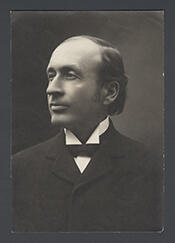
Here you will find contact information for Representative Moses Pierce Kinkaid, including email address, phone number, and mailing address.
| Name | Moses Pierce Kinkaid |
| Position | Representative |
| State | Nebraska |
| District | 6 |
| Party | Republican |
| Status | Former Representative |
| Term Start | November 9, 1903 |
| Term End | March 3, 1923 |
| Terms Served | 10 |
| Born | January 24, 1856 |
| Gender | Male |
| Bioguide ID | K000221 |
About Representative Moses Pierce Kinkaid
Moses Pierce Kinkaid (January 24, 1856 – July 6, 1922) was an American politician and lawyer who represented Nebraska in the United States House of Representatives from 1903 until his death in 1922. A member of the Republican Party, he served ten consecutive terms in Congress and became best known as the sponsor of the 1904 Kinkaid Land Act, which allowed homesteaders to claim up to 640 acres (260 ha) of government land in western Nebraska. His long tenure in the House coincided with a significant period in American history, during which he participated in the legislative process and represented the interests of his largely rural constituents.
Kinkaid was born near Morgantown, Virginia, on January 24, 1856, in a region that later became part of West Virginia following the Civil War. As a boy, he was involved in antislavery activity, piloting Canada-bound fugitive slaves to his grandparents’ home in Pennsylvania, where they received food, shelter, and assistance. He attended local public schools and pursued legal studies at the University of Michigan in Ann Arbor, graduating from the law department in 1876. That same year he was admitted to the bar, beginning a legal career that would underpin his later work in public office.
After his admission to the bar, Kinkaid practiced law in Henry County, Illinois, from 1876 to 1880. Seeking new opportunities on the frontier, he moved to Pierre in the Dakota Territory, where he continued his legal practice in 1880 and 1881. In 1881 he relocated to O’Neill, Nebraska, which would remain his home for the rest of his life. In O’Neill he established a law office and quickly became a prominent figure in the community. He also entered local business, serving as an officer of the Holt County Bank from its foundation in 1884 until 1886, and maintained his law office in what is now known as the Old Nebraska State Bank Building.
Kinkaid’s political and judicial career in Nebraska developed alongside his legal practice. He was elected to the Nebraska state Senate in 1883, gaining early legislative experience at the state level. In 1887 he was appointed or elected as a district judge, a position he held until 1900. During these years he built a reputation as a jurist and public servant in north-central Nebraska. In 1900 he made his first bid for national office, running unsuccessfully for the U.S. House of Representatives from Nebraska’s Sixth Congressional District. Undeterred, he ran again in 1902 and was elected, taking his seat in the Fifty-eighth Congress in March 1903.
From 1903 to 1923, Kinkaid served as a Republican Representative from Nebraska, holding his Congressional seat continuously until his death. His district encompassed most of the Nebraska Sandhills, a region of grass-stabilized sand dunes characterized by sandy soils, numerous lakes, and reliance on cattle ranching rather than intensive cultivation. At the time he entered Congress, federal land policy in the region was governed primarily by the 1862 Homestead Act, which allowed settlers to obtain 160 acres (65 ha), and the 1873 Timber Culture Act, which permitted an additional 160 acres. In the arid Sandhills, however, a total of 320 acres was generally insufficient to support a family, and large cattle ranches often used homestead laws strategically to secure control of water resources.
Seeking to promote settlement and break up the dominance of large ranches in northwestern Nebraska, Kinkaid sponsored legislation to modify federal land policy. His efforts culminated in the Kinkaid Act of 1904, which amended the Homestead Act to allow settlers on non-irrigable lands west of the 98th meridian in western Nebraska to claim up to 640 acres (260 ha) of public land. Signed into law by President Theodore Roosevelt, the measure triggered a substantial influx of settlers—known as “Kinkaiders”—into the Sandhills. Nearly nine million acres (3,600,000 ha) of land in Nebraska were claimed under the act by 1912, by which time most of the available land had been taken. Although many attempts at farming these large tracts failed due to the region’s marginal agricultural conditions, the act, combined with federal regulations prohibiting the fencing of public land, contributed to the replacement of a few very large ranches with many smaller ranching operations. The apparent success of this experiment in Nebraska influenced later federal policy, including the Stock-Raising Homestead Act of 1916, which extended similar provisions to other Western states.
During his long service in the House of Representatives, Kinkaid was an active participant in the legislative process and a consistent advocate for the interests of his rural and agricultural constituents. In the 66th and 67th Congresses (1919–1922), he served as chairman of the Committee on Irrigation of Arid Lands, a position that reflected his expertise and ongoing interest in land use, water policy, and the development of the American West. His work on this committee and his sponsorship of the Kinkaid Act placed him among the influential Western legislators shaping federal policy on homesteading, reclamation, and settlement during the early twentieth century.
Kinkaid died in office in Washington, D.C., on July 6, 1922, shortly before the completion of his tenth term in Congress. He was buried in Prospect Hill Cemetery in O’Neill, Nebraska, the community where he had lived and practiced law for more than four decades. The Old Nebraska State Bank Building in O’Neill, where he maintained his law office from 1884 until his death, later became the Holt County Historical Museum and is listed on the National Register of Historic Places; Kinkaid’s restored office is preserved there as a museum exhibit. His legacy in the region is reflected not only in the enduring impact of the Kinkaid Act and the settlement patterns it fostered, but also in commemorations such as the Kinkaider Brewing Company in Broken Bow, Nebraska, named in honor of the congressman and the “Kinkaiders” who settled the area, and his 1963 induction into the Hall of Great Westerners of the National Cowboy & Western Heritage Museum.