Senator Moses Robinson
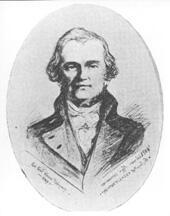
Here you will find contact information for Senator Moses Robinson, including email address, phone number, and mailing address.
| Name | Moses Robinson |
| Position | Senator |
| State | Vermont |
| Party | Anti-Administration |
| Status | Former Representative |
| Term Start | October 24, 1791 |
| Term End | October 15, 1796 |
| Terms Served | 1 |
| Born | March 22, 1741 |
| Gender | Male |
| Bioguide ID | R000350 |
About Senator Moses Robinson
Moses Robinson (March 22, 1741 – May 26, 1813) was a Vermonter and later American politician who played a central role in the political development of Vermont from its days as an independent republic through its admission to the Union and early statehood. When Vermont was an independent republic, he was its first chief justice and served a one-year term as governor. As governor, he superintended the negotiations that led to Vermont’s admission to the Union as the fourteenth state in the United States. After statehood, he served from 1791 to 1796 as one of the first two United States senators from Vermont and was aligned with the Anti-Administration Party, later associating with the emerging Democratic-Republican Party.
Robinson was born in Hardwick, Massachusetts, the son of Samuel Robinson (1707–1767) and Mercy (Leonard) Robinson (1714–1793). He was raised in Hardwick and in 1761 moved with his family to Bennington, in the New Hampshire Grants, a frontier region then governed as part of New Hampshire and later contested by New York. His father, Samuel Robinson, became an important leader in the New Hampshire Grants and was deeply involved in the controversy over whether New Hampshire or New York held the right to grant land and town charters there. Samuel Robinson died in England in 1767 while attempting to resolve this dispute, a struggle that shaped the political environment in which Moses Robinson came of age.
In Bennington, Moses Robinson quickly emerged as a leading citizen. He served as town clerk from 1762 to 1781, while also farming and engaging in land speculation, activities typical of prominent settlers in the Grants. As tensions with Great Britain mounted, Robinson became active in the American independence movement. During the American Revolution he served as a colonel in the Vermont militia, helping to defend the region and contributing to the establishment of Vermont’s de facto independence from both New York and British authority.
When Vermont declared itself an independent republic in 1777 and erected its own government in 1778, Robinson assumed major responsibilities in the new polity. He became a member of the governor’s council and was appointed the first chief justice of the Vermont Supreme Court. In this capacity he helped shape the legal foundations of the republic. In 1782 he was sent to the Continental Congress as a state agent to work toward resolving the ongoing governance dispute with New York and to seek recognition of Vermont’s status. Robinson served on the governor’s council until 1785 and continued as chief justice until 1789. His stature in the republic was further recognized when he received honorary Master of Arts degrees from Yale University in 1789 and from Dartmouth College in 1790.
In 1789, Robinson succeeded Thomas Chittenden as governor of Vermont. As governor, he oversaw and superintended the delicate negotiations that culminated in Vermont’s admission to the Union as the fourteenth state. He served as governor until October 1790, nearly five months before Vermont formally entered the United States on March 4, 1791, and he was then succeeded again by Chittenden. Robinson’s gubernatorial term thus bridged the final phase of Vermont’s independent status and laid the groundwork for its transition to statehood.
After Vermont’s admission to the Union in 1791, Robinson was elected by the Vermont General Assembly to one of the state’s first two seats in the United States Senate. A member of the Anti-Administration Party, he served one term in the Senate from October 17, 1791, to October 15, 1796, resigning before the completion of his six-year term. During this significant period in early American history, Robinson participated in the legislative process and represented the interests of his Vermont constituents as the new federal government took shape. In the Senate he was associated with the anti-administration faction opposed to certain policies of the Washington administration and, later in his term, with the beginnings of the Democratic-Republican Party led by Thomas Jefferson. After leaving the Senate, he remained active in state politics and was the Democratic-Republican nominee for governor in 1797 and 1798, though he was defeated both times by Federalist Isaac Tichenor.
Following his retirement from the Senate, Robinson returned to Bennington, where he resumed farming and land speculation. He continued to serve the public, including a term in the Vermont House of Representatives in 1802. His later years were spent in the community where he had long been a leading figure, maintaining his role in local affairs and in the broader political tradition of Vermont.
Robinson’s family connections further tied him to the political and military leadership of early Vermont. He married Mary Fay, daughter of Stephen Fay, a prominent leader of the Green Mountain Boys, and sister of Joseph Fay and David Fay. Moses and Mary Robinson had six sons. After Mary’s death, he married Susanah Howe. Robinson was the older brother of Jonathan Robinson and Samuel Robinson, both of whom were also prominent in Vermont’s political history. His grandson, John S. Robinson, who was the son of Nathan Robinson, later served as governor of Vermont, extending the family’s influence into a subsequent generation. Moses Robinson died in Bennington on May 26, 1813, and is interred at the Old Bennington Cemetery.