Representative Moses Dunning Stivers
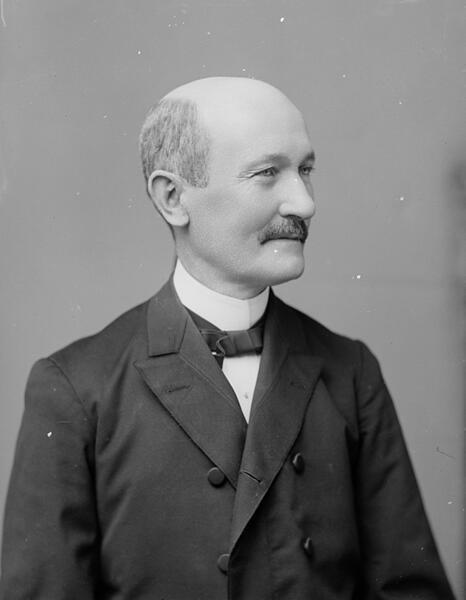
Here you will find contact information for Representative Moses Dunning Stivers, including email address, phone number, and mailing address.
| Name | Moses Dunning Stivers |
| Position | Representative |
| State | New York |
| District | 15 |
| Party | Republican |
| Status | Former Representative |
| Term Start | December 2, 1889 |
| Term End | March 3, 1891 |
| Terms Served | 1 |
| Born | December 30, 1828 |
| Gender | Male |
| Bioguide ID | S000930 |
About Representative Moses Dunning Stivers
Moses Dunning Stivers (December 30, 1828 – February 2, 1895) was an American businessman and Republican politician who served one term as a U.S. Representative from New York from 1889 to 1891. His congressional service took place during a significant period in American history, as the nation continued to adjust to the post–Civil War era, rapid industrialization, and evolving political alignments. As a member of the House of Representatives, Stivers participated in the democratic process and represented the interests of his New York constituents while contributing to the legislative work of the Fiftieth Congress.
Stivers was born on December 30, 1828, and came of age in a United States that was expanding westward and undergoing profound economic and social change. Details of his early life are relatively sparse, but his later career as a businessman suggests that he was drawn early to commercial pursuits and to the opportunities presented by the growing economy of the mid-nineteenth century. His formative years would have coincided with the rise of the railroad, the growth of market towns, and the increasing importance of trade and finance in New York State, all of which shaped the environment in which he would later build his professional life.
Before entering national politics, Stivers established himself as a businessman, a role that provided him with experience in economic affairs and public concerns that would later inform his political views. Operating in an era when New York was consolidating its position as a commercial and financial center, he was part of a generation of local leaders who bridged the worlds of commerce and public service. His business background likely contributed to his understanding of the needs of his district and the broader economic issues facing the country, including tariffs, infrastructure, and the regulation of commerce.
Stivers’s political career developed within the Republican Party, which had emerged as the dominant political force in national politics after the Civil War. As a Republican, he aligned himself with a party that emphasized Union preservation, economic development, and, increasingly, industrial and commercial growth. His standing as a businessman and local figure in New York helped pave the way for his election to Congress, reflecting the close connection at the time between local economic leadership and political representation at the national level.
Elected as a Republican to the U.S. House of Representatives, Stivers served a single term from 1889 to 1891. During this period, he took part in the legislative process at a time when Congress was addressing issues such as economic policy, veterans’ affairs, and the regulation of interstate commerce. Representing a New York district, he was responsible for voicing the concerns of his constituents and participating in debates and votes that affected both his state and the nation. Although the detailed record of his committee assignments and specific legislative initiatives is limited, his service in the House placed him among the policymakers grappling with the challenges of a rapidly modernizing country.
Stivers’s tenure in Congress coincided with a broader national conversation about the role of the federal government in economic life, including questions of monetary policy, tariffs, and support for internal improvements. As a member of the Republican Party, he would have been part of a majority that generally favored protective tariffs and policies designed to foster industrial growth, positions that were particularly important to many interests in New York. His participation in this environment underscored his role in shaping, however modestly, the legislative responses to the economic and social issues of his day.
After leaving Congress in 1891, Stivers returned to private life and to the pursuits that had defined his career before his term in Washington. He remained identified as both a businessman and a public figure whose service in the House of Representatives formed a notable chapter in his life. His experience in national office, combined with his background in commerce, reflected the pattern of nineteenth-century American public life in which local business leaders often moved in and out of formal political roles.
Moses Dunning Stivers died on February 2, 1895. His life spanned a period of dramatic transformation in the United States, from the Jacksonian era through the Civil War and into the Gilded Age. Remembered as an American businessman and politician who served one term as a U.S. Representative from New York from 1889 to 1891, he exemplified the citizen-legislator of his time, contributing to the legislative process and representing the interests of his constituents during a pivotal era in American history.