Senator Muriel Humphrey
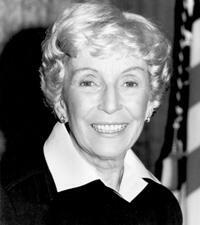
Here you will find contact information for Senator Muriel Humphrey, including email address, phone number, and mailing address.
| Name | Muriel Humphrey |
| Position | Senator |
| State | Minnesota |
| Party | Democratic |
| Status | Former Representative |
| Term Start | January 3, 1977 |
| Term End | January 3, 1979 |
| Terms Served | 1 |
| Born | February 20, 1912 |
| Gender | Female |
| Bioguide ID | H000956 |
About Senator Muriel Humphrey
Muriel Fay Humphrey Brown (née Buck; February 20, 1912 – September 20, 1998) was an American politician who served as the second lady of the United States from 1965 to 1969 and as a United States Senator from Minnesota in 1978. A member of the Democratic Party, she was married to the 38th vice president of the United States, Hubert H. Humphrey, and later became the first woman to represent Minnesota in the U.S. Senate. Her service in Congress, though brief, occurred during a significant period in American history, and she contributed to the legislative process during one term in office in the 95th Congress.
Humphrey was born Muriel Fay Buck on February 20, 1912, in Huron, Beadle County, South Dakota, the daughter of Andrew E. Buck and Jessie Mae (Pierce) Buck. She grew up in Huron and attended Huron College. In 1934, when she was twenty-two years old and working as a bookkeeper, she met Hubert Humphrey, then a young pharmacist and aspiring public servant. The couple married on September 3, 1936, later recalling that “it was love at first waltz.” After their marriage, they lived for a time in South Dakota with their first child before moving to Louisiana, where Hubert pursued a graduate degree at Louisiana State University. There, Muriel worked as a typist in the university’s Department of Government, helping support the family while her husband completed his studies.
Muriel and Hubert Humphrey had four children: Hubert H. Humphrey III, Nancy, Robert, and Douglas. In the mid-1950s, as Hubert’s political career advanced, the family built a home and moved to Waverly, a small village west of Minneapolis, Minnesota, which they maintained as their primary residence until Hubert Humphrey was elected vice president in the 1964 presidential election. Throughout these years, Muriel Humphrey was deeply involved in her husband’s emerging public life. She served as an informal adviser as he entered politics, first as mayor of Minneapolis and then as a United States Senator from Minnesota. It was during his second Senate campaign that she began making regular campaign appearances alongside him, honing the public speaking and political skills that would later inform her own service in office.
During Hubert Humphrey’s campaign for the Democratic presidential nomination in 1960, Muriel traveled and made speeches on his behalf, including in the Wisconsin primary, where he ultimately lost to Senator John F. Kennedy. After Humphrey remained in the Senate, President Lyndon B. Johnson selected him as his vice-presidential running mate in 1964. With Muriel frequently campaigning at his side and receiving favorable attention in the national press, the Johnson–Humphrey ticket won the election, and Hubert Humphrey served as vice president from January 20, 1965, to January 20, 1969. As second lady of the United States, Muriel Humphrey maintained a demanding schedule of travel and public engagement. She served as a member of the President’s Committee for People with Intellectual Disabilities from 1966 to 1969, convened meetings of women active in the Democratic Party, and became increasingly identified with advocacy for individuals with intellectual and developmental disabilities, a cause that would remain central to her public life.
Muriel Humphrey played a visible role in her husband’s 1968 presidential campaign, making numerous public appearances and drawing praise from President Johnson for her effectiveness on the trail. After Hubert Humphrey lost the 1968 election to former Vice President Richard M. Nixon, he returned to Minnesota politics and successfully ran again for the U.S. Senate in 1970, taking office in January 1971. During this period, Muriel continued her advocacy work, particularly on behalf of people with Down syndrome, a subject of personal importance to her because of her granddaughter Victoria Solmonson’s condition. In 1967 and 1968 she visited facilities for people with Down syndrome on Long Island and was profiled by The New York Times for her efforts. In 1970, she delivered a speech on the subject that was reprinted in a leading medical journal, further establishing her as a national voice on mental health and intellectual disability issues.
Hubert Humphrey died of bladder cancer on January 13, 1978, at the age of sixty-six. Following his death, the Minnesota Democratic–Farmer–Labor Party nominated Muriel Humphrey to fill the resulting vacancy in the U.S. Senate, and Governor Rudy Perpich formally appointed her to the seat. She took office on January 25, 1978, serving in the 95th Congress until November 7, 1978. In this capacity, Muriel Buck Humphrey served as a Senator from Minnesota from 1978 to 1978, becoming the first woman to serve as a senator from Minnesota and the first spouse of a former vice president to serve in Congress. During her tenure, she was an active senator with years of public-speaking experience behind her. Although, according to some accounts, she was initially ostracized by the all-male Senate, she served on the Committee on Foreign Relations and voted consistently in support of the foreign policy initiatives of President Jimmy Carter’s administration.
In the Senate, Muriel Humphrey pursued her own legislative interests and priorities. She supported an extension of the ratification deadline for the Equal Rights Amendment and advocated for programs benefiting persons with mental disabilities, reflecting her long-standing commitment to disability rights and mental health. Among the issues she championed was public visibility and improved care for individuals with Down syndrome. She sponsored the Mental Health Advocacy Act of 1978 and continued to press for the rights of the mentally disabled and for women’s reproductive choice, both during and after her time in office. Reflecting later on her political identity, she remarked, “There’s something I’ve been wanting to say for a long time. I’m a liberal and I’m proud of it. In fact, I was probably a little more liberal than Hubert was. I just wanted to say that.” After consulting with President Carter, she chose not to run in the 1978 special election for the remainder of her husband’s Senate term, later describing her brief Senate service as “the most challenging thing I’ve done in my whole life.”
After leaving office, Muriel Humphrey remained engaged in public causes but gradually withdrew from day-to-day partisan politics. In 1981, she married Max Brown, a friend from her childhood in South Dakota, and thereafter was known as Muriel Humphrey Brown. Reflecting on this new chapter, she observed, “I don’t live a life of politics any more. Max and I have so much fun. We have a wonderful companionship that Hubert and I didn’t have, couldn’t have. We were so busy and it was so official almost all the time.” She continued to support efforts on behalf of people with intellectual disabilities and women’s rights, and her papers, preserved at the Minnesota Historical Society, document the breadth of her activities as second lady, political spouse, and senator. Muriel Fay Humphrey Brown died on September 20, 1998. Her second husband, Max Brown, died in 2004 at the age of ninety-three.