Representative Nan Wood Honeyman
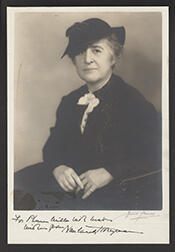
Here you will find contact information for Representative Nan Wood Honeyman, including email address, phone number, and mailing address.
| Name | Nan Wood Honeyman |
| Position | Representative |
| State | Oregon |
| District | 3 |
| Party | Democratic |
| Status | Former Representative |
| Term Start | January 5, 1937 |
| Term End | January 3, 1939 |
| Terms Served | 1 |
| Born | July 15, 1881 |
| Gender | Female |
| Bioguide ID | H000754 |
About Representative Nan Wood Honeyman
Nan Wood Honeyman (née Wood; July 15, 1881 – December 10, 1970) was an American politician from the state of Oregon and the first woman elected to the United States Congress from Oregon. A native of New York, she was born in New York City and was the daughter of Charles Erskine Scott Wood, a prominent author and attorney known in the Pacific Northwest. Her family moved to Oregon during her childhood, and she grew up in Portland, where she was exposed early to civic affairs and public life through her father’s legal and literary circles. This upbringing in an intellectually active household helped shape her later interest in politics and public service.
Honeyman received her early education in Portland and, as a young woman, spent time in the cultural and social life of the city, where she developed an interest in reform issues and Democratic Party politics. She married David T. Honeyman, a member of a well-known Portland family, and became active in local civic organizations and charitable work. The couple’s residence, later known as the David T. and Nan Wood Honeyman House, became associated with their standing in the community and reflected their engagement in Portland’s social and political life.
Before entering elective office, Honeyman became increasingly involved in Democratic Party activities in Oregon, particularly during the 1930s as the New Deal realigned national politics. She emerged as a supporter of Franklin D. Roosevelt and his policies, building a reputation as an advocate for federal action to address the economic hardships of the Great Depression. This political engagement led to her election to the Oregon House of Representatives, where she began formal legislative service. After her term in the lower chamber, she later served in the Oregon State Senate, gaining experience in state-level lawmaking and further establishing herself as a leading Democratic figure in Oregon.
Honeyman’s growing prominence culminated in her historic election to the United States House of Representatives in 1936. Running as a Democrat, she won election from Oregon’s 3rd congressional district and became the first woman elected to the United States Congress from Oregon. She served one term in the Seventy-fifth Congress, holding office from 1937 to 1939. During this period, a significant era in American history marked by the continuing effects of the Great Depression and the expansion of New Deal programs, she contributed to the legislative process as a member of the House of Representatives and represented the interests of her Portland-area constituents.
In Congress, Nan Wood Honeyman was a strong supporter of the New Deal and aligned herself closely with President Roosevelt’s legislative agenda. She advocated for federal public works and economic recovery measures and was particularly noted for her support of the completion of the Bonneville Dam on the Columbia River, a major regional project that promised hydroelectric power, navigation improvements, and economic development for the Pacific Northwest. As a member of the Democratic Party, she participated actively in debates over federal relief, infrastructure, and social welfare, helping to shape policy during a transformative period in national governance.
Despite her active role and alignment with the popular New Deal, Honeyman’s congressional career was limited to a single term. Her bid for reelection in 1938 was unsuccessful, and a subsequent campaign for election in 1940 also did not succeed. After leaving the U.S. House of Representatives in 1939, she continued her involvement in public affairs and Democratic politics in Oregon. She later returned to state-level service, including her tenure in the Oregon State Senate, and remained a visible figure in civic and political circles, reflecting her long-standing commitment to public service.
In her later years, Honeyman lived in Oregon and retained her association with the causes and institutions she had supported throughout her career. She died on December 10, 1970, closing a life that spanned from the late nineteenth century through the modern political realignments of the mid-twentieth century. Remembered as a pioneering woman in Oregon politics and the first congresswoman from the state, Nan Wood Honeyman’s career linked local and state service with national legislative work during one of the most consequential eras in American political history.