Representative Nancy E. Boyda
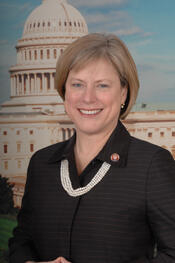
Here you will find contact information for Representative Nancy E. Boyda, including email address, phone number, and mailing address.
| Name | Nancy E. Boyda |
| Position | Representative |
| State | Kansas |
| District | 2 |
| Party | Democratic |
| Status | Former Representative |
| Term Start | January 4, 2007 |
| Term End | January 3, 2009 |
| Terms Served | 1 |
| Born | August 2, 1955 |
| Gender | Female |
| Bioguide ID | B001258 |
About Representative Nancy E. Boyda
Nancy E. Boyda (born August 2, 1955) is an American chemist and politician who served as a Democratic Representative from Kansas in the United States Congress from January 3, 2007, to January 3, 2009. A former Republican who later joined the Democratic Party, she represented Kansas’s 2nd congressional district for one term and remained active in public service and electoral politics in the years following her congressional tenure.
Boyda grew up in a Republican family in the Midwest, an upbringing that shaped her early political identity before she later shifted her party affiliation. She pursued higher education at William Jewell College in Liberty, Missouri, where she graduated with honors. At William Jewell, she earned dual degrees in chemistry and education, combining a strong grounding in the sciences with formal training in teaching. This academic background laid the foundation for her early professional work as a chemist and informed her later interest in public policy, particularly in areas touching on science, education, and public health.
Beginning in 1978, Boyda worked as an analytical chemist and field inspector, entering the workforce at a time when relatively few women held technical positions in the sciences. Her work in analytical chemistry and field inspection gave her direct experience with regulatory compliance, environmental and workplace standards, and the practical application of scientific methods in industry and government-related settings. Over the course of her early career, she developed a reputation as a detail-oriented professional, and her scientific training would later influence her approach to legislative issues requiring data-driven analysis and oversight.
Although she was raised in a Republican household and was herself a Republican for much of her adult life, Boyda formally became a Democrat in 2003. She later explained that she left the Republican Party because she believed it had become too conservative and no longer reflected her views on issues such as education, government accountability, and the conduct of the Iraq War. This party switch preceded her entry into electoral politics and framed her subsequent campaigns as those of a centrist-leaning Democrat with a background in both science and business.
Boyda first ran for public office in 2004, challenging Republican incumbent Jim Ryun in Kansas’s 2nd congressional district. In that race she criticized Ryun’s support for school vouchers and what she viewed as insufficient support for public schools, presenting herself as an advocate for strengthening public education. Ryun, in turn, criticized her participation in protests against the Iraq War. Boyda spent approximately $1.1 million on the campaign, including about $300,000 of her own money, while Ryun spent about $1.2 million. In a district that President George W. Bush carried 59 percent to 39 percent, Ryun defeated Boyda by 56 percent to 41 percent. Boyda carried only one county in the district, Crawford County, but the campaign established her as a serious contender and raised her profile within Kansas politics.
Undeterred by her initial defeat, Boyda again challenged Ryun in 2006 in what was initially considered a low-profile contest by both national parties. The political environment in Kansas that year was shaped by significant infighting within the state Republican Party between conservative and moderate factions, and by the strong re-election campaign of Democratic Governor Kathleen Sebelius, who won statewide by 57 percent to 40 percent. Many moderate Republicans appeared to defect to both Sebelius and Boyda, and Ryun also faced scrutiny over his purchase of a Washington, D.C., townhouse from associates of former House Majority Leader Tom DeLay at a price reported to be well below market value. In this more favorable climate, Boyda defeated Ryun in an upset, winning 51 percent to 47 percent and securing a seat in the U.S. House of Representatives.
As a member of the House of Representatives in the 110th Congress, Boyda participated in the legislative process during a significant period in American history marked by ongoing military operations in Iraq and Afghanistan and growing concern over ethics and corruption in government. Early in her term, as a freshman legislator, she introduced H.R. 476, a bill to deny federal pensions to members of Congress convicted of bribery, conspiracy, or perjury. The measure reflected her emphasis on ethics and accountability and passed the House of Representatives on January 23, 2007, by a vote of 431–0. Boyda applied to join the House Blue Dog Coalition, a caucus of fiscally conservative Democratic representatives, but was unable to do so because adding her would have put the group over its membership limit of 47 at that time.
During her term, Boyda served on the House Armed Services Committee and the House Committee on Agriculture. Within the Armed Services Committee, she sat on the Subcommittee on Military Personnel and the Subcommittee on Readiness, positions that placed her at the center of debates over troop deployments, military readiness, and the welfare of service members and their families. On the Agriculture Committee, she served on the Subcommittee on Conservation, Credit, Energy and Research; the Subcommittee on Department Operations, Oversight, Nutrition and Forestry; and the Subcommittee on General Farm Commodities and Risk Management, where she addressed issues critical to Kansas’s agricultural economy, including farm policy, credit access, conservation programs, and oversight of the U.S. Department of Agriculture.
Boyda’s tenure coincided with intense national debate over the Iraq War. On May 10, 2007, she voted against H.R. 2237, a measure “to provide for the redeployment of United States Armed Forces and defense contractors from Iraq.” She explained that while she supported a gradual withdrawal of U.S. forces, she also favored continuing to fund troops until they could be safely brought home. In 2007, after voting to provide additional funds for American troops serving in Iraq, she met with protestors during a public appearance in Lawrence, Kansas. She explained her vote by stating that she would support the troops and would “do what I can to bring those troops home as soon as possible,” adding that “it’s the Republican side of the aisle that’s holding things up.” Her positions reflected an effort to balance opposition to the administration’s war strategy with concern for the safety and support of deployed service members.
Her role on the Armed Services Committee drew national attention in July 2007, when she briefly left a committee hearing during testimony by retired Army General Jack Keane, who described the situation in Iraq following the troop surge in optimistic terms, stating that U.S. forces were on the offensive, that security had improved in and around Baghdad, and that public spaces such as cafes and coffee houses were again full of people. Boyda later said she stepped out because “there was only so much that you could take,” characterizing Keane’s account as inappropriately “rosy.” Her chief of staff, Shanan Guinn, said Boyda was frustrated with how the administration was handling the war and that “no one wants to have a real conversation about ways to move forward,” while “our brave men and women overseas are being played like a political ping pong ball.” Boyda subsequently told the Manhattan (Kan.) Mercury that she did not “walk out” of the meeting but instead stepped into a small adjacent room for about five minutes before returning, emphasizing that she had politely excused herself rather than storming out.
On social issues, Boyda’s positions evolved over time. During her 2008 re-election campaign, she opposed a proposed constitutional amendment to ban same-sex marriage, arguing that lawmakers should avoid “tampering” with the U.S. Constitution in response to efforts to amend it to prohibit marriage equality. At the same time, she stated that she personally believed “that marriage is between a man and a woman” and, in 2008, joined 39 other Democrats in voting for an amendment that rolled back domestic partner benefits for public employees in the District of Columbia. By the time of her 2024 congressional campaign, she expressed strong support for LGBTQIA rights, including marriage equality, legal protections against employment, housing, and public accommodation discrimination, and equal access to health care. She also publicly shared that she is the parent of a gay son and voiced concern about bullying and violence directed at LGBTQIA individuals, stating, “I am deeply concerned with increased bullying and violence toward the community. If elected, I will consistently vote to respect and protect the right to privacy no matter what our current activist Supreme Court does.”
Boyda’s 2008 re-election campaign unfolded under intense national scrutiny. In January 2007, National Republican Congressional Committee (NRCC) Chairman Tom Cole had announced that the NRCC intended to target her seat in 2008. Former Representative Jim Ryun declared his intention to reclaim his old seat, and Republican leaders reportedly assured him that he would win. However, on April 4, 2007, Kansas State Treasurer Lynn Jenkins officially entered the Republican primary, later defeating State Senator Dennis Pyle to become the Republican nominee. In the general election, Boyda faced Jenkins, along with Libertarian candidate Robert Garrard and Reform Party candidate Leslie Martin. Boyda announced that, unlike in 2006, she would not seek assistance from the Democratic Congressional Campaign Committee (DCCC), saying that “Kansas voters should control Kansas campaigns” and that Kansans should be able to “run our election without Washington interference.” The NRCC spent heavily on Jenkins’s behalf, and on November 4, 2008, Jenkins defeated Boyda by 51 percent to 46 percent. Boyda later left a message for DCCC Chairman Chris Van Hollen expressing regret for declining the committee’s assistance and asking him to share her experience with other vulnerable Democrats considering a similar course. Van Hollen stated that Boyda “has been very clear about the fact that she made a mistake… she clearly felt that not participating [with the DCCC’s help] was a good part of the reason she failed.”
Following her single term in Congress, Boyda continued her public service in the executive branch. President Barack Obama appointed her Deputy Assistant Secretary of Defense for Manpower and Personnel at the Pentagon, and she was sworn into that position on July 20, 2009. In this role, she worked on issues related to the management, readiness, and welfare of military and civilian personnel within the Department of Defense, drawing on her Armed Services Committee experience and her longstanding interest in the well-being of service members and their families.
In the years after leaving Congress and the Defense Department, Boyda remained engaged in Kansas and national politics. It was reported in April 2019 that she was exploring a candidacy for the U.S. Senate in the 2020 Kansas election. She formally announced her candidacy for the Democratic nomination on July 1, 2019. During that campaign, she argued that campaign finance practices and partisan gerrymandering were major reasons politicians did not “work across the aisle,” and she said her campaign aimed to break legislative gridlock and foster bipartisan cooperation. She later withdrew from the Senate race, announcing that she would instead focus on creating a nonprofit organization dedicated to reducing partisan division rather than seeking elected office at that time.
Boyda returned to electoral politics once again in the 2024 election cycle, filing to run for her former seat in Kansas’s 2nd congressional district. She won the Democratic primary, defeating Matt Kleinmann, and advanced to the general election against former Kansas Attorney General Derek Schmidt, the Republican nominee. In her 2024 campaign, Boyda emphasized bipartisan immigration reform, tax cuts for working-class individuals, and comprehensive campaign finance reform as key priorities. Consistent with themes from her 2020 Senate bid, she stressed her desire to bridge political divides among Kansans and to encourage more cooperative governance. In the general election, however, she was defeated by Schmidt by a margin of 57,162 votes. Throughout her career, both in and out of office, Nancy E. Boyda has remained identified with efforts to promote ethical government, support for military personnel, and a commitment to reducing partisan polarization in American politics.