Representative Nancy Lee Johnson
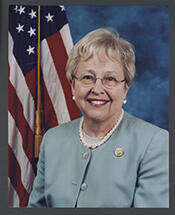
Here you will find contact information for Representative Nancy Lee Johnson, including email address, phone number, and mailing address.
| Name | Nancy Lee Johnson |
| Position | Representative |
| State | Connecticut |
| District | 5 |
| Party | Republican |
| Status | Former Representative |
| Term Start | January 3, 1983 |
| Term End | January 3, 2007 |
| Terms Served | 12 |
| Born | January 5, 1935 |
| Gender | Female |
| Bioguide ID | J000163 |
About Representative Nancy Lee Johnson
Nancy Elizabeth Johnson (née Lee; born January 5, 1935) is an American lobbyist and former politician from the state of Connecticut who served as a Republican member of the United States House of Representatives from 1983 to 2007. Over the course of 12 consecutive terms in Congress, she represented Connecticut’s 6th Congressional District and, following reapportionment, the 5th District, participating actively in the legislative process during a significant period in late 20th- and early 21st-century American history. A prominent moderate within her party, she became particularly known for her work on health care policy and tax legislation.
Johnson was born in Chicago, Illinois, and was educated in that city’s schools, graduating from the University of Chicago Laboratory School in 1953. She went on to attend Radcliffe College of Harvard University, from which she graduated in 1957. Immediately after college, she pursued further study in art history at the Courtauld Institute of Art at the University of London in 1957 and 1958. She later moved to New Britain, Connecticut, which became her long-term home and political base. Before entering elective office, Johnson was an active volunteer in local schools and social service agencies in her community, work that helped establish her public profile and interest in social policy.
Johnson’s formal political career began in state government. She was elected to the Connecticut Senate, where she served from 1977 to 1983. In that role she developed a reputation as a pragmatic Republican legislator and gained experience in state-level policymaking that would underpin her later work in Congress. Her state legislative service coincided with her growing involvement in community affairs in and around New Britain, further solidifying her ties to the region she would later represent in Washington.
In 1982, Johnson was elected to the U.S. House of Representatives with 52 percent of the vote, defeating Democratic state senator William E. Curry Jr. in a race for the seat being vacated by Democrat Anthony “Toby” Moffett, who left the House to make an unsuccessful bid for the U.S. Senate. Taking office on January 3, 1983, she became part of a new cohort of Republican lawmakers during the Reagan era. In 1983 she was also named one of the original congressional members of the United States House Select Committee on Children, Youth, and Families, reflecting her interest in family and social issues. In 1988, Johnson broke new ground when she became the first Republican woman appointed to the powerful House Committee on Ways and Means, where she eventually rose to chair three separate subcommittees, placing her at the center of debates over tax, trade, and health policy.
Throughout the 1990s and early 2000s, Johnson generally won re-election by comfortable margins, though she faced a notably close contest in 1996. That year she narrowly defeated Democrat Charlotte Koskoff by a 50–49 percent margin, a result she attributed in part to the time she had devoted to serving on the House ethics panel, which was then dealing with allegations against Speaker Newt Gingrich and limited her ability to campaign in the district. She again faced Koskoff in 1998, winning with 59 percent of the vote, and was re-elected in 2000 with 63 percent against Democrat Paul Valenti. During this period, she was widely viewed as a serious contender for appointment to the United States Senate had Al Gore won the 2000 presidential election; observers considered her a likely choice for Governor John G. Rowland to appoint to the seat held by Gore’s running mate, Senator Joe Lieberman, who had been re-elected that year.
Following the 2000 census, Connecticut’s congressional districts were redrawn, and in 2002 Johnson’s New Britain–based 6th District was merged with the Waterbury-based 5th District represented by Democrat James H. Maloney. Although the new district retained the 5th District designation, its geography and demographics were seen as slightly favoring Johnson. In the resulting incumbent-versus-incumbent race, she defeated Maloney with 54 percent of the vote. She was re-elected again in 2004, defeating Democrat Theresa Gerratana with 60 percent. During these years she continued to build seniority on Ways and Means, and with the impending retirement of Chairman Bill Thomas of California at the end of the 109th Congress in 2006, Johnson was mentioned as a possible candidate to succeed him as chair if Republicans retained control of the House and she won re-election; neither condition came to pass.
In the 2006 election cycle, Johnson faced a strong challenge from Democrat Chris Murphy, a state senator from Southington who resided in Cheshire. The race drew national attention and became increasingly contentious. In April 2006 she was targeted by a negative advertising campaign from the political action committee MoveOn.org, which alleged ties between Johnson and disgraced lobbyist Jack Abramoff and former House Majority Leader Tom DeLay. Johnson responded with her own advertisements dismissing the allegations and attacking Murphy for not disavowing the MoveOn ads. She entered the race with a substantial financial advantage, reporting $436,000 raised in the first quarter of 2006—60 percent from political action committees and 56 percent from contributors outside Connecticut—and nearly $800,000 raised in the second quarter, leaving her with $2.6 million cash on hand as of June 30, 2006. Despite this, late-October polling showed Murphy with a slight lead, and he ultimately defeated Johnson by 12 percentage points in the November general election. Analyses in the Hartford Courant suggested that Johnson’s own negative television ads, which accused Murphy of “coddling” sex offenders and drug dealers, may have backfired. She carried only six of the district’s 41 towns and lost heavily in New Britain, a community she had represented at the state and federal levels for three decades and had already failed to carry in her two previous elections. Her defeat was among the most decisive suffered by a House incumbent in 2006, exceeded only by that of Indiana Republican John Hostettler.
Ideologically, Johnson was regarded as a moderate Republican. She described herself as “an independent voice in Washington,” and nonpartisan analyses such as those by National Journal often placed her near the ideological center of the House. Rating organizations reflected her mixed record: the conservative American Conservative Union gave her a score of 40 out of 100 for her 2005 voting record, while the liberal Americans for Democratic Action gave her 35 points, indicating a blend of conservative and liberal positions. She was generally moderate-to-liberal on social issues and more conservative on economic and fiscal matters. Johnson was active in several socially moderate Republican organizations, including The Wish List, the Republican Main Street Partnership, Republicans for Choice, the Republican Majority for Choice, and Republicans for Environmental Protection (later ConservAmerica). Nonetheless, she supported many key elements of President George W. Bush’s agenda and that of House Republican leaders, including a 2005 White House plan to partially privatize Social Security and a measure sponsored by Majority Leader Tom DeLay that would have weakened House ethics rules. In 1998, she was the only member of the Connecticut congressional delegation to vote for two of the four articles of impeachment against President Bill Clinton. In 2003, she broke with most Republicans by voting with House Democrats against the Partial-Birth Abortion Ban Act, which nevertheless passed 281–142. In 2006, she was one of 14 moderate Republicans who crossed party lines to vote against a Republican budget reconciliation bill that ultimately passed the House by just two votes.
Health care policy was one of Johnson’s central legislative interests, a focus that aligned with Connecticut’s status as a center of the pharmaceutical industry, with major facilities operated by companies such as Pfizer and Bayer. According to the nonpartisan group OpenSecrets, she became one of the leading congressional recipients of campaign contributions from the pharmaceutical sector, receiving $534,830 in related contributions since 2000. On the Ways and Means Committee, she played a key role in designing the Medicare Part D prescription drug benefit, which took effect in 2006. Responding to public criticism and confusion surrounding the program’s enrollment rules, Johnson announced on May 15, 2006, that she would introduce legislation to waive penalties for beneficiaries who missed enrollment deadlines; although the bill did not pass, it was endorsed by the AARP. She also authored legislation allowing welfare recipients to remain eligible for Medicaid, adding a more moderate dimension to federal welfare reform. Beyond health care, Johnson supported Republican policy on the Iraq War but opposed aspects of the Bush administration’s energy agenda, including proposals to permit oil drilling in the Arctic National Wildlife Refuge. Her record earned favorable evaluations and awards from organizations such as the National Education Association and the Sierra Club.
After leaving Congress in January 2007, Johnson transitioned to roles in academia, public policy, and lobbying. In 2007 she served as a resident fellow at Harvard University’s Institute of Politics, reflecting her long experience in federal legislative affairs. She later became co-chair of the Information Technology and Innovation Foundation, a public policy think tank focused on innovation, technology, and economic competitiveness. In September 2007, she began work as a lobbyist in Washington, D.C., joining the law and public policy firm Baker, Donelson, Bearman, Caldwell & Berkowitz, PC. Remaining active in national Republican politics, she endorsed former New York City Mayor Rudy Giuliani’s campaign for the 2008 Republican presidential nomination in October 2007. In 2013, she was a signatory to an amicus curiae brief submitted to the Supreme Court in support of same-sex marriage in the case Hollingsworth v. Perry, underscoring her continued identification with socially moderate Republican positions.
Johnson is married to Theodore Johnson, an obstetrics and gynecology physician, and they have three adult daughters. She has long resided in New Britain, Connecticut, maintaining close ties to the community that launched her political career and that she represented in both the Connecticut Senate and the U.S. House of Representatives.