Senator Nancy Landon Kassebaum
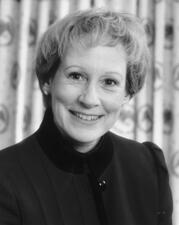
Here you will find contact information for Senator Nancy Landon Kassebaum, including email address, phone number, and mailing address.
| Name | Nancy Landon Kassebaum |
| Position | Senator |
| State | Kansas |
| Party | Republican |
| Status | Former Representative |
| Term Start | December 23, 1978 |
| Term End | January 3, 1997 |
| Terms Served | 4 |
| Born | July 29, 1932 |
| Gender | Female |
| Bioguide ID | K000017 |
About Senator Nancy Landon Kassebaum
Nancy Josephine Kassebaum Baker (née Landon; born July 29, 1932) is an American retired politician from Kansas who served as a United States senator from 1978 to 1997. A member of the Republican Party, she was the first woman to represent Kansas in the Senate and, notably, the first woman ever elected to a full term in the Senate without her husband having previously served in Congress. Her election and tenure placed her at the center of a significant period in American political history, during which she became known for her independence, bipartisan approach, and leadership on foreign affairs and health policy. She is the daughter of Alfred M. “Alf” Landon, who served as Governor of Kansas from 1933 to 1937 and was the Republican nominee for president in 1936, and she is the widow of former U.S. senator and diplomat Howard H. Baker Jr.
Kassebaum was born in Topeka, Kansas, and grew up in a prominent political household shaped by her father’s statewide and national career. The Landon family’s public profile exposed her early to political discourse and public service, and her upbringing in Kansas instilled a lasting connection to the state she would later represent in Congress. Despite the visibility of her father’s career, she developed a reputation for charting her own political path, ultimately emerging as a public figure in her own right rather than as an extension of his legacy.
Kassebaum pursued higher education before entering public life, although her early adult years were largely spent outside elective office. She married and raised a family in Kansas, remaining active in civic and community affairs. Her later marriage to Howard Baker, a Republican senator from Tennessee who would go on to serve as Senate majority leader and U.S. ambassador to Japan, further linked her to national political circles, but her own Senate career preceded that marriage and was built on her independent electoral success and legislative record.
With her victory in the 1978 U.S. Senate election in Kansas, Kassebaum entered the national spotlight as the only woman in the U.S. Senate at that time and as the first woman to represent Kansas in that body. She took office in December 1978, filling the unexpired term of Senator James B. Pearson, and went on to serve through 1997, completing what is commonly described as three full terms in the Senate and spanning four electoral cycles in office. During these years she participated actively in the legislative process, representing the interests of her Kansas constituents while engaging in national debates on foreign policy, labor, health care, and social issues. Her tenure coincided with the administrations of Presidents Jimmy Carter, Ronald Reagan, George H. W. Bush, and Bill Clinton, and she became known as a moderate Republican willing to work across party lines.
In the Senate, Kassebaum developed a reputation for political independence and for building bipartisan coalitions on both foreign and domestic issues. As chair of the Senate Subcommittee on African Affairs, she played a limited but visible role in the congressional effort to impose sanctions on South Africa’s apartheid regime. The Comprehensive Anti-Apartheid Act of 1986, enacted over President Ronald Reagan’s veto, was drafted principally by Senators Richard Lugar, William Roth, Mitch McConnell, and Bob Dole, although Kassebaum later in life claimed credit for the legislation. Her involvement in the broader sanctions effort nonetheless underscored her interest in human rights and international affairs. Domestically, as chair of the Senate Committee on Labor and Human Resources, she led the fight for major health care reforms that, for the first time, assured health insurance coverage for people changing jobs with pre-existing medical conditions, a significant step toward portability of health insurance for American workers.
After leaving the Senate in 1997, Kassebaum remained closely connected to public service through her marriage to Howard Baker and through her own policy and advocacy work. From 2001 to 2005, when Senator Baker served as the United States ambassador to Japan, she accompanied him to Tokyo and lived there during his diplomatic tenure. In Japan she was recognized for her work alongside Baker, including organizing a regional conference in Tokyo in 2004 to combat human trafficking in Asia, reflecting her continuing engagement with international human rights and security issues even after her formal legislative career had ended.
In later years, Kassebaum continued to participate in national policy discussions and bipartisan initiatives. She has served as an advisory board member for the Partnership for a Secure America, a not-for-profit organization dedicated to recreating a bipartisan center in American national security and foreign policy, and she is also a member of the ReFormers Caucus of Issue One, a group of former elected officials focused on political and electoral reform. Her public statements have increasingly emphasized moderation and bipartisanship, and she has been a noted critic of President Donald Trump. Reflecting her centrist and independent streak, she endorsed Democrat Laura Kelly in the 2018 Kansas gubernatorial election and again in Kelly’s successful 2022 reelection bid, and she supported Republican-turned-Democrat Barbara Bollier in the 2020 U.S. Senate election in Kansas over the Republican nominee, Roger Marshall. In 2014 she publicly expressed support for same-sex marriage, and in 2024 she endorsed Kamala Harris for president, underscoring her willingness to cross party lines in support of candidates she views as aligned with her principles.