Senator Nathan Lynn Bachman
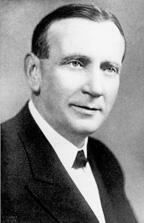
Here you will find contact information for Senator Nathan Lynn Bachman, including email address, phone number, and mailing address.
| Name | Nathan Lynn Bachman |
| Position | Senator |
| State | Tennessee |
| Party | Democratic |
| Status | Former Representative |
| Term Start | March 9, 1933 |
| Term End | January 3, 1937 |
| Terms Served | 1 |
| Born | August 2, 1878 |
| Gender | Male |
| Bioguide ID | B000010 |
About Senator Nathan Lynn Bachman
Nathan Lynn Bachman (August 2, 1878 – April 23, 1937) was a United States senator from Tennessee from 1933 until his death. A member of the Democratic Party, he represented Tennessee in the Senate during a significant period in American history and contributed to the legislative process during one full term in office and a portion of a second.
Bachman was born in Chattanooga, Tennessee, on August 2, 1878. He was the son of Dr. Jonathan W. Bachman, a Confederate veteran and longtime pastor of the First Presbyterian Church in Chattanooga, a position that made the elder Bachman a prominent civic and religious figure in the community. Growing up in this environment, Nathan Bachman was exposed early to public affairs and community leadership, influences that would shape his later legal and political career.
Bachman pursued an extensive and varied education. He attended Southwestern Presbyterian University in Clarksville, Tennessee, the predecessor of what is now Rhodes College in Memphis, on a campus that later became the site of Austin Peay State University. He also studied at Central University in Richmond, Kentucky, which later merged with Centre College in Danville, Kentucky, and at Washington and Lee University in Lexington, Virginia. Returning to his hometown, he enrolled in the Chattanooga College of Law, then the law school of the former University of Chattanooga (now the University of Tennessee at Chattanooga). He ultimately completed his legal education at the University of Virginia, graduating from its law school in 1903. That same year he was admitted to the bar and began the practice of law in Chattanooga.
Bachman quickly entered public service through local legal offices. From 1906 to 1908 he served as Chattanooga city attorney, gaining experience in municipal law and governance. He was elected a circuit court judge in 1912 and held that position until 1918, presiding over a broad range of civil and criminal matters. In 1918 he was elevated to the Tennessee Supreme Court as an associate justice, reflecting his growing stature in the state’s legal community. He served on the state’s highest court until 1924, when he resigned to seek election to the United States Senate. His 1924 campaign for the Senate was unsuccessful, and he returned to private law practice in Chattanooga.
Bachman’s opportunity to enter national office came nearly a decade later. On February 28, 1933, Tennessee Governor Hill McAlister appointed him to the United States Senate to fill the unexpired term of Senator Cordell Hull, who had resigned to become Secretary of State in the administration of President Franklin D. Roosevelt. In November 1934, Bachman was elected in his own right to serve the remainder of Hull’s unexpired Senate term, and he completed the term to which Hull had originally been elected. In 1936, during his Senate service, Bachman was chosen as the presiding officer in the impeachment trial of federal judge Halsted L. Ritter, a notable exercise of the Senate’s constitutional role in judicial impeachments. Later that same year, he was re-elected to a full Senate term, affirming his political standing in Tennessee during the early New Deal era.
As a senator from 1933 until his death in 1937, Bachman participated in the democratic process and represented the interests of his Tennessee constituents during a transformative period marked by the Great Depression and the implementation of New Deal legislation. Serving as a Democrat aligned with the Roosevelt administration, he contributed to the legislative deliberations of the era, although his career in the Senate was cut short before the completion of his newly won full term.
Outside of his formal public offices, Bachman was active in civic and fraternal life in Chattanooga. He was a prominent leader in the Masonic fraternity, including service in Knights Templar Commandery No. 14, and he was also an active member of Civitan, reflecting his engagement with community service organizations. His family’s name was further commemorated locally through the Bachman Tubes, a pair of highway tunnels on U.S. Highways 41/76 (Ringgold Road) through Missionary Ridge connecting Chattanooga with the adjacent town of East Ridge. Completed in 1929 and named in honor of his father, these twin 1,000-foot tunnels significantly increased traffic to the area and led to the upgrading of East Ridge roads from tar-and-gravel surfaces to a four-lane highway in the mid-1930s.
Nathan Lynn Bachman died in Washington, D.C., in early 1937, having served less than four months of the new full Senate term to which he had been elected in 1936. He died on April 23, 1937, at the age of 58. He was interred at Forest Hills Cemetery in Chattanooga, Tennessee. His death in office placed him among the members of the United States Congress who died while serving between 1900 and 1949.