Representative Nathan Cole
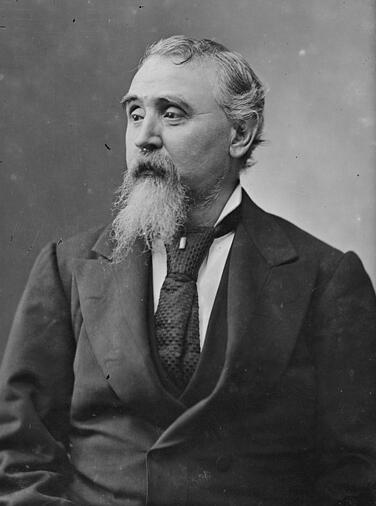
Here you will find contact information for Representative Nathan Cole, including email address, phone number, and mailing address.
| Name | Nathan Cole |
| Position | Representative |
| State | Missouri |
| District | 2 |
| Party | Republican |
| Status | Former Representative |
| Term Start | October 15, 1877 |
| Term End | March 3, 1879 |
| Terms Served | 1 |
| Born | July 26, 1825 |
| Gender | Male |
| Bioguide ID | C000610 |
About Representative Nathan Cole
Nathan Cole (July 26, 1825 – March 4, 1904) was a nineteenth-century politician, merchant, businessman, and Republican member of the United States House of Representatives from Missouri. Born in St. Louis, Missouri, on July 26, 1825, he spent his early years in that city and attended the common schools there as a child. His upbringing in St. Louis placed him at the center of a growing commercial hub along the Mississippi River, an environment that would shape his later pursuits in business and public life.
Cole pursued further education by taking a partial course at Shurtleff College in Illinois, reflecting a commitment to formal learning even though he did not complete a full collegiate program. This combination of basic schooling in St. Louis and partial higher education at Shurtleff College provided him with the foundational knowledge and skills that supported his subsequent career in commerce, banking, and politics.
After his schooling, Cole engaged in mercantile pursuits in St. Louis, establishing himself as a prominent figure in the city’s business community. He became a director of the Bank of Commerce in St. Louis, a position he held for forty-three years. For most of that period he also served as vice president of the bank, underscoring his long-term influence in regional finance. In addition to his banking activities, Cole was a director in a number of insurance and other corporations, further broadening his role in the economic development of St. Louis.
Cole’s prominence in business naturally extended into civic leadership. He served as mayor of St. Louis, Missouri, from 1869 to 1871, guiding the city during a period of post–Civil War growth and reconstruction. In 1876 he was elected president of the St. Louis Merchants’ Exchange, one of the city’s key commercial institutions, reflecting the high regard in which he was held by the local business community. These positions solidified his reputation as both a civic leader and a spokesman for the city’s commercial interests.
Building on this record of public and commercial service, Cole entered national politics as a member of the Republican Party. He was elected as a Republican to the United States House of Representatives in 1876 and served as a Representative from Missouri in the United States Congress from March 4, 1877, to March 3, 1879. His single term in office placed him in the Forty-fifth Congress, during a significant period in American history marked by the end of Reconstruction and evolving national economic and political priorities. As a member of the House of Representatives, Nathan Cole contributed to the legislative process, participated in the democratic governance of the nation, and represented the interests of his Missouri constituents. He sought reelection in 1878 but was unsuccessful, concluding his formal congressional service after one term.
Following his departure from Congress in 1879, Cole resumed his former business activities in St. Louis. He returned to his roles in banking, insurance, and corporate leadership, continuing to play an important part in the city’s commercial life well into the late nineteenth century. His long tenure in business and public affairs made him a significant figure in the civic history of St. Louis. His family also extended his influence beyond Missouri: his son, Nathan Cole Jr., became one of the founders of the Los Angeles Times in 1881, linking the Cole name to the early development of major American journalism on the West Coast.
Nathan Cole remained in St. Louis for the rest of his life. He died there on March 4, 1904, closing a career that had spanned local, financial, and national public service. He was interred in Bellefontaine Cemetery in St. Louis, Missouri, a resting place for many of the city’s notable figures, reflecting his standing in the community he had served in business, municipal government, and the United States Congress.