Senator Nathan Sanford
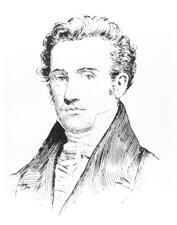
Here you will find contact information for Senator Nathan Sanford, including email address, phone number, and mailing address.
| Name | Nathan Sanford |
| Position | Senator |
| State | New York |
| Party | Adams |
| Status | Former Representative |
| Term Start | December 4, 1815 |
| Term End | March 3, 1831 |
| Terms Served | 2 |
| Born | November 5, 1777 |
| Gender | Male |
| Bioguide ID | S000052 |
About Senator Nathan Sanford
Nathan Sanford (November 5, 1777 – October 17, 1838) was an American lawyer, jurist, and legislator who served two nonconsecutive terms as a United States Senator from New York during a formative period in the nation’s political development. He was born on November 5, 1777, in Bridgehampton, New York, to Thomas Sanford and Phebe (née Baker) Sanford, a family of farmers and tradesmen. Raised in eastern Long Island, Sanford’s early life reflected the transition of the post-Revolutionary generation from agrarian roots to professional and public careers, a path he would follow through law and politics.
Sanford pursued higher education at Yale University, where he prepared for the legal profession. After his studies, he read law, was admitted to the bar, and commenced practice in New York City. His legal abilities quickly brought him prominence in the state’s legal community. Among his early professional activities, he appeared as appellate counsel in the landmark property and hunting-rights case Pierson v. Post, which became a foundational decision in American property law and is still widely studied for its treatment of possession and ownership.
In 1803, Sanford was appointed United States Attorney for the District of New York, a post he held until 1815, when the district was divided into the Northern and Southern Districts of New York. While serving as U.S. Attorney, he simultaneously entered state politics. He was a member of the New York State Assembly in 1808–1809 and again in 1811. On January 29, 1811, he was elected Speaker of the Assembly, but ill health forced him to cease attending the session after February 10, and the Assembly subsequently elected William Ross as his successor. Sanford then advanced to the New York State Senate, representing the Southern District from 1812 to 1815 and sitting in the 35th, 36th, 37th, and 38th New York State Legislatures, where he helped shape state policy during the War of 1812 era.
Sanford’s federal legislative career began when he was elected as a Democratic-Republican to the United States Senate from New York, serving his first term from March 4, 1815, to March 3, 1821. During this period, he contributed to the legislative process in a Congress grappling with postwar economic and commercial issues. He served as Chairman of the Committee on Commerce and Manufactures in the 15th and 16th Congresses, and sat on the Committee on Naval Affairs in the 15th Congress and the Committee on Finance in the 16th Congress. His work on these committees placed him at the center of debates over trade, manufacturing, and fiscal policy in the years following the War of 1812. In 1821, running for re-election as a Clintonian, he was defeated by Bucktail candidate Martin Van Buren, temporarily ending his first period of service in the Senate.
Following his initial Senate tenure, Sanford remained an influential figure in New York public life. He served as a delegate to the New York State Constitutional Convention of 1821, participating in the revision of the state’s fundamental law during a time of expanding democracy and changing suffrage rules. In 1823, he was appointed Chancellor of New York, the state’s highest judicial officer in equity, and held that office until 1826. His stature in national politics was reflected in the presidential election of 1824, when he received 30 electoral votes for Vice President of the United States. In 1826, after being nominated in caucus for a return to the federal legislature, he resigned the chancellorship and was again elected to the U.S. Senate from New York.
Sanford’s second Senate term began when he took his seat on January 31, 1826, and continued until March 3, 1831. During this period, he served as Chairman of the Committee on Foreign Relations in the 19th Congress, engaging with issues of diplomacy and international commerce at a time when the United States was consolidating its position among nations. In this later phase of his congressional service, he generally aligned himself with President John Quincy Adams and Secretary of State Henry Clay, and is often associated with the Adams Party in New York politics. From 1815 to 1831, across his two terms in the Senate, Sanford participated actively in the democratic process, representing New York’s interests and contributing to national legislative deliberations during a significant era in American political and economic development.
After leaving the Senate in 1831, Sanford resumed the practice of law in Flushing, New York, where he established his residence, known as “Sanford Hall.” His home later gained a different kind of prominence when, in 1845, it was converted into a private insane asylum operated by Dr. James Macdonald, M.D., and Gen. Allan Macdonald. In his personal life, Sanford was married three times. His first marriage was to Elizabeth “Eliza” Van Horn (1780–1811), with whom he had several children, including Edward Sanford (1805–1876), who himself became a New York State Senator; Eliza Sanford, who married John Le Breton; Charles Sanford; and Henry Sanford. After Eliza’s death in 1811, he married Mary Esther Malbone Isaacs (1790–1816), eldest daughter of Col. Ralph Isaacs and Elizabeth (née Sebor) Isaacs, in 1813. They had two children: Mary Sanford (1814–1841), who married Peter Gansevoort (1788–1876), also a New York State Senator, and Henry Sanford (1816–1832), who died young. Following Mary Esther’s death, Sanford married Mary Buchanan (1800–1879) in May 1828; they were the parents of Robert Sanford (1831–1908), a graduate of Union College and New York Law School.
Nathan Sanford died in Flushing, New York, on October 17, 1838. He was interred at St. George’s Episcopal Church Cemetery in Flushing. Through his long legal career, his service as U.S. Attorney, state legislator, Chancellor of New York, and two-term United States Senator from New York, Sanford played a notable role in both state and national affairs during the early nineteenth century, leaving a legacy carried forward in part by his descendants’ continued participation in public life.