Senator Nathan Bay Scott
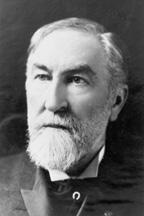
Here you will find contact information for Senator Nathan Bay Scott, including email address, phone number, and mailing address.
| Name | Nathan Bay Scott |
| Position | Senator |
| State | West Virginia |
| Party | Republican |
| Status | Former Representative |
| Term Start | December 4, 1899 |
| Term End | March 3, 1911 |
| Terms Served | 2 |
| Born | December 18, 1842 |
| Gender | Male |
| Bioguide ID | S000182 |
About Senator Nathan Bay Scott
Nathan Bay Scott (December 18, 1842 – January 2, 1924) was a Republican politician, businessman, and public official who represented West Virginia in the United States Senate from 1899 to 1911. His two terms in the Senate spanned a significant period in American history marked by industrial expansion, political realignment, and the nation’s emergence as a global power, during which he participated actively in the legislative process and represented the interests of his constituents.
Scott was born near Quaker City, Guernsey County, Ohio, on December 18, 1842. He attended the common schools in his native region, receiving a basic formal education typical of mid-19th-century rural America. As a young man, he moved west and engaged in mining near Colorado Springs, Colorado, from 1859 to 1862, gaining early experience in the extractive industries that would later inform his legislative work on mining issues.
During the American Civil War, Scott entered the Union Army in 1863 as a corporal. He advanced steadily in responsibility, being appointed a sergeant in 1864 and promoted to regimental commissary sergeant in 1865, a position that entrusted him with the management and distribution of supplies for his regiment. He was mustered out of service in 1865. His wartime experience in logistics and administration helped shape his later career in business and public service.
After the war, Scott settled in Wheeling, West Virginia, then an important industrial and commercial center. There he engaged in the manufacture of glass, participating in one of the region’s key growth industries, and also became involved in banking. His success in business elevated his standing in the community and led to his entry into local politics. From 1881 to 1883 he served on the Wheeling city council and was its president, playing a leading role in municipal affairs during a period of urban and industrial development.
Scott’s political career expanded to the state level when he was elected to the West Virginia Senate, in which he served from 1883 to 1890. As a Republican state legislator, he was involved in shaping policy during the formative years of West Virginia’s post–Civil War economic and political consolidation. His influence within the party grew, and in 1888 he became a member of the Republican National Committee, reflecting his rising prominence in national Republican politics and helping to position him for federal office.
In 1898, President William McKinley appointed Scott Commissioner of Internal Revenue, placing him in charge of the federal agency responsible for administering internal revenue laws and overseeing the collection of federal taxes. He served in that capacity until February 1899, when he resigned to take his seat in the United States Senate. Elected as a Republican in 1899 and reelected in 1905, he served from March 4, 1899, to March 3, 1911. During his two terms, Scott contributed to the legislative process on a range of issues important to a rapidly industrializing nation. He was chairman of the Senate Committee on Mines and Mining during the Fifty-seventh through Fifty-ninth Congresses, a role that aligned closely with his early experience in mining and his state’s coal and mineral interests. He also served as a member of the Committee on Public Buildings and Grounds during the Fifty-ninth through Sixty-first Congresses, participating in oversight and development of federal public infrastructure. He was an unsuccessful candidate for renomination in 1910, bringing his Senate service to a close in March 1911.
Following his departure from the Senate, Scott remained active in public affairs and business. In 1911 he was appointed a member of the Lincoln Memorial Commission, which was charged with planning and overseeing the construction of the national memorial to President Abraham Lincoln in Washington, D.C. At the same time, he continued his involvement in banking in Washington, D.C., maintaining his long-standing connection to finance and commerce while residing in the nation’s capital.
Scott’s later years included a notable incident related to the development of chemical weapons during World War I. On August 3, 1918, while Scott and his family were at their home near a U.S. Army chemical weapons research facility, they were exposed to a cloud of toxic lewisite following an accident at the installation. Acting quickly, Scott led his family back into the house, closed all the windows, and telephoned for assistance. His throat and eyes were burned, and his face was blistered by the gas, but his prompt actions likely saved his family’s lives. He complained vigorously about the incident, prompting an official investigation into the accident and the safety practices at the facility.
Nathan Bay Scott died in Washington, D.C., on January 2, 1924. His remains were cremated, and his ashes were placed in a mausoleum in Rock Creek Cemetery in Washington. His career spanned military service in the Civil War, industrial and banking enterprises, municipal and state office in West Virginia, a significant role in national Republican politics, and twelve years in the United States Senate during a transformative era in American history.