Representative Nathan Leroy Strong
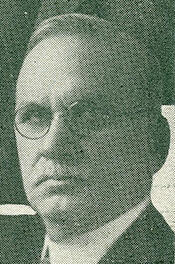
Here you will find contact information for Representative Nathan Leroy Strong, including email address, phone number, and mailing address.
| Name | Nathan Leroy Strong |
| Position | Representative |
| State | Pennsylvania |
| District | 27 |
| Party | Republican |
| Status | Former Representative |
| Term Start | April 2, 1917 |
| Term End | January 3, 1935 |
| Terms Served | 9 |
| Born | November 12, 1859 |
| Gender | Male |
| Bioguide ID | S001015 |
About Representative Nathan Leroy Strong
Nathan Leroy Strong (November 12, 1859 – December 14, 1939) was a Republican member of the U.S. House of Representatives from Pennsylvania who served nine consecutive terms in Congress between 1917 and 1935. Over the course of nearly two decades in the House of Representatives, he participated actively in the legislative process during a period marked by World War I, the Roaring Twenties, and the onset of the Great Depression, representing the interests of his Pennsylvania constituents within the broader national debates of his time.
Strong was born on November 12, 1859, in the mid-nineteenth century United States, a time of mounting sectional tensions that would soon culminate in the Civil War. Details of his early family life and upbringing are sparse in the surviving public record, but his formative years were shaped by the post–Civil War era of Reconstruction and industrial expansion, developments that would have been particularly evident in Pennsylvania, a state central to the nation’s coal, steel, and railroad industries. These conditions provided the economic and social backdrop against which Strong came of age and later entered public life.
Information about Strong’s formal education is limited, but like many political figures of his generation, he likely received a basic education in local schools before pursuing professional and civic endeavors. The educational environment of late nineteenth-century Pennsylvania, with its growing network of public schools and academies, would have offered him exposure to the legal, commercial, and civic issues that were increasingly important in an industrializing society. This background helped prepare him for the responsibilities of public office and the complex policy questions he would confront as a legislator.
Before his election to Congress, Strong developed his career in Pennsylvania, gaining experience that would support his later legislative work. Although the detailed record of his early professional life is not fully preserved in the brief surviving summaries, his eventual prominence as a Republican officeholder indicates that he was active in local or state affairs and established himself as a trusted figure within his community and party. Through this involvement, he built the political base and reputation that enabled his election to the U.S. House of Representatives.
Strong entered national office as a Representative from Pennsylvania in the United States Congress in 1917, at the beginning of the 65th Congress, and he served continuously until 1935. A member of the Republican Party, he contributed to the legislative process during nine terms in office, participating in debates and votes on issues ranging from wartime mobilization and postwar reconstruction to Prohibition, economic regulation, and relief measures during the early years of the Great Depression. As a member of the House of Representatives, he participated in the democratic process and represented the interests of his constituents, working within the committee system and party structure that shaped federal legislation in the early twentieth century.
Strong’s congressional service coincided with some of the most consequential developments in modern American history. During World War I, he served in a Congress that addressed questions of military preparedness, war finance, and civil liberties. In the 1920s, he was part of the Republican majorities that oversaw a period of economic growth, industrial consolidation, and changes in immigration and tariff policy. As the nation entered the Great Depression after 1929, he was among the legislators confronted with unprecedented economic crisis, participating in the deliberations over federal responses to widespread unemployment and financial instability. Throughout these years, he remained aligned with the Republican Party’s evolving positions while continuing to advocate for the needs and priorities of Pennsylvania.
After leaving Congress in 1935, Strong retired from national public office. In his later years, he lived away from the center of political life as the New Deal era reshaped the federal government and party alignments. He died on December 14, 1939, closing a life that had spanned from the immediate pre–Civil War period through the eve of World War II. Remembered primarily for his long tenure in the U.S. House of Representatives, Nathan Leroy Strong’s career reflects the role of a steady, long-serving Republican legislator who helped guide his state and nation through a transformative period in American history.